
Living in Madison, WI: The Complete 2026 Relocation and Visitor Guide
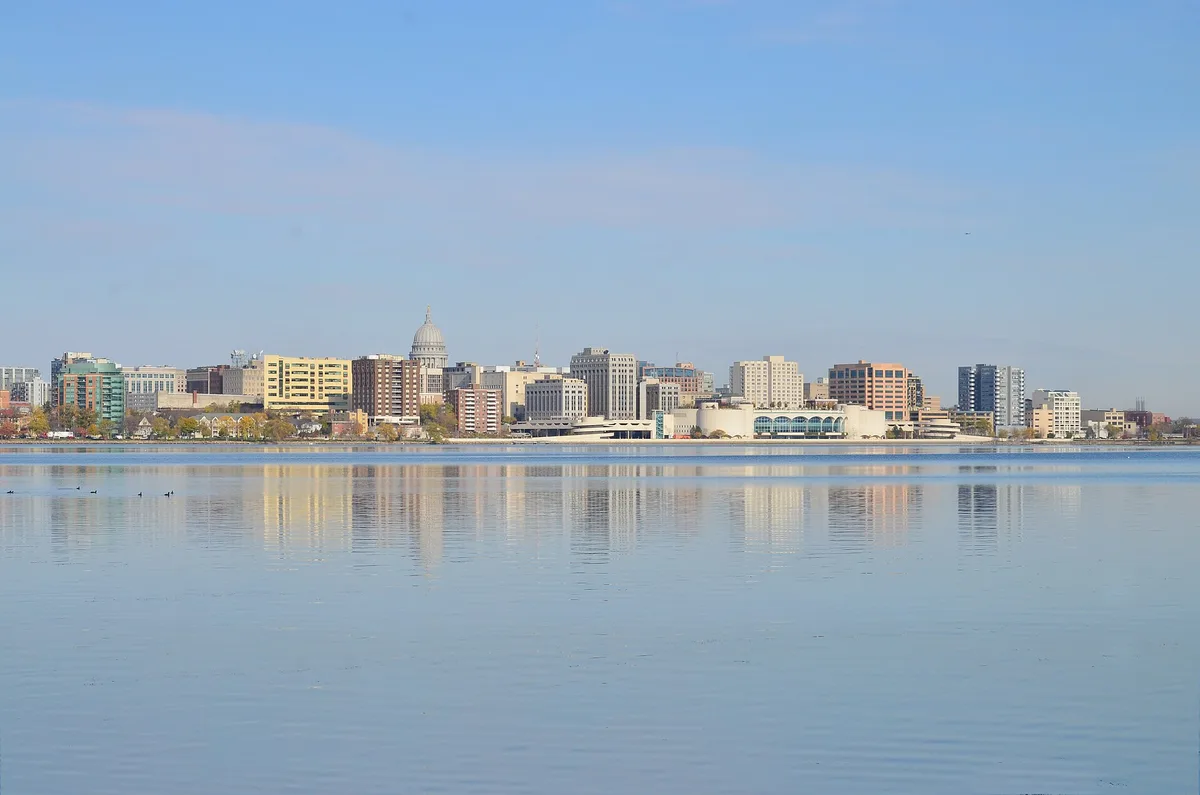
Madison runs on two independent economic engines — the University of Wisconsin–Madison and Wisconsin’s state government — and the result is a 2.8% unemployment rate, among the lowest of any major Midwestern city, that holds steady through national cycles. An A+ Niche grade, a crime index 26% below the national average, and a setting on an isthmus between two glacial lakes explain why this city of 275,000 keeps topping livability lists. The costs of that reputation: a $420,000 median home, living costs 12% above the national average, genuine Wisconsin winters, and one of the Midwest’s higher state income taxes. For academics, state-government professionals, healthcare workers, and Epic Systems hires, this guide covers what the numbers mean on the ground.
Quick Answer — Is Madison Worth Moving To?
Madison is an exceptional place to live, known for UW–Madison’s research culture, the double economic stability of a major university and state government, a spectacular lakeside setting, and a progressive civic culture that has produced some of the country’s most bike-friendly infrastructure and vibrant farmers’ market traditions. The cost of living sits modestly above the national average as of 2025, and housing has gotten meaningfully more competitive over the past five years. It’s an especially strong fit for academics, state-government professionals, healthcare workers, and tech employees (particularly Epic Systems), though Wisconsin’s winters are genuine and the state’s income tax is among the higher rates in the Midwest.
At a Glance: Madison by the Numbers (2025)
| Metric | Madison |
|---|---|
| Population | ~275,000 (city); ~700,000 (metro) |
| Median home price | $420,000 |
| Cost of living index | 112 (U.S. avg = 100) |
| Median household income | $74,000 |
| Unemployment rate | 2.8% |
| Average commute | 20 minutes |
| Walk Score | 51/100 |
| Niche overall grade | A+ |
| Crime index | 74 (U.S. avg = 100; lower = safer) |
| School district grade | B+ |
| Average summer high | 82°F |
| Average winter low | 7°F |
| Annual sunshine days | 189 |
Madison’s 2.8% unemployment rate is among the lowest of any major Midwestern city, a reflection of the dual anchors of university and state government employment that keep the local economy stable through national cycles. The A+ Niche rating reflects a community that consistently scores well on education, outdoor amenities, civic engagement, and quality of life.
Cost of Living in Madison
As of 2025, Madison’s cost of living index sits at approximately 112 — about 12% above the national average, according to BestPlaces/Sperling’s. For a city of its caliber, that premium is relatively modest. Housing drives the bulk of the premium: the median home price has reached $420,000, and UW–Madison enrollment growth combined with Epic Systems’ expanding Verona campus have kept demand persistently ahead of supply in the most desirable neighborhoods. Groceries run about 5% above the national average. Utilities are moderate but heating costs are meaningful — Madison’s winters are real, and a well-insulated home with an efficient furnace is a practical necessity. Transportation costs are below average for those who use Madison’s extensive bike infrastructure or the Metro Transit bus network. Healthcare is near the national average, with UW Health providing world-class academic medical care. Wisconsin’s graduated income tax tops out at 7.65% — among the higher state rates nationally, and a meaningful factor for high earners relocating from flat-tax or no-income-tax states.
Housing Market Snapshot
Madison’s housing market has tightened significantly since 2019, driven by UW enrollment growth, Epic Systems expansion, and an influx of remote workers from Chicago and the broader Midwest seeking more affordable quality of life. The median home price as of 2025 is approximately $420,000, with craftsman homes in Marquette and Willy Street neighborhoods frequently exceeding $500,000. Rentals are competitive: one-bedroom apartments average $1,350–$1,700 per month, and two-bedrooms typically run $1,700–$2,200. Campus-adjacent housing commands a premium. The market consistently favors sellers, with well-priced listings attracting multiple offers. Data sourced from Zillow and Realtor.com.
## Jobs and EconomyMadison’s economy is anchored by two institutions that provide unusual stability: the University of Wisconsin–Madison and the Wisconsin state government. Together they account for tens of thousands of direct jobs and a multiplier effect that supports retail, dining, professional services, and healthcare throughout the metro. As of 2025, the unemployment rate is approximately 2.8% — one of the lowest among major Midwestern metros — according to the Bureau of Labor Statistics. The median household income of $74,000 reflects the mix of university employees, state workers, and the tech sector that shapes Madison’s professional class. Epic Systems, the world’s largest electronic health records company, employs over 10,000 people at its sprawling campus in neighboring Verona and is one of the most significant private employers in Wisconsin’s history. American Family Insurance, one of the nation’s major insurers, is headquartered in Madison. The city has also developed a genuine startup ecosystem — accelerator programs like gener8tor and UW’s Discovery to Product (D2P) program have produced a steady stream of spinoffs in biotech, cleantech, and enterprise software. The dominant industries are education and research, state government, healthcare technology, insurance, and a growing biotech sector.
Neighborhoods in Madison: Where to Live
Madison’s neighborhoods are shaped by the city’s unusual isthmus geography — the narrow strip of land between Lakes Mendota and Monona is where the Capitol and UW campus sit, flanked by distinct residential communities to the east and west. The result is a city where the lake is never far away and neighborhood character shifts meaningfully within a few blocks. Those priced out of Madison proper increasingly look to nearby Middleton, Fitchburg, and Verona — all within 20 minutes of downtown.
Marquette / Willy Street is Madison’s most eclectic and beloved neighborhood — a dense, walkable community of Victorian-era homes, bungalows, and newer infill development along the Williamson Street commercial corridor. Independent coffee shops, restaurants, and the Willy Street Co-op anchor a neighborhood that attracts artists, academics, young families, and longtime Madison residents who value its progressive, community-oriented character. It sits directly on the Lake Monona shoreline and connects to the Capital City Trail. Housing here is competitive and typically in the $450,000–$700,000 range for single-family homes.
Tenney-Lapham / Near East Side sits adjacent to Marquette and shares its lakeside, walkable character, but with a slightly more residential and slightly more affordable profile. The Tenney Park neighborhood — built around a beautiful city park and the Yahara River channel between Lakes Mendota and Monona — is one of Madison’s genuine gems, popular with families and professionals who want easy access to both the university and downtown without paying Marquette premiums.
Nakoma / Westmorland (West Side) offers Madison’s most established family neighborhoods — quieter, tree-lined streets of mid-century homes and craftsman bungalows on the city’s west side, with easy access to the university via bicycle or bus. The area feeds into strong elementary and middle schools and attracts faculty, professionals, and families seeking a lower-density environment than the near east side. Prices run slightly lower than Marquette, and the neighborhood’s mature landscaping and community feel make it perennially popular with long-term Madison residents.
Fitchburg / South Madison represents the most accessible entry point into the greater Madison area for price-conscious buyers, with newer construction, larger lots, and a growing commercial corridor that has developed significantly in the past decade. The proximity to Epic Systems in Verona and easy I-90 access make it particularly practical for tech workers and commuters, and the trade-off of suburban character for square footage and value is worth it for many families. The Cannonball Trail connects Fitchburg to Madison’s broader bike network.
## Schools, Safety, and Quality of LifeSchools: The Madison Metropolitan School District (MMSD) earns a B+ from Niche, reflecting a district with strong aggregate outcomes but meaningful variation between schools. Madison’s magnet and specialty programs — including several highly regarded language immersion schools — give families who engage the district’s choice system access to excellent options. The district’s challenges reflect the demographics of a diverse urban district, and many families in well-resourced neighborhoods report very strong experiences. UW–Madison, of course, is the city’s flagship higher-education institution — a member of the Association of American Universities and home to world-leading programs in engineering, biological sciences, political science, and the humanities. Madison College provides strong community college and technical education options.
Safety: Madison is a generally safe city, with a crime index of approximately 74 compared to the national average of 100, according to FBI Uniform Crime Reports. Property crime in student-adjacent neighborhoods and some south-side corridors is the primary concern, and the city has invested in community policing and violence reduction programs with measurable results over the past several years. Violent crime rates are below the national average, and most Madison residents experience the city as a safe and comfortable place to live and raise families.
Quality of Life: UW Health — the university’s academic health system — is consistently ranked among the best hospital systems in the Midwest, and SSM Health St. Mary’s provides additional capacity. Madison’s bike infrastructure is exceptional: the city maintains over 200 miles of dedicated bike paths and lanes, and is regularly recognized as one of the most bike-friendly cities in the United States. The two lakes — Mendota and Monona — provide swimming, sailing, kayaking, and ice skating (in winter) that give Madison an outdoor recreation identity unusual in a landlocked Midwestern city. The Overture Center for the Arts anchors the city’s performing arts scene with a world-class facility for music, theater, and visual arts, and the Wisconsin State Capitol — one of the most architecturally significant state capitols in the country — provides a civic grandeur at the city’s literal center.
Climate and Weather in Madison
Madison’s climate requires honest preparation. Winters are cold and persistent: average January lows reach 7°F, and wind chills below -20°F occur during cold snaps. The city typically receives 40–50 inches of snow annually, and the winter season effectively runs from November through early March. Lake ice typically covers both Mendota and Monona from January through March, creating a striking winter landscape that longtime Madisonians celebrate rather than merely endure — outdoor skating, ice fishing, and cross-country skiing on the frozen lakes are genuine local traditions. Summers are warm and beautiful: average July highs of 82°F and low humidity make June through September one of the most pleasant seasons of any Midwestern city. Fall brings spectacular foliage and the most coveted weeks of the outdoor recreation calendar. Madison averages 189 sunshine days per year, according to WeatherSpark and NOAA data — less than Sunbelt cities but respectable for the upper Midwest. For housing decisions, quality insulation and a reliable heating system are practical necessities, and heating costs from November through April should be factored meaningfully into any monthly budget.
Things to Do in Madison: Top Attractions and Day Trips
Madison’s leisure identity is built around its lakes, its farmers’ market (the largest outdoor farmers’ market in the United States), the University of Wisconsin’s athletic and cultural programming, and a craft-beer culture that has made the city one of the Midwest’s top brewery destinations. The combination of outdoor recreation, Big Ten sports energy, and genuine civic intellectual life creates a leisure palette that residents find remarkably sustaining year after year.
-
Dane County Farmers’ Market — Held every Saturday morning from late April through November on the Capitol Square, the Dane County Farmers’ Market is the largest producer-only farmers’ market in the United States, wrapping around all four sides of the State Capitol with over 300 vendors selling produce, meats, cheeses, baked goods, and crafts from Wisconsin farms and artisans. It is the social heartbeat of Madison’s weekend life and the single best introduction to the city’s civic and culinary culture. Free to attend, but plan to arrive early and bring cash.
-
Memorial Union Terrace — The lakeside terrace at the UW–Madison Memorial Union is one of the great public spaces in American university life — a sprawling outdoor patio of colorful sunburst chairs overlooking Lake Mendota, serving food and beverages to students, faculty, and community members alike. Summer evenings on the Terrace, with live music, sunsets over Mendota, and the energy of a great university town, represent Madison at its most distinctive. Open to the public; no UW affiliation required.
-
Henry Vilas Zoo — One of the last free admission zoos in the United States, Henry Vilas Zoo is a 28-acre family destination that has served Madison for over 100 years. The zoo houses big cats, primates, bears, and a beloved children’s zoo, and its location adjacent to Vilas Park and the Lake Wingra shoreline makes it easy to extend a visit into a full afternoon. The free admission policy is a genuine civic commitment that reflects Madison’s values and makes it accessible to all families.
-
Capital City Trail / Lake Loop — Madison’s off-street trail network connects both lakes and the city’s major parks in a system that makes the city genuinely navigable by bike or on foot. The full lake loop, combining the Capital City Trail and the Monona Lakefront Path, is approximately 11 miles and passes beaches, parks, and neighborhoods that give newcomers the best possible orientation to the city’s geography and character. Rentable bikes and e-bikes are available through Madison BCycle stations throughout the trail network.
-
Olbrich Botanical Gardens — A 16-acre public garden on the Lake Monona shoreline, Olbrich is free to visit outdoors year-round and houses a Thai pavilion and sala (donated by the Royal Thai Government), a tropical conservatory, and beautifully maintained theme gardens. It is one of Madison’s most genuinely peaceful destinations and particularly rewarding in spring and early summer when the display gardens are at peak bloom.
For day trips, Milwaukee (1.5 hours east via I-94) offers the full range of a Midwestern city — the Milwaukee Art Museum, Summerfest, the Third Ward restaurant district, and Lakefront Brewery among the highlights. Wisconsin Dells (1 hour north) is the Midwest’s water-park capital and a reliable family day trip from May through September. Chicago (2.5 hours south via I-90/94) is the natural big-city complement to Madison’s more intimate scale — the Art Institute, the Riverwalk, and world-class dining all within a manageable drive.
## Moving to Madison: Your 90-Day Checklist90–60 days before:
- Research neighborhoods and set housing budget using Zillow or Realtor.com
- Get at least three moving company quotes (PODS, Allied, HireAHelper, or local movers)
- Research MMSD enrollment deadlines and explore magnet and specialty school options
- Review Wisconsin’s graduated income tax (rates up to 7.65%)
- Begin decluttering — book a self-storage unit if needed
60–30 days before: 6. Confirm moving company — avoid late August (UW move-in) if possible 7. Transfer medical and dental records; UW Health is a world-class option for new providers 8. Notify employer, bank, and subscriptions of address change 9. Research utility providers (MG&E for gas and electric) and set up accounts 10. Arrange short-term lodging if permanent housing won’t be ready immediately
First 30 days after arrival: 11. Transfer driver’s license and vehicle registration to Wisconsin 12. Register to vote at new address 13. Visit the Dane County Farmers’ Market and Memorial Union Terrace using the attractions section above 14. Join local Facebook groups or Nextdoor for your neighborhood 15. File change of address with USPS if not already done
## Frequently Asked Questions About Living in MadisonQ: Is Madison a good place to live? A: Madison earns an A+ from Niche and consistently ranks among the best mid-sized cities in the country — recognition that reflects the genuine depth of its assets: UW–Madison, the state government’s employment stability, lakeside outdoor recreation, a world-class farmers’ market, and a civic culture invested in public goods. As of 2025, the honest trade-offs are Wisconsin’s serious winters, a housing market that has gotten meaningfully more expensive, and a state income tax among the higher rates in the Midwest.
Q: What is the cost of living in Madison? A: Madison’s cost of living index of approximately 112 places it about 12% above the national average — competitive for a city of its quality and significantly more affordable than coastal peers like Ann Arbor, Boulder, or any California college town. The median home price of $420,000 and one-bedroom rents of $1,350–$1,700 per month reflect a market tightened by Epic Systems growth and UW expansion. Wisconsin’s income tax, which tops at 7.65%, is the most significant tax consideration for relocating professionals.
Q: Is Madison safe? A: Madison is a generally safe city, with a crime index of approximately 74 compared to the national average of 100. Property crime in student-adjacent areas and some south-side corridors is the primary concern, and violent crime rates are below the national average. Most Madison residents experience the city as safe and comfortable, and families relocating from Chicago or Milwaukee commonly cite safety as one of the city’s most appreciated qualities.
Q: What are the best neighborhoods in Madison? A: Marquette and Willy Street are the top choices for those who want walkability, independent dining, and the city’s most distinctive neighborhood character. The Near East Side offers similar appeal at marginally lower prices. Nakoma and Westmorland on the west side attract faculty and families seeking quieter, tree-lined streets. Fitchburg is the most accessible entry point for price-conscious buyers, especially those commuting to Epic Systems in Verona.
Q: What is the job market like in Madison? A: With a 2.8% unemployment rate, Madison has one of the strongest employment markets in the Midwest. UW–Madison and the Wisconsin state government provide the economic foundation, and Epic Systems — with over 10,000 employees in nearby Verona — has transformed the private-sector employment landscape. American Family Insurance and a growing startup ecosystem add further depth. The city’s employment base is unusually resilient to national economic cycles.
Q: How far is Madison from Chicago? A: Madison is approximately 150 miles north of Chicago — a 2.5-hour drive via I-90/94 in normal conditions, though Chicago-area traffic can extend that to three hours or more on Fridays and Sundays. Amtrak’s Hiawatha service runs from Milwaukee to Chicago in 90 minutes, and several bus services connect Madison to Milwaukee, providing an indirect rail connection. Direct Madison-to-Chicago bus services (FlixBus, Greyhound) run multiple times daily and take approximately 3 hours.
Madison vs. Nearby Cities
Milwaukee, 80 miles east, offers a major-city scale that Madison lacks — a larger job market, more diverse neighborhoods, and lower housing costs — but with higher crime and less of the walkable, college-town character that defines Madison’s appeal. Green Bay, 2 hours north, is a more working-class industrial city with dramatically lower housing costs and a tighter-knit community, though with fewer of Madison’s cultural and employment amenities. Minneapolis, 4 hours northwest, is the natural comparison for those weighing a larger Midwestern metro with similar progressive values and outdoor culture — at a similar cost but with meaningfully more urban scale. For full profiles of these cities, see our guides to Milwaukee, Green Bay, and Minneapolis.
Sources and Data Notes
Data for this guide was drawn from the U.S. Census Bureau American Community Survey (2024), Bureau of Labor Statistics (2025), Niche.com, BestPlaces.net/Sperling’s Cost of Living Index, FBI Uniform Crime Reports, WeatherSpark, Walk Score, and Zillow/Realtor.com. Statistics reflect 2024–2025 data where available.