
Living in Houston, Texas: The Complete 2026 Relocation and Visitor Guide
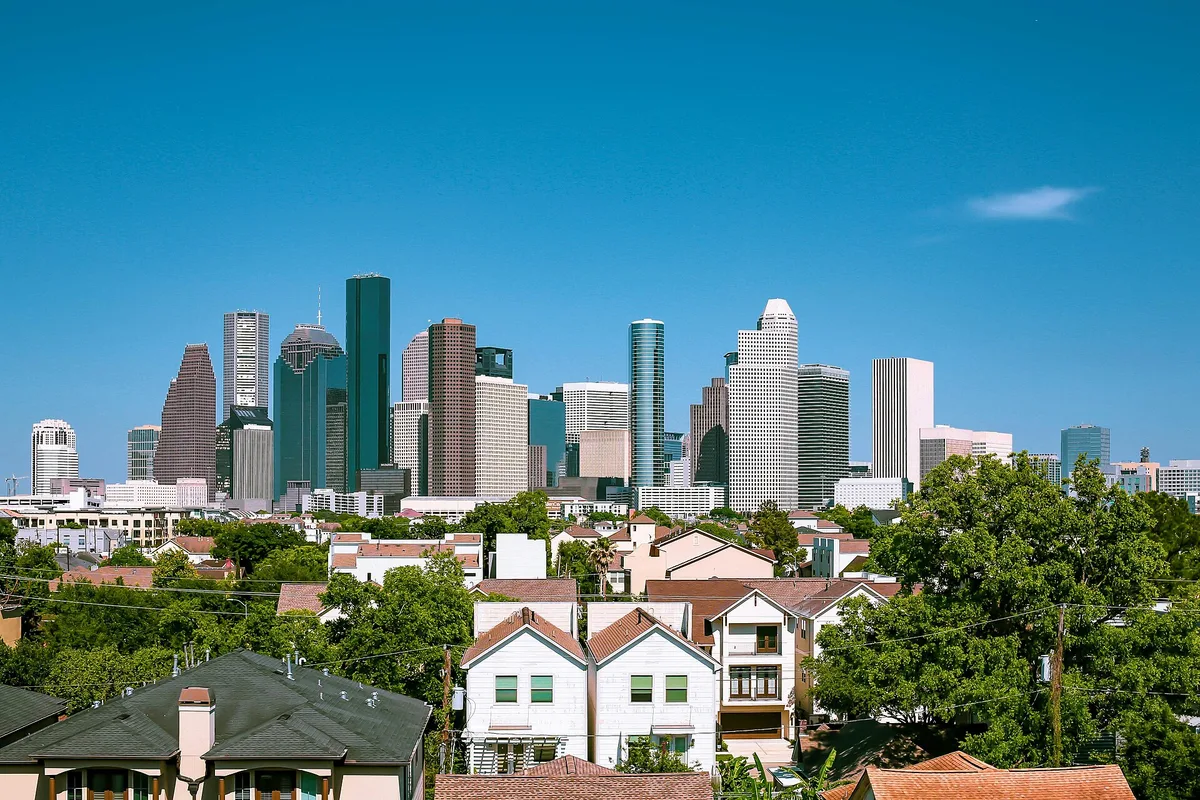
Houston costs almost exactly the national average to live in — index 101, median home $330,000 as of 2025 — while being the fourth-largest city in the United States, a value proposition no coastal metro approaches. The 7.3-million-person metro runs on the global energy industry, the Texas Medical Center (the largest medical complex on Earth), aerospace, and logistics, with Texas’s zero income tax on top. One of the most ethnically diverse major cities in the country, Houston counters its lack of mountains and coastline views with a food scene that rivals any American city — including the best Vietnamese food outside Vietnam. The reckoning: brutal June-through-September heat, genuine flooding risk, heavy traffic, and a crime index of 168 that demands neighborhood-level research. This guide covers all of it.
Quick Answer — Is Houston Worth Moving To?
Houston is one of the strongest value propositions in American cities — a major economic powerhouse with a cost of living barely above the national average, no state income tax, and a genuine diversity of industries and cultures. The cost of living index sits around 101, meaning it costs almost exactly the national average to live here despite being a top-five U.S. metro. The job market is broad and resilient, anchored by energy, healthcare, aerospace, and logistics. It’s an especially good fit for energy industry professionals, medical workers, business owners, and anyone escaping high-tax coastal states — though newcomers should honestly reckon with Houston’s summer heat (brutal from June through September), traffic, flooding risk, and a crime index that requires neighborhood-level research.
At a Glance: Houston by the Numbers (2025)
| Metric | Houston |
|---|---|
| Population | ~2.3 million city / 7.3 million metro |
| Median home price | $330,000 |
| Cost of living index | 101 (U.S. avg = 100) |
| Median household income | $57,000 |
| Unemployment rate | 4.2% |
| Average commute | 29 minutes |
| Walk Score | 49/100 |
| Niche overall grade | B |
| Crime index | 168 (U.S. avg = 100; lower = safer) |
| School district grade | B- |
| Average summer high | 95°F |
| Average winter low | 42°F |
| Annual sunshine days | 204 |
Houston’s crime index of 168 is above the national average, driven by the city’s scale and concentrated crime in specific corridors — a figure that must be read neighborhood by neighborhood rather than as a blanket verdict. Meanwhile, the Niche B grade reflects real trade-offs: a world-class economy and cultural scene offset by uneven schools, traffic, and summer weather that is genuinely demanding.
Cost of Living in Houston
Houston’s cost of living index of 101 is one of the most remarkable figures in American urban economics. For a city of 7+ million with major league sports, a world-class medical center, NASA, and Fortune 500 headquarters, Houston’s cost basis is essentially identical to the national average. Housing is the headline: median home prices of $330,000 put homeownership within reach of middle-income households in a way that simply doesn’t exist in Denver, Seattle, or any coastal metro. Groceries run approximately 3–5% above the national average; utilities average $175–$210/month due to year-round AC demand. Car ownership is non-negotiable for most residents — Houston is one of the most car-dependent major metros in the country. Healthcare costs are close to national norms, aided by the Texas Medical Center’s scale and competition. Texas has no state income tax, which delivers annual savings of $5,000–$20,000+ for professional-income households relocating from California, New York, or Illinois.
Housing Market Snapshot
Houston’s housing market has historically been one of the most resistant to the overheating seen in other Sun Belt metros, partly because Houston has minimal zoning restrictions that allow supply to respond to demand. Median home prices sit around $330,000 as of Q1 2025 (per Zillow), with affordable options in the Energy Corridor, Katy, Pearland, and Sugar Land suburbs. Median rent for a 1-bedroom apartment runs approximately $1,350–$1,550/month; a 2-bedroom averages $1,700–$2,000. The Inner Loop neighborhoods (Montrose, Heights, Midtown) command premiums. One practical caveat: flood insurance is essential for many Houston properties — always check FEMA flood zone maps before purchasing.
---Jobs and Economy
Houston’s five largest employers reflect its industrial breadth: the Texas Medical Center (which employs 106,000+ across 60 institutions), ExxonMobil, the City of Houston, the Houston Independent School District, and Shell. The energy sector — oil, gas, petrochemicals, and increasingly renewable energy — remains the dominant private industry cluster, with Chevron, ConocoPhillips, Halliburton, Baker Hughes, and hundreds of energy service companies headquartered or heavily staffed here. Aerospace is Houston’s second major distinctive: NASA’s Johnson Space Center anchors a cluster of aerospace contractors including Boeing, Lockheed Martin, and a growing commercial space corridor. The Texas Medical Center is a world unto itself — 60 institutions, more than 10 million patient visits annually, and a research enterprise that trails only the NIH in federal funding. Port of Houston is among the nation’s busiest cargo ports, feeding logistics and manufacturing employment. Metro unemployment sits at 4.2%, slightly above national average but reflective of Houston’s larger, more structurally diverse workforce. (Sources: BLS; Greater Houston Partnership.)
Neighborhoods in Houston: Where to Live
Houston’s sheer scale means neighborhood selection shapes daily life profoundly. Here are four areas that represent the range of what the city offers.
Montrose is Houston’s most eclectic and walkable urban neighborhood — a dense mix of bungalows, apartment buildings, art galleries, independent restaurants, and the city’s most visible LGBTQ+ community. It sits inside the 610 Loop just west of downtown, with easy access to the Museum District and Hermann Park. Best for creatives, young professionals, and anyone who wants Houston’s most neighborhood-like urban feel. Median home prices range $450K–$700K; rental options are plentiful.
The Heights is a historic bungalow district northwest of downtown, popular with young families and professionals drawn to its walkable 19th Street commercial strip, independent coffee shops, and distinctive craftsman architecture. It’s one of Houston’s fastest-appreciating neighborhoods. Best for couples and families who want character and community without Montrose’s nightlife density. Median home prices range $500K–$800K.
Sugar Land / Missouri City anchors Houston’s southwest suburban corridor, consistently ranking among Texas’s safest and most family-friendly communities. It’s best for families with children, professionals commuting to the Energy Corridor or Medical Center, and Houston newcomers from South Asian backgrounds — Sugar Land has one of the most vibrant South Asian cultural communities in the U.S. outside New Jersey. Median home prices range $350K–$600K, with newer construction available.
Katy is the western suburban hub along I-10, known for top-rated Katy Independent School District (one of the best in Texas), master-planned communities, and easy Energy Corridor access. Best for families prioritizing school quality and newer construction. Median home prices range $325K–$550K. The Katy Mills outlet mall and LaCenterra at Cinco Ranch anchor the area’s retail scene.
For context on comparable Texas and Southern metros, see our guides to [Dallas, Texas], [Austin, Texas], and [San Antonio, Texas].
---Schools, Safety, and Quality of Life
Schools: Houston Independent School District (HISD) — the largest in Texas and eighth-largest in the U.S. — earns a Niche B-, reflecting significant variation between high-performing magnets and underperforming neighborhood schools. Standout options include High School for the Performing and Visual Arts (HSPVA), DeBakey High School for Health Professions, and Carnegie Vanguard High School — all nationally recognized. Suburban districts consistently outperform: Katy ISD earns a Niche A-, Fort Bend ISD a B+, and Clear Creek ISD a B+. Rice University (Niche #17 nationally), University of Houston, and Houston Baptist University anchor the higher education landscape.
Safety: Houston’s crime index of 168 reflects elevated property and violent crime in specific corridors, particularly certain inner-city wards and along the I-45 and I-10 corridors east of downtown. However, Sugar Land, The Woodlands, Katy, Pearland, and most of Houston’s suburban municipalities post crime rates at or below the national average. Even inside the city proper, neighborhoods like the Heights, Montrose, and Meyerland are substantially safer than the citywide figure suggests. Violent crime declined in Houston between 2022 and 2024, following national trends. (Source: FBI UCR 2023.) Neighborhood selection is the most important safety variable for Houston residents.
Quality of Life: The Texas Medical Center provides Houston residents access to among the best hospital and specialty care in the world — MD Anderson Cancer Center, Memorial Hermann, Houston Methodist, and Texas Children’s are all here. Houston’s Museum District on the south side of Midtown clusters 19 museums within walking distance, several of them free. The city is home to four professional sports franchises (Astros, Rockets, Texans, Dynamo), a world-class symphony, opera, and ballet, and a culinary scene — particularly Vietnamese, Mexican, and Indian food — that experts consistently rank among the three best in the U.S. Car dependency is the defining quality-of-life trade-off: Houston’s METRORail covers limited corridors, and most residents drive for all daily needs.
Climate and Weather in Houston
Houston’s climate is subtropical — hot, humid, and wet, with mild winters and summers that demand respect. Summer highs average 95°F in August with high humidity that pushes heat indices well above 100°F from June through September; it is not unusual to experience feels-like temperatures of 105–110°F during peak summer. Winters are genuinely mild by national standards: average January lows hover around 42°F, and snow is rare — though the February 2021 winter storm (Winter Storm Uri) delivered a wake-up call about infrastructure vulnerability. Annual rainfall averages 49 inches, making Houston prone to flooding — the city is flat, sits near sea level, and has experienced catastrophic flooding events including Hurricane Harvey (2017). Residents should research flood zones carefully before purchasing property, and maintain hurricane preparedness plans from June through November. Houston’s 204 sunshine days provide some relief, and spring (March–April) is genuinely beautiful. (Source: NOAA; WeatherSpark.)
Things to Do in Houston: Top Attractions and Day Trips
Houston’s identity as a leisure city is often underestimated — it’s large enough to support world-class museums, elite dining, professional sports, and live music, while its proximity to the Gulf Coast and Texas Hill Country provides easy escape options. The city’s diversity also translates into one of the most genuine and varied food landscapes in the country, where a great bowl of pho sits two blocks from an excellent taqueria.
-
Space Center Houston / NASA Johnson Space Center — One of the most legitimate STEM tourism destinations in the United States. NASA’s Johnson Space Center campus hosts the Mission Control facilities that guided Apollo, Space Shuttle, and ISS missions, and Space Center Houston’s visitor complex includes actual space hardware, tram tours of JSC facilities, and rotating exhibits on current Artemis missions. Open daily; admission approximately $35 for adults. The Independence Plaza replica Saturn V rocket and shuttle carrier aircraft are extraordinary.
-
The Museum District — A walkable cluster of 19 museums along Main Street south of Midtown, including the Museum of Fine Arts Houston (one of the 10 largest art museums in the U.S.), the Houston Museum of Natural Science, the Children’s Museum of Houston, and the Holocaust Museum. Several are free. The adjacent Hermann Park includes the McGovern Centennial Gardens, a Japanese garden, and the Houston Zoo. This district alone justifies Houston’s cultural credentials.
-
Hermann Park and the Houston Zoo — A 445-acre public park in the heart of the Medical Center, Hermann Park is Houston’s Central Park — with paddleboats, a miniature train, the Miller Outdoor Theatre (free performances), and the Houston Zoo (one of the most visited in the nation). Admission to the zoo runs approximately $24 for adults; Hermann Park itself is free. Best experienced in the cooler months of October through April.
-
Montrose and the Restaurant Scene — Houston’s dining landscape is genuinely world-class, driven by its extraordinary diversity. Noteworthy standouts include Xin Chao (Vietnamese), Pappadeaux (Gulf seafood), Hugo’s (upscale Mexican), BCN Taste & Tradition (Spanish), and the legendary Ninfa’s on Navigation. The Montrose neighborhood’s independent restaurant strip alone could occupy a week of meals. Houston’s Vietnamese community in the Midtown and Beltway 8 areas is among the largest in the U.S., producing an exceptional pho and banh mi corridor.
-
Buffalo Bayou Park — A 160-acre greenway along the Buffalo Bayou from downtown west through the Heights, Buffalo Bayou Park is Houston’s most successful urban greenspace investment — with trails, art installations, kayak launches, and the Cistern (a converted underground cistern with remarkable acoustics, open for art installations and yoga). Free to access; the Waugh Drive bat colony at dusk is one of Houston’s best free spectacles.
-
Galveston Island — An hour south on I-45, Galveston offers Gulf Coast beaches, historic Victorian architecture on the Strand, Moody Gardens, Schlitterbahn water park, and the UTMB medical campus. It’s Houston’s primary beach outlet and a natural day trip. The island’s shrimp boats deliver some of the freshest Gulf seafood in the state; the Grand 1894 Opera House stages touring Broadway shows year-round.
Day Trips: Austin is 2.5 hours west on I-10/US-290 — Texas’s music and tech capital. San Antonio is 3 hours west, with the Riverwalk and the Alamo. The Texas Hill Country (Fredericksburg, Wimberley, New Braunfels) is 3–4 hours for wine country, tubing, and German heritage towns. Galveston (1 hour) and Port Aransas (4 hours) serve Gulf beach needs. The Big Thicket National Preserve, an hour northeast, offers East Texas forest hiking unlike anything else in the state.
---Moving to Houston: Your 90-Day Checklist
90–60 days before:
- Research neighborhoods and set housing budget using Zillow or Realtor.com — compare Inner Loop options (Montrose, Heights) with suburban corridors (Katy, Sugar Land, The Woodlands)
- Get at least three moving company quotes (PODS, Allied Van Lines, HireAHelper, or local movers)
- Research school enrollment deadlines if you have children — HISD magnet school applications open in November for the following year
- Review Texas’s zero state income tax advantage and calculate net household savings vs. your current state
- Begin decluttering — book a self-storage unit if needed
60–30 days before: 6. Confirm moving company and lock in dates 7. Transfer medical and dental records; find new providers — Texas Medical Center institutions accept most major insurance plans 8. Notify employer, bank, and subscriptions of address change 9. Research utility providers (CenterPoint Energy, Houston Public Works) and set up accounts; budget aggressively for summer cooling costs 10. Check FEMA flood zone maps for your specific property and purchase flood insurance if required — this is not optional in Houston
First 30 days after arrival: 11. Transfer driver’s license and vehicle registration to Texas — visit a Texas DPS office within 90 days of establishing residency 12. Register to vote at new address 13. Explore your neighborhood’s dining and cultural scene — Houston rewards curious eaters immediately 14. Join local Facebook groups or Nextdoor for your neighborhood and the broader Houston transplant communities 15. File change of address with USPS if not already done
---Frequently Asked Questions About Living in Houston
Q: Is Houston a good place to live? A: Houston earns a Niche B grade overall, reflecting its extraordinary economic opportunity, genuine cultural diversity, and remarkably affordable housing for a city of its size — offset by a crime index above the national average, punishing summer heat, and serious flooding risk. For the right person — especially energy, healthcare, or aerospace professionals — Houston offers a quality-of-life value proposition that few American cities can match. Neighborhood selection is the single most important decision you’ll make moving to Houston.
Q: What is the cost of living in Houston? A: Houston’s cost of living index is approximately 101 — essentially equal to the national average, which is extraordinary for the fourth-largest U.S. metro. Median home prices sit around $330,000 as of 2025. Texas has no state income tax, which delivers substantial net savings for professional-income households. The primary hidden cost is flood insurance for properties in flood-prone areas, which can add $1,500–$4,000 per year to housing costs. (Source: BestPlaces/Sperling’s; Zillow Q1 2025.)
Q: Is Houston safe? A: Houston’s crime index of 168 is above the national average, but this figure covers enormous variation across a 670-square-mile city. Sugar Land, Katy, The Woodlands, Pearland, and Friendswood consistently rank among Texas’s safest communities. Inside the city, neighborhoods like the Heights, Montrose, and West University Place are well below national crime averages. Property crime is more prevalent than violent crime in most residential areas. (Source: FBI UCR 2023.) Researching crime data at the neighborhood level is essential before choosing where to live.
Q: What are the best neighborhoods in Houston? A: Montrose is Houston’s most walkable urban neighborhood, known for its dining scene, arts community, and LGBTQ+ culture. The Heights offers historic bungalows, a commercial strip of independent shops, and family-friendly community feel. Sugar Land and Katy are the top suburban options, with excellent schools and master-planned communities. The Woodlands, north of the city on I-45, is consistently ranked one of the best places to live in Texas and the U.S.
Q: What is the job market like in Houston? A: Houston’s metro unemployment rate sits at 4.2%, slightly above national average in a city whose workforce scale and sector diversity absorb large fluctuations in energy prices. The dominant sectors are energy (ExxonMobil, Chevron, Shell, Halliburton), healthcare (Texas Medical Center, HCA Houston), aerospace (NASA JSC, Boeing), logistics (Port of Houston), and increasingly technology and renewable energy. Houston has the second-most Fortune 500 headquarters of any U.S. city after New York. (Source: BLS; Greater Houston Partnership.)
Q: How far is Houston from Dallas and Austin? A: Houston is approximately 240 miles from Dallas — about a 3.5-hour drive north on I-45. Austin is roughly 165 miles west, a 2.5-hour drive on US-290 or I-10. Both cities have direct flights from Houston’s two major airports: George Bush Intercontinental (IAH), a United Airlines hub, and William P. Hobby (HOU), a Southwest hub.
Houston vs. Nearby Cities
Houston (COL 101, median home $330K) is the value leader among major Texas metros. Dallas (COL 106, $395K) has a slightly higher cost of living and median home price but offers a more dispersed suburban job market and arguably more cosmopolitan downtown experience. Austin (COL 122, $530K) is significantly pricier — the tech premium has pushed housing well beyond Houston’s reach — but offers a more walkable urban core and stronger outdoor recreation culture. San Antonio (COL 93) is more affordable than Houston on housing, but its job market is narrower. For anyone optimizing on cost, income tax savings, and economic opportunity simultaneously, Houston is the strongest case in the Texas triangle. For full profiles of these cities, see our guides to [Dallas, Texas], [Austin, Texas], and [San Antonio, Texas].
Sources and Data Notes
Data sourced from U.S. Census Bureau / American Community Survey (2023), Bureau of Labor Statistics (2024), Niche.com (2024–2025 grades), BestPlaces.net / Sperling’s Cost of Living Index, FBI Uniform Crime Reports (2023), WeatherSpark / NOAA climate normals, Walk Score (2024), and Zillow / Realtor.com (home price and rent data, Q1 2025). Flood risk data sourced from FEMA National Flood Hazard Layer. All figures cited “as of 2025” reflect the most current available data at time of publication.