
Living in Dallas, Texas: The Complete 2026 Relocation and Visitor Guide
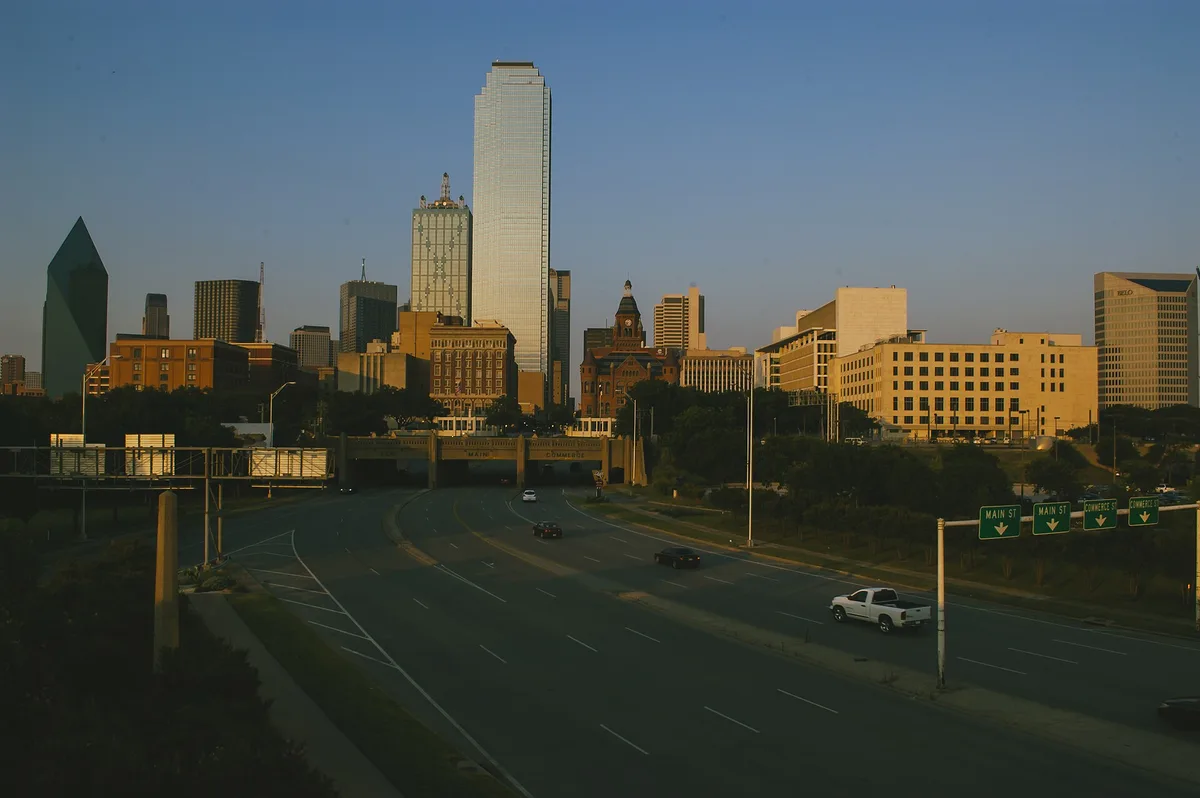
Dallas anchors the fourth-largest metro in the United States — 7.7 million people across the DFW metroplex — with a cost of living index of 106 and a $395,000 median home, a scale-to-cost ratio no other top-five metro matches as of 2025. Add Texas’s zero state income tax and a job market spread across Fortune 500 finance, tech, healthcare, and logistics at 3.5% unemployment, and the economics of a move here are straightforward. The costs are physical instead: 97°F average summer highs, severe traffic, and a car required for virtually all daily life. For corporate professionals, families chasing top suburban school districts, and Northeast or California transplants, this guide covers the full metroplex picture — master-planned suburbs stretching 50 miles in every direction included.
Quick Answer — Is Dallas Worth Moving To?
Dallas is one of the most economically powerful relocation destinations in the country, with a zero state income tax, a diverse job market anchored by Fortune 500 headquarters, and a metro cost of living that sits just above the national average despite massive scale and amenities. The cost of living index sits around 106, and median home prices of $395,000 are notably affordable for a top-five U.S. metro. The job market is consistently strong, with unemployment around 3.5%. It’s an especially good fit for corporate professionals, finance and tech workers, families seeking top suburban school districts, and anyone relocating from the Northeast or California seeking major-city amenities at dramatically lower cost — though Dallas summers are genuinely brutal, traffic is severe, and the city requires car ownership for virtually all daily life.
At a Glance: Dallas by the Numbers (2025)
| Metric | Dallas |
|---|---|
| Population | ~1.3 million city / 7.7 million DFW metro |
| Median home price | $395,000 |
| Cost of living index | 106 (U.S. avg = 100) |
| Median household income | $65,000 |
| Unemployment rate | 3.5% |
| Average commute | 27 minutes |
| Walk Score | 46/100 |
| Niche overall grade | B |
| Crime index | 168 (U.S. avg = 100; lower = safer) |
| School district grade | B- |
| Average summer high | 97°F |
| Average winter low | 34°F |
| Annual sunshine days | 235 |
Dallas’s crime index of 168 is above the national average, driven by the dense urban core and specific elevated-crime corridors south and west of downtown — but the DFW metro includes some of the safest large suburban communities in the United States. The 235 sunshine days and warm winters make Dallas one of the sunnier major metros, a significant lifestyle asset for those escaping cold-weather cities.
Cost of Living in Dallas
Dallas’s cost of living index of 106 means residents pay about 6% more than the national average — a moderate premium for a metro with Fortune 500 headquarters, major-league sports, premier healthcare, and growing arts infrastructure. Housing at a median of $395,000 is considerably more accessible than comparably sized metros: Seattle’s median is $865K, Boston’s $865K, and even Denver’s $578K. Groceries run approximately 3–5% above national average. Utilities average $175–$200/month, with summer cooling costs spiking to $250–$350/month during the peak July–August heat. Car ownership is essential — Dallas Area Rapid Transit (DART) operates one of the nation’s most extensive light rail systems in terms of track miles, but the region’s sprawl means most residents still drive for daily errands and commutes. Texas has no state income tax, making the net financial picture significantly stronger than the COL index alone suggests.
Housing Market Snapshot
The Dallas housing market cooled from its frenzied 2021–2022 peak but remains competitive. Median home prices sit around $395,000 in the city proper as of Q1 2025 (per Zillow); the broader DFW metro offers substantially more range, with affordable options in Garland, Mesquite, and Desoto and premium offerings in Plano, Frisco, Allen, and Highland Park. Median rent for a 1-bedroom apartment runs approximately $1,500–$1,750/month; a 2-bedroom averages $1,900–$2,300. Highland Park and University Park (the “Park Cities”) are Dallas’s most prestigious urban enclaves, with median home prices above $1.5M. Frisco and Prosper in the north suburbs offer newer construction at $450K–$750K.
---Jobs and Economy
Dallas’s five largest employers reflect its Fortune 500 density and sector diversity: AT&T (global HQ in downtown Dallas), American Airlines (HQ in Fort Worth), the City of Dallas, Toyota North America (HQ relocated to Plano), and UT Southwestern Medical Center. The financial services sector is Dallas’s most distinctive private cluster — Goldman Sachs, Charles Schwab (relocated from San Francisco), JPMorgan Chase, and Fidelity Investments all operate major Dallas campuses. Technology has grown substantially, with Texas Instruments headquartered in Dallas and a corridor of tech firms in Plano, Frisco, and Richardson (nicknamed the “Telecom Corridor”). Healthcare anchors include UT Southwestern (a world-renowned academic medical center), Baylor Scott & White, Tenet Healthcare, and HCA Healthcare’s Texas Division. Defense and aerospace employment connects to Fort Worth (Lockheed Martin F-35 production) and the broader Metroplex. The metro unemployment rate sits at 3.5%. (Sources: BLS; Dallas Regional Chamber.)
Neighborhoods in Dallas: Where to Live
Dallas’s neighborhood landscape ranges from walkable urban villages to vast suburban master plans. Here are four that represent its breadth.
Uptown / Victory Park is Dallas’s most walkable urban neighborhood — a dense cluster of high-rise apartments, boutique shops, and acclaimed restaurants just north of downtown. McKinney Avenue runs through Uptown’s commercial heart, and the M-Line trolley provides car-free connections downtown. Best for young professionals and urban transplants from coastal cities who want maximum city feel. Expect rents of $1,800–$2,800/mo; condos and townhomes run $400K–$900K. American Airlines Center anchors the Victory Park entertainment district adjacent.
Bishop Arts District is a bohemian, independent-restaurant neighborhood in North Oak Cliff, across the Trinity River from downtown. It’s Dallas’s most distinctive creative neighborhood — small independent galleries, cocktail bars, and some of the city’s best taquerias concentrated on a walkable grid. Best for creatives, young couples, and independent-business owners. Median home prices range $350K–$600K in the surrounding blocks; the neighborhood itself is more rental-dense.
Plano / Frisco anchors Dallas’s most sought-after northern suburbs along the Dallas North Tollway — top-rated Plano ISD (Niche A) and Frisco ISD (Niche A), corporate campuses for Toyota, Liberty Mutual, and Raytheon, and newer construction in master-planned communities. Best for families prioritizing school quality and professionals commuting to Telecom Corridor employers. Median home prices range $450K–$750K in Frisco; $400K–$650K in Plano.
Lake Highlands / White Rock Lake offers a more affordable inner-suburban option east of downtown — established neighborhoods, mature trees, and White Rock Lake’s 10-mile running and cycling trail. Best for families who want city character without the premium of the Park Cities. Median home prices range $350K–$600K, with significant variation between block-level pockets.
For context on comparable Texas metros, see our guides to [Houston, Texas], [Austin, Texas], and [San Antonio, Texas].
---Schools, Safety, and Quality of Life
Schools: Dallas Independent School District (DISD) earns a Niche B-, with wide variation between high-performing magnet schools and underfunded neighborhood campuses. Standout public options include the Booker T. Washington High School for the Performing and Visual Arts (nationally acclaimed), the Science and Engineering Magnet (SEM), and TAG (Talented and Gifted) program schools. Suburban districts consistently outperform: Plano ISD (A), Frisco ISD (A), Allen ISD (A-), and Highland Park ISD (A+) are among Texas’s most competitive. Southern Methodist University (SMU) and UT Dallas anchor the higher education landscape; Texas A&M and UT Austin are within driving distance.
Safety: Dallas’s crime index of 168 is above the national average, concentrated in specific areas south and west of downtown and along certain I-30 corridors. In practice, the DFW suburbs deliver dramatically lower crime: Plano, Allen, Frisco, Southlake, and Flower Mound consistently rank among the safest large cities in Texas. Even within Dallas proper, Uptown, Lakewood, the M Streets, and Lake Highlands report crime rates near or below national norms. (Source: FBI UCR 2023.) As with Houston, the critical variable is neighborhood selection — the metro-level crime figure doesn’t describe the daily reality in most residential areas.
Quality of Life: UT Southwestern Medical Center is one of the top academic medical centers in the U.S., with Parkland Memorial Hospital (Level I trauma center) adjacent. Baylor University Medical Center and Texas Health Resources provide additional capacity. Dallas Area Rapid Transit (DART) runs 93 miles of light rail — the nation’s longest — connecting key nodes of the metro, though most residents still commute by car. Quality of life strengths include the Dallas Arts District (the largest contiguous arts district in the U.S.), three professional sports teams (Cowboys, Mavericks, Stars, Rangers — technically four), a vibrant restaurant scene led by Tex-Mex and global cuisines, and the Katy Trail urban cycling greenway running 3.5 miles along a former railroad corridor through Uptown and Oak Lawn.
Climate and Weather in Dallas
Dallas is hot, sunny, and occasionally wild. Summer highs average 97°F in August, with July and August regularly producing multi-week stretches above 100°F and heat indices above 110°F. Humidity is present but less severe than Houston — the heat still demands air conditioning from May through October. Winters are mild by northern standards but variable: January lows average 34°F, and Dallas receives ice storms more than snow — the region’s flat geography and north wind exposure make it vulnerable to winter precipitation events that exceed the city’s preparedness (Winter Storm Uri in 2021 caused widespread power outages). Spring brings tornado risk — North Texas is in Tornado Alley, and the DFW metro experiences several significant tornado events per decade. The 235 annual sunshine days, mild October–November, and warm February–March make the shoulder seasons genuinely excellent. (Source: NOAA; WeatherSpark.)
Things to Do in Dallas: Top Attractions and Day Trips
Dallas’s identity is equal parts ambitious culture-building and unpretentious Texas directness. The Dallas Arts District has made a genuine argument for world-class cultural infrastructure; the restaurant scene spans from legendary Tex-Mex to serious fine dining; and the surrounding region offers surprising variety in day-trip options.
-
Dallas Museum of Art (DMA) — One of the largest art museums in the United States, the DMA occupies a central position in the Dallas Arts District with a collection spanning 5,000 years across 24,000 works. Free general admission is one of the most generous policies of any major U.S. museum. The adjacent Nasher Sculpture Center and Perot Museum of Nature and Science round out the Arts District’s offering into one of the most compelling urban cultural blocks in any American city.
-
Sixth Floor Museum at Dealey Plaza — One of the most significant historic sites in the U.S., the Sixth Floor Museum documents the assassination of President John F. Kennedy and his legacy from the former Texas School Book Depository. It’s thoughtful, well-curated, and genuinely moving — not exploitative. A required visit for any newcomer or tourist, and a site that offers lasting context for understanding Dallas’s history. Admission approximately $18 for adults.
-
Deep Ellum — Dallas’s live music and street art district east of downtown, Deep Ellum is one of the premier blues and indie rock corridors in the South, with 50+ venues, murals on every block, and some of Dallas’s most interesting independent restaurants. Best experienced on a weekend evening; the area is dense with foot traffic and energy from Thursday through Saturday nights.
-
Klyde Warren Park — A 5.2-acre urban park built over the Woodall Rodgers Freeway connecting Uptown to the Arts District, Klyde Warren has become Dallas’s most successful public space — food trucks, a dog park, yoga and fitness classes, a children’s park, and free concerts throughout the year. It’s the city’s de facto living room and the best evidence of Dallas’s investment in walkable urban infrastructure.
-
White Rock Lake — A 1,015-acre urban reservoir park in East Dallas with a 10-mile trail loop, sailing, kayaking, and birdwatching that makes it one of the largest urban parks in Texas. Best for cyclists, runners, and families seeking outdoor recreation without leaving the city. Free to access; paddle boat rentals available on weekends.
-
Bishop Arts District and Oak Cliff — South of the Trinity River, the Bishop Arts District delivers Dallas’s most independent neighborhood experience — small-plate restaurants, mezcal bars, vintage shops, and galleries on a walkable grid anchored by Bishop and Davis streets. The surrounding Oak Cliff neighborhood is among Dallas’s most architecturally interesting and rapidly gentrifying urban areas.
Day Trips: Fort Worth is 30 miles west — the Stockyards National Historic District, the Kimbell Art Museum (one of America’s finest), and a distinct cowtown identity. Austin is 3 hours south — tech, food, and live music. San Antonio is 4.5 hours south — the Riverwalk and the Alamo. The Texas Hill Country (Fredericksburg, Wimberley) is 3.5–4 hours for wine, wildflowers, and tubing. Cedar Hill State Park and Lake Ray Hubbard provide local outdoor recreation options.
---Moving to Dallas: Your 90-Day Checklist
90–60 days before:
- Research neighborhoods and set housing budget using Zillow or Realtor.com — compare Uptown (urban, high-rent) with Plano, Frisco, and Allen (suburban, top schools) based on commute and lifestyle
- Get at least three moving company quotes (PODS, Allied Van Lines, HireAHelper, or local movers)
- Research school enrollment and magnet application deadlines if you have children — DISD magnet applications open in the fall
- Review Texas’s zero state income tax and calculate net household savings vs. your current state
- Begin decluttering — book a self-storage unit if needed
60–30 days before: 6. Confirm moving company and lock in dates 7. Transfer medical and dental records; find new providers — UT Southwestern and Baylor Scott & White both have extensive primary care networks across the metro 8. Notify employer, bank, and subscriptions of address change 9. Research utility providers (Oncor for electricity delivery, choose a retail provider via PowerToChoose.org; Atmos Energy for gas) and set up accounts 10. Arrange short-term lodging if permanent housing won’t be ready on arrival
First 30 days after arrival: 11. Transfer driver’s license and vehicle registration to Texas — visit a Texas DPS office within 90 days of establishing residency 12. Register to vote at new address 13. Explore Deep Ellum and the Arts District on foot — these are Dallas’s best first cultural impressions 14. Join local Facebook groups or Nextdoor for your neighborhood and the broader DFW transplant communities 15. File change of address with USPS if not already done
---Frequently Asked Questions About Living in Dallas
Q: Is Dallas a good place to live? A: Dallas earns a Niche B grade overall, reflecting its exceptional economic opportunity, zero state income tax, and a metro that consistently ranks among the fastest-growing in the U.S. The most compelling strengths are the Fortune 500 job density, 235 sunshine days, and housing that remains affordable relative to comparable metros. The honest trade-offs are severe summer heat, a car-dependent layout, and a crime index above the national average in the urban core — offset by safe suburban options in Plano, Frisco, and Southlake.
Q: What is the cost of living in Dallas? A: Dallas’s cost of living index is approximately 106, meaning everyday expenses run about 6% above the national average. Median home prices sit around $395,000 as of 2025. Texas’s zero state income tax is a significant net benefit — a household earning $150,000 moving from California saves approximately $10,000–$15,000 annually in state taxes. Summer utility bills can spike substantially due to air conditioning demand. (Source: BestPlaces/Sperling’s; Zillow Q1 2025.)
Q: Is Dallas safe? A: Dallas’s crime index of 168 is above the national average in the city proper, driven by concentrated crime in specific urban corridors. However, the broader DFW metro contains some of Texas’s safest large communities — Plano, Allen, Frisco, Southlake, and Flower Mound all report crime rates significantly below national averages. Within Dallas city limits, Uptown, Lake Highlands, Lakewood, and the M Streets are substantially safer than the citywide figure suggests. (Source: FBI UCR 2023.)
Q: What are the best neighborhoods in Dallas? A: Uptown is Dallas’s most walkable urban neighborhood, best for young professionals seeking city life. Bishop Arts District in Oak Cliff offers the most distinctive independent neighborhood character. Plano and Frisco in the north suburbs are the top choices for families seeking excellent public schools. Lake Highlands offers a more affordable inner-suburban option east of downtown with good parks and mature neighborhoods.
Q: What is the job market like in Dallas? A: Dallas’s metro unemployment rate sits at 3.5%, with dominant sectors in financial services (AT&T, Charles Schwab, JPMorgan Chase), technology (Texas Instruments, Telecom Corridor), healthcare (UT Southwestern, Baylor Scott & White), and logistics/aviation (American Airlines, Southwest Airlines). The DFW region has attracted significant corporate relocations from California and the Northeast over the past decade, adding executive and professional employment across multiple sectors. (Source: BLS; Dallas Regional Chamber.)
Q: How far is Dallas from Houston and Austin? A: Dallas is approximately 240 miles from Houston — about a 3.5-hour drive south on I-45. Austin is roughly 195 miles southwest, about a 3-hour drive on I-35. Both cities have numerous daily direct flights from Dallas Love Field (Southwest hub) and Dallas/Fort Worth International Airport (DFW), one of the world’s busiest aviation hubs.
Dallas vs. Nearby Cities
Dallas (COL 106, median home $395K) sits at the business-focused center of the Texas triangle. Houston (COL 101, $330K) is cheaper and has the world’s largest medical complex, but Dallas offers a more cosmopolitan downtown and concentrated finance sector. Austin (COL 122, $530K) is pricier and tech-heavier, with a more walkable urban core and stronger outdoor recreation culture. Fort Worth — technically part of the same DFW metro — offers a distinct cowtown identity, significantly lower home prices, and slightly less traffic congestion than Dallas proper. For full profiles of these cities, see our guides to [Houston, Texas], [Austin, Texas], and [San Antonio, Texas].
Sources and Data Notes
Data sourced from U.S. Census Bureau / American Community Survey (2023), Bureau of Labor Statistics (2024), Niche.com (2024–2025 grades), BestPlaces.net / Sperling’s Cost of Living Index, FBI Uniform Crime Reports (2023), WeatherSpark / NOAA climate normals, Walk Score (2024), and Zillow / Realtor.com (home price and rent data, Q1 2025). All figures cited “as of 2025” reflect the most current available data at time of publication.