
Living in Memphis, TN: The Complete 2026 Relocation and Visitor Guide
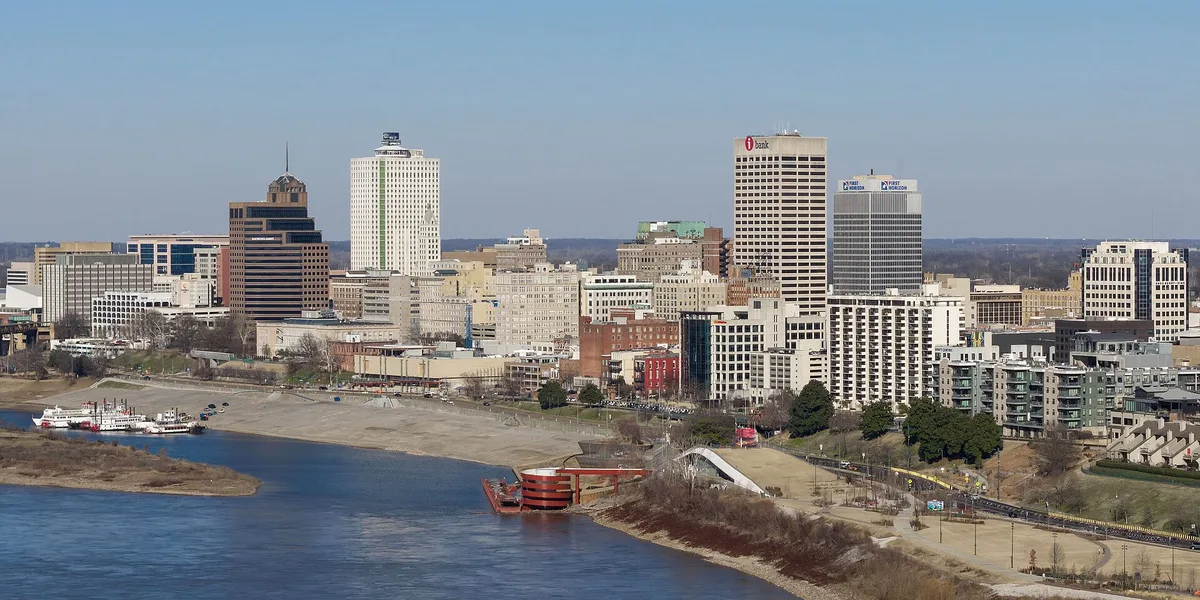
Memphis prices homeownership at a level almost no city of its cultural weight can touch: a median home of $185,000 and a cost of living nearly 20% below the national average as of 2025, with Tennessee’s zero state income tax on top. The economy moves the world’s packages — FedEx ships roughly 6 million a night through Memphis International Airport — alongside a growing UPS hub and St. Jude Children’s Research Hospital. The culture needs no introduction: birthplace of the blues, home of Elvis, capital of soul food. The counterweights are equally outsized: a crime index of 248 and D+-rated schools make neighborhood and district selection the single most important decision a mover makes here. This guide treats both sides — the bargain and its conditions — with the candor they deserve.
Quick Answer — Is Memphis Worth Moving To?
Memphis is a city of genuine contrasts — extraordinary cultural depth and a very low cost of living on one side, and serious challenges around crime, public school quality, and urban disinvestment on the other. Known for the blues, soul food, FedEx, and St. Jude Children’s Research Hospital, Memphis delivers an authentic American city experience at a price point that is almost unmatched among cities its size. It’s an especially strong fit for logistics and healthcare professionals, those seeking homeownership at accessible prices, and anyone drawn to one of the richest music and culinary traditions in the country — though the crime rate and the importance of neighborhood selection require honest attention from anyone considering a move.
At a Glance: Memphis by the Numbers (2025)
| Metric | Memphis |
|---|---|
| Population | ~620,000 (city); ~1.3M (metro) |
| Median home price | $185,000 |
| Cost of living index | 82 (U.S. avg = 100) |
| Median household income | $48,000 |
| Unemployment rate | 4.8% |
| Average commute | 23 minutes |
| Walk Score | 35/100 |
| Niche overall grade | C+ |
| Crime index | 248 (U.S. avg = 100; lower = safer) |
| School district grade | D+ |
| Average summer high | 92°F |
| Average winter low | 31°F |
| Annual sunshine days | 218 |
Memphis’s cost of living index of 82 — nearly 20% below the national average — is the headline number that draws budget-conscious relocators, and the median home price of $185,000 represents genuine homeownership accessibility that is difficult to find in any other city of Memphis’s cultural and economic profile. The crime index and school district grade require candid discussion and are addressed directly in the relevant sections below.
Cost of Living in Memphis
As of 2025, Memphis has one of the lowest costs of living of any major American city — a cost of living index of approximately 82, nearly 20% below the national average, according to BestPlaces/Sperling’s. Housing drives the affordability story: the median home price of $185,000 makes homeownership accessible to a working- and middle-class population in ways that most American cities no longer offer. Groceries run about 5% below the national average, utilities are moderate (air conditioning costs are meaningful in Memphis summers), and transportation is car-dependent but inexpensive. Healthcare costs are near the national average, with Methodist Le Bonheur and Baptist Memorial providing strong local systems alongside the nationally renowned St. Jude Children’s Research Hospital. Tennessee has no state income tax on earned wages — a significant financial advantage that effectively increases take-home pay compared to most states — though Tennessee does impose a sales tax of 9.75% (state plus typical local rate), among the highest in the country, which is the primary tax trade-off to understand before relocating.
Housing Market Snapshot
Memphis offers some of the most accessible homeownership of any major American city. The median home price sits at approximately $185,000 as of 2025, with solid single-family homes available in desirable neighborhoods like East Memphis and Germantown for $250,000–$400,000, according to Zillow and Realtor.com. Renters face a very affordable market: one-bedroom apartments average $950–$1,150 per month, and two-bedrooms typically run $1,100–$1,400. The market is generally buyer-friendly, with inventory available and negotiating room in most price ranges. Newcomers are strongly advised to research specific neighborhoods carefully — price variation across Memphis is dramatic, and neighborhood selection is more consequential here than in most cities.
## Jobs and EconomyMemphis’s economy is anchored by two industries that give it unusual national importance: logistics and healthcare. FedEx, headquartered in Memphis and operating the world’s largest cargo airport through Memphis International, is the city’s dominant private employer with over 30,000 local employees. UPS operates one of its largest hub facilities in the Memphis area, adding thousands more logistics and operations jobs. Together with the Tennessee Department of Transportation and a cluster of third-party logistics companies that have located near the airport, Memphis has positioned itself as America’s distribution capital — a role that generates stable employment across a range of skill levels. In healthcare, St. Jude Children’s Research Hospital is one of the most important pediatric cancer research institutions in the world, and its ongoing $12.9 billion expansion plan through the late 2020s represents one of the largest single investments in Memphis’s history. Methodist Le Bonheur Healthcare, Baptist Memorial Health Care, and Regional One Health add further healthcare employment depth. As of 2025, Memphis’s unemployment rate sits at approximately 4.8% — above the national average, reflecting structural employment challenges in parts of the city — but the logistics and healthcare corridors offer strong employment for qualified candidates. The median household income of $48,000 reflects the city’s economic diversity and the presence of a significant working-class population alongside higher-earning professionals. Tennessee’s lack of a state income tax effectively raises the net take-home value of Memphis salaries compared to neighboring states.
Neighborhoods in Memphis: Where to Live
Memphis is a city where neighborhood selection is genuinely consequential — the variation in safety, school quality, and quality of life between Memphis’s best and most challenged neighborhoods is among the widest of any American city. The neighborhoods below represent the areas most consistently recommended for newcomers and relocating professionals, with honest notes on character and trade-offs. Real estate agents and local Facebook groups are invaluable resources for drilling deeper into specific blocks.
East Memphis is the most established and consistently desirable area for relocating professionals and families — a mature, tree-canopied district of mid-century ranches, colonial revivals, and brick Tudor homes stretching east from the medical district along Poplar Avenue. East Memphis anchors the city’s best retail and restaurant corridor, is home to several of the city’s top private schools, and offers the combination of safety, convenience, and neighborhood character that most newcomers prioritize. Median home prices in East Memphis run $250,000–$450,000, and the area consistently attracts physicians, executives, and longtime Memphis families.
Germantown is technically a separate incorporated city immediately east of Memphis, and it functions as the metro’s premier family suburb — with top-rated Germantown Municipal School District schools (among the best in Tennessee), newer construction, well-maintained commercial corridors, and crime rates dramatically below the Memphis citywide average. Many Memphis-area employers specifically locate offices and operations near the Germantown corridor to attract suburban professionals. Median home prices run $350,000–$600,000, and the quality-of-life metrics here are competitive with any suburb in the mid-South.
Midtown Memphis is the city’s most culturally vibrant urban neighborhood — a dense, walkable-by-Memphis-standards community of Victorian homes, bungalows, and apartments clustered around Overton Park, Cooper-Young, and the Overton Square entertainment district. Midtown draws artists, young professionals, LGBTQ+ residents, and longtime Memphians who value independent restaurants, the Brooks Museum of Art, and the Memphis Zoo. It is the closest Memphis gets to a Brooklyn-style urban neighborhood, with significantly more character and independent business culture than the eastern suburbs. Crime varies meaningfully by block, and newcomers are advised to research specific streets.
Collierville mirrors Germantown as a premier family suburb on the eastern side of the metro — a well-planned community with excellent Collierville Schools (a separate municipal district), newer housing stock, and a charming historic town square that gives it more community character than typical American suburbs. The commute to FedEx headquarters and the airport logistics corridor is manageable, and the combination of school quality and new construction draws significant demand from relocating families with children.
## Schools, Safety, and Quality of LifeSchools: Shelby County Schools — the merged district serving Memphis and most of the surrounding county — earns a D+ from Niche, reflecting persistent challenges that are a significant consideration for families with school-age children. The district has struggled with funding, staffing, and student outcome metrics despite ongoing reform efforts. The practical response for most relocating families is to look at the municipality-specific school districts: Germantown Municipal Schools and Collierville Schools both earn A ratings from Niche and operate independently from Shelby County Schools. Several strong private and charter school options — including St. Mary’s Episcopal School, Briarcrest Christian School, and Memphis University School — serve families who remain in the Memphis city proper. The University of Memphis and Rhodes College are both strong higher-education institutions within the metro.
Safety: Memphis’s crime rate is among the highest of any major American city, and honesty requires saying so directly. The city’s crime index of approximately 248 — more than twice the national average — reflects both violent and property crime rates that are elevated citywide, according to FBI Uniform Crime Reports. At the same time, Memphis’s crime is highly concentrated geographically: neighborhoods like East Memphis, Germantown, Collierville, and Midtown’s best blocks experience crime rates far below the citywide average, while certain north and south Memphis corridors account for a disproportionate share of violent incidents. Neighborhood selection is the single most consequential decision for newcomers, and consulting crime mapping tools (CrimeMapping.com, local MPD data) for specific addresses is strongly recommended before committing to a lease or purchase.
Quality of Life: For those who land in the right neighborhood, Memphis offers genuine quality of life driven by cultural richness, affordability, and a healthcare infrastructure that punches well above the city’s size. Methodist Le Bonheur, Baptist Memorial, and St. Jude provide exceptional healthcare. Overton Park — 342 acres in the heart of Midtown — houses the Memphis Zoo, the Brooks Museum of Art, a golf course, and one of the finest urban old-growth forests in the eastern United States. The Memphis Grizzlies (NBA) and Memphis Tigers (college basketball) provide a serious sports culture, and Beale Street’s live music scene remains one of the most authentic in the country.
Climate and Weather in Memphis
Memphis sits in the mid-South and experiences a humid subtropical climate — hot, muggy summers and mild winters with occasional ice. Average summer highs reach 92°F, with heat index values regularly exceeding 100°F from late June through August, and the humidity makes outdoor midday activity uncomfortable during the peak summer weeks. Winters are mild compared to most of the Midwest and Northeast: average January lows reach 31°F, snow accumulation is modest in most years, and temperatures above 50°F are common even in January. The transitional seasons — spring and fall — are Memphis at its finest: mild temperatures, relatively low humidity, and the flowering of the city’s abundant dogwoods and redbuds in March and April. Memphis sits within the tornado-prone mid-South corridor, and severe thunderstorm and tornado watches are a routine part of spring weather. Annual sunshine totals approximately 218 days per year, according to WeatherSpark and NOAA data. For housing decisions, central air conditioning is a non-negotiable necessity, and energy costs from June through September are meaningfully above the national average.
Things to Do in Memphis: Top Attractions and Day Trips
Memphis’s cultural identity is one of the most authentic and distinctive of any American city — rooted in blues, soul, and rock and roll history that is not curated nostalgia but a living tradition maintained by local musicians, restaurants, and institutions. The food alone — Memphis-style dry-rub BBQ, hot tamales, fried catfish, soul food — is worth serious attention from any relocator, and the concentration of music history within a few blocks of Beale Street is genuinely extraordinary.
-
Beale Street — The three-block entertainment district that gave America the blues, Beale Street runs from the Mississippi River into downtown Memphis and remains one of the most electrically charged public spaces in American music culture. Live blues, soul, and rock performances happen every night of the week in clubs ranging from historic institutions like B.B. King’s Blues Club to smaller venues where unknown musicians play with professional craft. It is simultaneously a tourist destination and a genuine cultural institution — and the distinction matters because the music is real.
-
Graceland — Elvis Presley’s home from 1957 until his death in 1977, Graceland is one of the most visited private residences in the United States and a genuinely moving experience for anyone with even passing interest in American popular culture. The mansion tour — preserving the original 1970s decor in all its shag-carpeted, mirror-ceilinged glory — is fascinating as cultural history, and the adjacent Elvis Presley’s Memphis entertainment complex provides context for his musical influence. Plan for two to three hours minimum; book tickets in advance.
-
National Civil Rights Museum at the Lorraine Motel — Built around the Lorraine Motel where Dr. Martin Luther King Jr. was assassinated on April 4, 1968, the National Civil Rights Museum is one of the finest museums in the United States — a comprehensive and emotionally powerful chronicle of the American civil rights movement from slavery through the present day. The preserved motel rooms where Dr. King spent his final hours are accessible as part of the tour. Essential for anyone living in Memphis; plan for three to four hours. Admission is charged.
-
Memphis Zoo & Overton Park — The Memphis Zoo, consistently ranked among the top zoos in the country, sits within Overton Park’s 342 acres of urban parkland in the heart of Midtown. The zoo houses over 3,500 animals including giant pandas, and the surrounding park — with its old-growth forest, golf course, and Brooks Museum — makes a full day of family-friendly activity in one of the finest urban parks in the South. Zoo admission is charged; the park itself is free.
-
The Rendezvous & Central BBQ — Memphis BBQ deserves its own category in any guide to the city, and the two institutions that define it most represent a mandatory eating education for anyone who moves here. Charlie Vergos’ Rendezvous (downtown, in an alley off Monroe Avenue) has been serving dry-rub ribs in a cavernous basement since 1948 and remains the most iconic BBQ dining experience in Memphis. Central BBQ offers a more accessible, multiple-location introduction to the dry-rub style for everyday meals. Eating both within your first week of arrival is not optional.
For day trips, Oxford, Mississippi (1.5 hours south) is one of the most charming small university towns in the South — home to the University of Mississippi, Square Books, and a food scene that punches well above its size. Jackson, Tennessee (1.5 hours northeast) is a regional hub with its own music history and a comfortable day trip. Shiloh National Military Park (1.5 hours east) is one of the most significant and moving Civil War battlefield sites in the country, set in a beautifully preserved riverside landscape that rewards a full day’s visit.
## Moving to Memphis: Your 90-Day Checklist90–60 days before:
- Research neighborhoods carefully — East Memphis, Germantown, Midtown, and Collierville each offer distinct trade-offs; consult crime mapping tools for specific addresses
- Get at least three moving company quotes (PODS, Allied, HireAHelper, or local movers)
- Research school options — if schools are a priority, Germantown and Collierville municipal districts and private school options are worth evaluating before choosing a neighborhood
- Note Tennessee has no state income tax on earned wages — a meaningful financial benefit
- Begin decluttering — book a self-storage unit if needed
60–30 days before: 6. Confirm moving company and lock in dates 7. Transfer medical and dental records; Methodist Le Bonheur and Baptist Memorial are strong local systems 8. Notify employer, bank, and subscriptions of address change 9. Research utility providers (Memphis Light, Gas and Water) and set up accounts 10. Arrange short-term lodging if permanent housing won’t be ready immediately
First 30 days after arrival: 11. Transfer driver’s license and vehicle registration to Tennessee 12. Register to vote at new address 13. Explore Beale Street, Overton Park, and the National Civil Rights Museum using the attractions section above 14. Join local Facebook groups or Nextdoor for your neighborhood 15. File change of address with USPS if not already done
## Frequently Asked Questions About Living in MemphisQ: Is Memphis a good place to live? A: Memphis earns a C+ from Niche overall, which reflects both its genuine strengths — extraordinary affordability, cultural richness, FedEx and St. Jude as world-class employers, Tennessee’s zero income tax — and its serious challenges around crime and public school quality. For professionals and families who choose the right neighborhood and school option, Memphis delivers a quality of life that substantially exceeds what its headline statistics suggest. The key is going in with clear eyes and doing the neighborhood research that the data requires.
Q: What is the cost of living in Memphis? A: Memphis’s cost of living index of approximately 82 places it nearly 20% below the national average — one of the most affordable major cities in the country. The median home price of $185,000 represents homeownership accessibility that is genuinely rare among cities of Memphis’s size and cultural profile. Tennessee’s no-income-tax policy adds further financial appeal, though the state’s 9.75% combined sales tax rate is among the highest nationally and is the primary offsetting tax consideration.
Q: Is Memphis safe? A: Memphis’s citywide crime rate is among the highest of any major American city, and that reality deserves honest acknowledgment. The crime index of approximately 248 reflects elevated rates of both violent and property crime across the metro. However, crime is highly concentrated geographically: neighborhoods like East Memphis, Germantown, Collierville, and well-maintained Midtown blocks report crime rates far below the citywide average. Neighborhood selection — informed by current crime mapping data — is the most important single decision for relocating to Memphis safely.
Q: What are the best neighborhoods in Memphis? A: East Memphis is the most consistently recommended area for relocating professionals — safe, convenient, and well-established. Germantown and Collierville offer the metro’s best suburban family living with top-rated independent school districts. Midtown — particularly the Cooper-Young and Overton Square areas — provides the most distinctive urban character and cultural life for those who do their neighborhood research carefully.
Q: What is the job market like in Memphis? A: Memphis’s job market is anchored by two world-class sectors: logistics (FedEx world headquarters, major UPS hub, extensive third-party logistics industry) and healthcare (St. Jude Children’s Research Hospital, Methodist Le Bonheur, Baptist Memorial). Together these sectors provide stable, career-building employment across a range of skill levels and compensation bands. The city’s unemployment rate of approximately 4.8% is above the national average but reflects structural challenges in parts of the city rather than conditions in the professional employment corridors.
Q: How far is Memphis from Nashville? A: Memphis is approximately 210 miles west of Nashville — a 3 to 3.5-hour drive via I-40. There is no direct passenger rail service between the two cities. Both cities are in the Central Time Zone and share Tennessee’s zero state income tax, but they have very different economic profiles and cultural identities: Nashville is the faster-growing, more expensive, more nationally visible city, while Memphis offers greater affordability and deeper cultural roots in blues and soul music history.
Memphis vs. Nearby Cities
Nashville, 210 miles east, is the high-growth, higher-cost Tennessee alternative — a city that has seen dramatic appreciation in both housing prices and national profile over the past decade, offering more in-migration momentum and a more diversified economy but at a meaningfully higher cost of living. Little Rock, Arkansas (130 miles west), is a smaller state capital with lower costs and a quieter pace but significantly fewer major employers and cultural anchors. Jackson, Mississippi (200 miles south), is a smaller, more economically challenged city that offers some of the lowest housing costs in the country but with more limited employment and quality-of-life infrastructure. For full profiles of these cities, see our guides to Nashville, Little Rock, and Jackson.
Sources and Data Notes
Data for this guide was drawn from the U.S. Census Bureau American Community Survey (2024), Bureau of Labor Statistics (2025), Niche.com, BestPlaces.net/Sperling’s Cost of Living Index, FBI Uniform Crime Reports, WeatherSpark, Walk Score, and Zillow/Realtor.com. Statistics reflect 2024–2025 data where available.