
Living in Raleigh, NC: The Complete 2026 Relocation and Visitor Guide
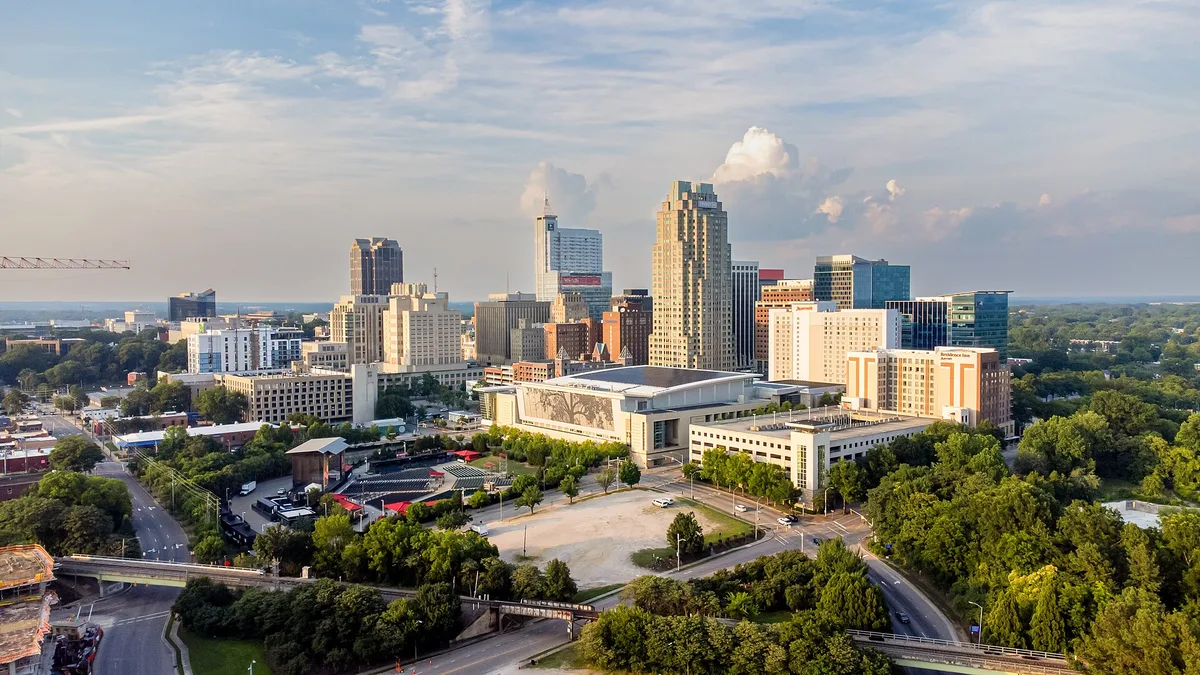
Raleigh combines an A Niche grade, a crime index 38% below the national average, and a cost of living just 8% above it — the numbers behind a decade of sustained in-migration to North Carolina’s capital of nearly 500,000. The Research Triangle supplies the employment depth: NC State in the city, Duke and UNC nearby, and Research Triangle Park — one of the world’s largest planned research campuses — at the doorstep, holding unemployment at 3.4% across tech, life sciences, and government. Growth has collected its fees: real traffic, and a $425,000 median home that has narrowed the affordability gap of five years ago. For tech and biotech professionals, families chasing schools, and remote workers leaving coastal costs, this guide weighs what’s left of the bargain — which is still considerable.
Quick Answer — Is Raleigh Worth Moving To?
Raleigh is one of the most compelling relocation destinations in the country right now, known for its fast-growing tech and life sciences job market, excellent public schools in many parts of the metro, a cost of living significantly below comparable cities on the coasts, and a mild four-season climate with real spring and fall. It’s an especially strong fit for tech and biotech professionals, families seeking quality schools at accessible housing prices, and remote workers escaping high-cost metros — though the city’s rapid growth has brought real traffic challenges, and housing appreciation has meaningfully narrowed the affordability gap of five years ago.
At a Glance: Raleigh by the Numbers (2025)
| Metric | Raleigh |
|---|---|
| Population | ~490,000 (city); ~1.5M (metro) |
| Median home price | $425,000 |
| Cost of living index | 108 (U.S. avg = 100) |
| Median household income | $81,000 |
| Unemployment rate | 3.4% |
| Average commute | 26 minutes |
| Walk Score | 34/100 |
| Niche overall grade | A |
| Crime index | 62 (U.S. avg = 100; lower = safer) |
| School district grade | B+ |
| Average summer high | 90°F |
| Average winter low | 30°F |
| Annual sunshine days | 213 |
Raleigh’s cost of living index of 108 — just 8% above the national average — is one of the most compelling numbers for any major metro that offers this combination of employment depth, school quality, and quality of life. The crime index of 62 reflects a meaningfully safer-than-average city, and the A Niche grade captures the consistent livability that has driven a decade of sustained in-migration.
Cost of Living in Raleigh
As of 2025, Raleigh’s cost of living sits at approximately 108 — modestly above the national average but dramatically below the metros that are supplying the most of its in-migrants: the Bay Area (245), Boston (162), Seattle (158), and Washington DC (152). Housing has appreciated substantially since 2019, driven by strong in-migration and tech-sector expansion, but the median home price of $425,000 remains significantly below comparable-quality tech metros. Groceries run about 5% above the national average. Utilities are moderate, with air conditioning costs elevated in summer. Transportation costs are significant — Raleigh is primarily car-dependent, though GoRaleigh bus service and the emerging GoTriangle regional network are expanding. Healthcare costs are near the national average. North Carolina’s flat 4.5% income tax is among the more moderate state rates nationally, and Raleigh’s overall tax burden is well below states like California, New York, or Massachusetts.
Housing Market Snapshot
Raleigh’s housing market has moderated somewhat from its 2021–2022 peak but remains competitive as of 2025, driven by sustained in-migration and the continued expansion of major tech employers. The median home price is approximately $425,000, with desirable neighborhoods in North Raleigh, Cary, and Apex frequently exceeding $550,000. Renters face a competitive but not extreme market: one-bedroom apartments average $1,450–$1,800 per month, and two-bedrooms typically run $1,800–$2,400. Inventory has improved from pandemic-era lows, and buyers have more negotiating room than in 2021–2022. Data sourced from Zillow and Realtor.com.
## Jobs and EconomyRaleigh’s economic transformation over the past two decades has been driven primarily by Research Triangle Park (RTP) — a 7,000-acre planned research campus between Raleigh and Durham that houses the North Carolina operations of more than 300 companies, including Cisco, IBM, Biogen, GlaxoSmithKline, and Lenovo’s North American headquarters. As of 2025, Raleigh’s unemployment rate sits at approximately 3.4%, according to the Bureau of Labor Statistics — below the national average and reflecting a professional workforce that has grown substantially with tech-sector in-migration. The median household income of $81,000 reflects the well-compensated tech and biotech workforce alongside the government and education sectors that anchor the capital-city economy. NC State University is a top employer and a leading engineering and agricultural research institution. Citrix, Red Hat (IBM), Bandwidth, Epic Games, and Apple (which announced a major East Coast campus in the Research Triangle) represent a deepening private-sector tech presence. The dominant industries are technology and software, pharmaceutical and life sciences, state government, higher education, and financial services.
Neighborhoods in Raleigh: Where to Live
Raleigh is a sprawling, car-dependent city by the standards of older Eastern metros, and its neighborhoods reflect successive waves of suburban development that give the metro a range of character and price points. The city’s most distinctive urban neighborhoods are concentrated in the downtown core and the Midtown corridor, while the northern and western suburbs offer the best combination of school quality and family amenity.
Downtown Raleigh / Glenwood South is the city’s most walkable and urban area — a revitalized downtown of converted warehouses, modern apartment towers, and renovated historic buildings centered on Fayetteville Street and the Glenwood South entertainment corridor. The Raleigh Convention Center, PNC Arena, and the city’s best restaurant concentration anchor the area. Condos and apartments attract young professionals and empty-nesters who want urban density in a city that otherwise sprawls considerably. Crime in the immediate downtown area is higher than suburban Raleigh but comparable to any American city center.
North Hills / Midtown sits about four miles north of downtown along Six Forks Road and has emerged as Raleigh’s most vibrant mixed-use suburban center — a walkable-by-Raleigh-standards concentration of restaurants, shops, and apartments anchored by the North Hills development. Proximity to RTP via I-440 and I-540 makes it highly practical for tech-corridor commuters, and the neighborhood’s balance of urban amenity and suburban convenience draws a broad demographic from young professionals to families.
Cary is technically a separate municipality — the most populous incorporated town in North Carolina — but functions as Raleigh’s premier western suburb and one of the most consistent performers on national “best places to live” lists. Cary’s combination of excellent schools (a mix of Wake County and Cary-area options), well-maintained infrastructure, low crime, and proximity to RTP employers has made it the destination of choice for many tech-sector relocators. Median home prices run $450,000–$650,000, and the quality-of-life metrics are among the best in the metro.
Apex / Holly Springs represent the fast-growing southwestern edge of the Wake County metro — communities that have expanded rapidly to meet demand from RTP-adjacent employees and families seeking newer construction, more land, and excellent schools at somewhat lower prices than Cary. Both towns have invested in downtowns and greenway systems that give them community character beyond the typical suburb, and both are well-served by Wake County’s highly rated public school system.
## Schools, Safety, and Quality of LifeSchools: Wake County Public School System (WCPSS) earns a B+ from Niche and is consistently one of the largest and better-performing urban-suburban school districts in the Southeast. The district’s magnet school program is among the most extensive in the country, offering science, technology, arts, and language immersion tracks at schools across the county. Individual school ratings vary, and families with specific preferences benefit from researching WCPSS’s magnet application process early. NC State University anchors Raleigh’s higher education landscape with particularly strong programs in engineering, agriculture, textile science, and design. Meredith College, Shaw University, and William Peace University add additional options within the city.
Safety: Raleigh is a notably safe city for its size, with a crime index of approximately 62 compared to the national average of 100, according to FBI Uniform Crime Reports. Both violent and property crime rates are below national averages, and the suburban neighborhoods that attract the most relocators — Cary, North Hills, Apex — report crime rates that are among the lowest in the state. Downtown Raleigh and some south-side neighborhoods have higher crime rates than the suburban average but are not unusual for American city centers of similar size.
Quality of Life: WakeMed Health and UNC Rex Healthcare provide strong local hospital systems, and Duke University Hospital (30 minutes west in Durham) offers world-class academic medical care for complex needs. Raleigh’s greenway system — over 130 miles of off-street trails connecting neighborhoods, parks, and the Neuse River corridor — is one of the finest urban trail networks in the Southeast and reflects a sustained civic investment in outdoor amenity. The North Carolina Museum of Natural Sciences (free, world-class), the NC Museum of Art, and a growing independent restaurant scene give Raleigh genuine cultural depth beyond its government-town reputation.
Climate and Weather in Raleigh
Raleigh’s climate is one of its quiet selling points — a four-season pattern that delivers genuine spring and fall without the brutal winters of the Midwest or Northeast, and summers that are hot and humid but manageable. Average summer highs reach 90°F, with the heat index making late July and August the most demanding weeks of the year for outdoor activity. Winters are mild: average January lows reach 30°F, and meaningful snow accumulation happens in most years but rarely for more than a day or two at a time. Spring arrives early — March brings dogwoods and azaleas to neighborhoods throughout Wake County — and fall extends well into November with comfortable temperatures and foliage color. The region does experience occasional ice storms that can disrupt the city significantly, as Raleigh’s hilly terrain and limited road-treatment infrastructure can make driving hazardous even on small accumulations. Annual sunshine totals approximately 213 days, according to WeatherSpark and NOAA data. Hurricane remnants occasionally bring heavy rain in late summer and early fall, but Raleigh’s inland location buffers it from the direct hurricane impacts that affect coastal NC communities.
Things to Do in Raleigh: Top Attractions and Day Trips
Raleigh’s leisure identity has evolved significantly as the city has grown — from a quiet government town to a genuinely dynamic city with a serious food scene, major-venue live music, professional hockey, and a museum district that is one of the best in the South. The broader Triangle region extends the cultural options considerably, with Durham’s nationally acclaimed food scene and Chapel Hill’s college-town energy both within 30 minutes.
-
NC Museum of Natural Sciences — The largest natural history museum in the Southeast, the NC Museum of Natural Sciences occupies two connected buildings in downtown Raleigh and houses permanent exhibits on paleontology, ecology, geology, and the natural world, including a spectacular six-story glass atrium. Admission to the permanent collection is free, making it one of the best cultural values in any Southern city and a reliable family destination year-round.
-
NC Museum of Art & Museum Park — The North Carolina Museum of Art houses a permanent collection spanning 5,000 years and 40,000 square feet of gallery space, with particular strengths in European paintings and American art. The adjacent 164-acre Museum Park is one of Raleigh’s finest outdoor spaces — a sculptural garden and amphitheater that hosts free outdoor film screenings and concerts from spring through fall. Museum admission is free for the permanent collection.
-
Pullen Park — One of the oldest continuously operating amusement parks in the United States (since 1887), Pullen Park offers a beloved community green space adjacent to NC State’s campus with a carousel, paddleboats, a miniature train, and a large aquatic center. It is the quintessential Raleigh family destination — unpretentious, affordable, and genuinely beloved by generations of local families. Open year-round; most attractions have a modest fee.
-
Glenwood South & Warehouse District — Raleigh’s most concentrated dining and nightlife corridor runs along Glenwood Avenue south of Wade Avenue and through the adjacent Warehouse District — a mix of converted industrial buildings and modern construction housing some of the city’s best restaurants, cocktail bars, and live music venues. A Friday or Saturday evening on Glenwood South provides the best single introduction to Raleigh’s emerging urban energy and the demographic transformation the city has undergone over the past decade.
-
William B. Umstead State Park — A 5,577-acre state park bisected by I-40 on Raleigh’s northwestern edge, Umstead is one of the finest urban wilderness areas in the eastern United States — forested trails, three lakes, and a network of equestrian paths within 20 minutes of downtown. The park absorbs millions of visits per year and remains genuinely peaceful on weekday mornings. Free to enter; parking lots fill on weekend afternoons in good weather.
For day trips, Durham (30 minutes west) is the natural first destination for Raleigh residents — a city that has undergone its own remarkable transformation, with a nationally acclaimed food scene, the American Tobacco Campus, and the Duke Lemur Center among its standout offerings. Chapel Hill (30 minutes southwest) offers the classic college-town experience centered on UNC’s beautiful campus and Franklin Street. The North Carolina Outer Banks (3 hours east) provide one of the East Coast’s most dramatic barrier island landscapes, with Cape Hatteras National Seashore and historic Ocracoke Island worth a full weekend visit.
## Moving to Raleigh: Your 90-Day Checklist90–60 days before:
- Research neighborhoods and set housing budget — consider Cary, Apex, and North Hills for the best combination of schools, safety, and RTP access
- Get at least three moving company quotes (PODS, Allied, HireAHelper, or local movers)
- Research Wake County Public Schools magnet program applications — deadlines are early in the calendar year
- Review North Carolina’s 4.5% flat income tax
- Begin decluttering — book a self-storage unit if needed
60–30 days before: 6. Confirm moving company and lock in dates 7. Transfer medical and dental records; WakeMed and UNC Rex are strong local options 8. Notify employer, bank, and subscriptions of address change 9. Research utility providers (Duke Energy, City of Raleigh water) and set up accounts 10. Arrange short-term lodging if permanent housing won’t be ready immediately
First 30 days after arrival: 11. Transfer driver’s license and vehicle registration to North Carolina 12. Register to vote at new address 13. Explore the Museum District downtown and Umstead State Park using the attractions section above 14. Join local Facebook groups or Nextdoor for your neighborhood 15. File change of address with USPS if not already done
## Frequently Asked Questions About Living in RaleighQ: Is Raleigh a good place to live? A: Raleigh earns an A from Niche and consistently ranks among the best large cities in the Southeast and the country — recognition reflecting its combination of a fast-growing tech economy, below-average crime, reasonable cost of living for its employment profile, mild climate, and sustained civic investment in parks, museums, and infrastructure. As of 2025, the honest trade-offs are a housing market that has gotten meaningfully more expensive since 2019, significant traffic congestion on the I-440 beltline and I-40, and a city that remains car-dependent despite ongoing transit investment.
Q: What is the cost of living in Raleigh? A: Raleigh’s cost of living index of approximately 108 places it about 8% above the national average — one of the most competitive cost profiles of any major tech-economy city in the country. The median home price of $425,000 and one-bedroom rents of $1,450–$1,800 per month are well below comparable metros like Seattle, Boston, Austin, or Denver. North Carolina’s 4.5% flat income tax is moderate by national standards, and the overall tax burden is significantly lower than the Northeast or California metros from which many Raleigh newcomers are relocating.
Q: Is Raleigh safe? A: Raleigh is a relatively safe city, with a crime index of approximately 62 compared to the national average of 100. Both violent and property crime rates are below national averages, and the suburban areas that attract the most relocating families — Cary, Apex, North Hills, and the northern Raleigh suburbs — report crime rates among the lowest in the state. Downtown Raleigh and some south-side neighborhoods have higher rates more typical of American city centers, but the overall picture is positive relative to most cities of Raleigh’s size.
Q: What are the best neighborhoods in Raleigh? A: Cary is the most consistent performer for families — excellent schools, low crime, RTP access, and a well-maintained suburban environment. North Hills/Midtown offers the best balance of urban amenity and suburban convenience for young professionals. Apex and Holly Springs provide newer construction and strong schools at somewhat more accessible prices. Downtown and Glenwood South appeal to those who prioritize walkability and the city’s emerging urban culture.
Q: What is the job market like in Raleigh? A: Raleigh’s job market is one of the most dynamic in the Southeast, with a 3.4% unemployment rate reflecting a strong and growing economy. Research Triangle Park anchors a world-class cluster of tech, pharmaceutical, and life sciences employers including Cisco, IBM, Biogen, and GlaxoSmithKline. NC State University provides research and education employment, and the private tech sector — including Red Hat, Bandwidth, Epic Games, and Apple’s planned East Coast campus — continues to expand. The Research Triangle’s reputation as a remote-work-friendly region has also attracted significant in-migration of employees working for companies headquartered elsewhere.
Q: How far is Raleigh from Charlotte? A: Raleigh is approximately 165 miles southwest of Charlotte — a 2.5-hour drive via I-85 or US-1/US-74 in normal conditions. Amtrak’s Carolinian service connects Raleigh and Charlotte with one daily train in each direction, taking approximately 3 hours. The two cities are the anchors of North Carolina’s economy, with Raleigh focused on tech and government and Charlotte on finance and energy — and many North Carolina residents consider the two metros as complementary options in the same state’s job market.
Raleigh vs. Nearby Cities
Durham, 30 minutes west, is Raleigh’s closest peer and natural complement — a smaller, more eclectic city with a nationally acclaimed food scene, Duke University’s employment and cultural anchor, and housing costs running 10–15% below Raleigh’s median while sharing the same Research Triangle economy. Chapel Hill, 30 minutes southwest, provides the classic college-town experience anchored by UNC and offers the metro’s highest-rated school district (Chapel Hill-Carrboro City Schools) at the highest housing prices in the Triangle. Charlotte, 2.5 hours southwest, is North Carolina’s largest city and financial hub — a major banking and logistics economy with a similar cost of living but very different character from the Research Triangle’s academic and tech culture. For full profiles of these cities, see our guides to Durham, Chapel Hill, and Charlotte.
Sources and Data Notes
Data for this guide was drawn from the U.S. Census Bureau American Community Survey (2024), Bureau of Labor Statistics (2025), Niche.com, BestPlaces.net/Sperling’s Cost of Living Index, FBI Uniform Crime Reports, WeatherSpark, Walk Score, and Zillow/Realtor.com. Statistics reflect 2024–2025 data where available.