
Living in Jacksonville, NC: The Complete 2026 Relocation and Visitor Guide
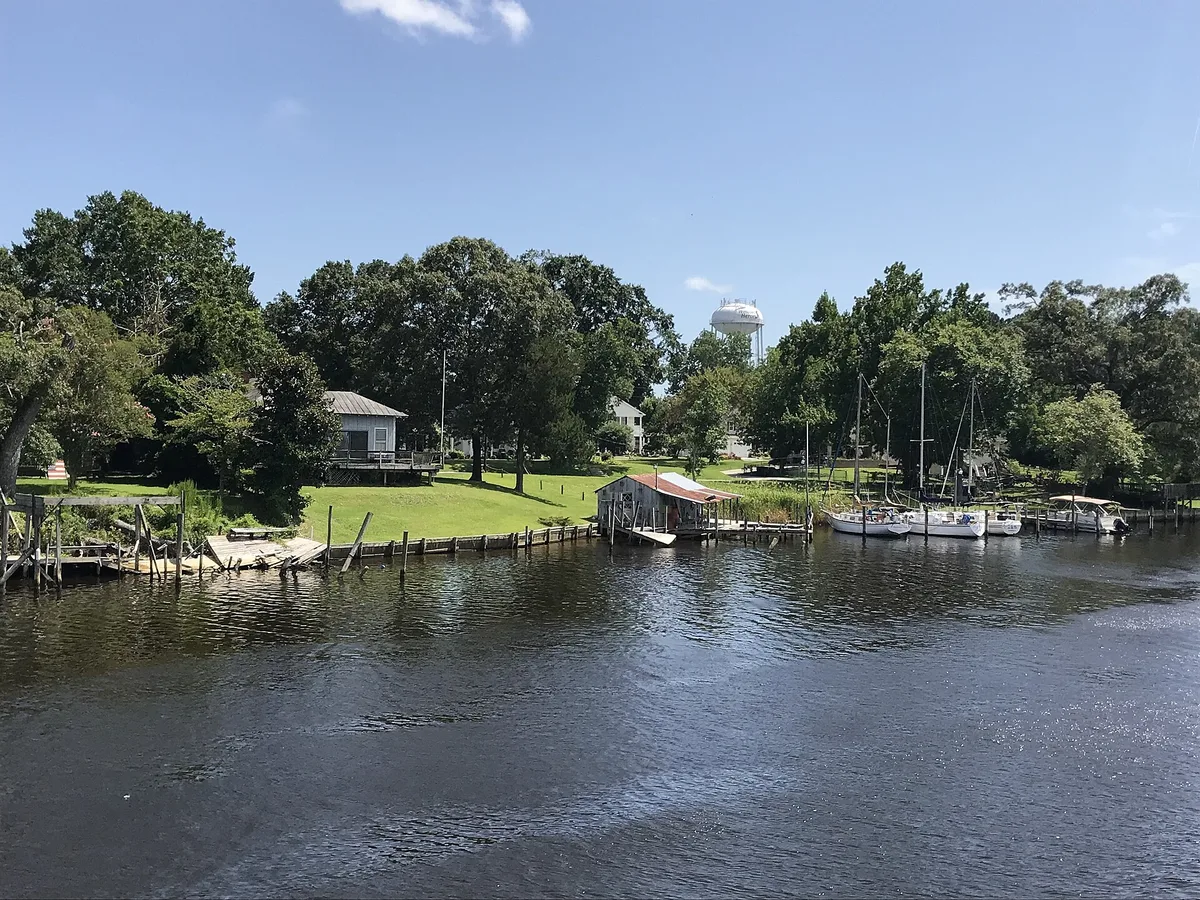
Jacksonville, North Carolina carries a cost of living index of 86.3 — about 14% below the national average — anchored by a median home price near $260,000, according to Redfin and BestPlaces.net data from 2025. The economy runs on Marine Corps Base Camp Lejeune and Marine Corps Air Station New River, which together make the federal government responsible for roughly 26% of all local jobs. This guide serves the PCS (permanent change of station — a military move) family with orders in hand, the civilian job-seeker weighing an affordable coastal city, and the visitor scouting Bear Island’s ferry-only beach before deciding anything at all. Whichever reader you are, Jacksonville’s identity is inseparable from Camp Lejeune, and every practical decision here — where to rent, which gate to live near, how to plan a hurricane season — runs through that fact.
Quick Answer — Is Jacksonville Worth Moving To?
Jacksonville, NC is a good fit for military families, remote workers chasing an affordable coast, and civilians willing to work around a car-dependent layout — Niche grades it a B overall, with a cost of living 14% below the national average and a median home price of $260,000 as of 2025. The job market leans heavily on federal defense spending, with 3.7% unemployment as of 2024 and a median household income of $57,697, below the national figure but stretched further by the low cost of living. It’s an especially strong match for anyone stationed at Camp Lejeune or MCAS New River, or drawn to nearby beaches like Bear Island and Emerald Isle, though the Walk Score of just 24 out of 100 means you will need a car for nearly everything, and the transient military population keeps roots here shallower than in most towns this size.
At a Glance: Jacksonville by the Numbers (2026)
| Metric | Jacksonville, NC |
|---|---|
| Population | 72,879 |
| Median home price | $260,000 |
| Cost of living index | 86.3 (U.S. avg = 100) |
| Median household income | $57,697 |
| Unemployment rate | 3.7% |
| Average commute | 15 minutes |
| Walk Score | 24/100 |
| Niche overall grade | B |
| Crime index | 152 (U.S. avg = 100; lower = safer) |
| School district grade | B |
| Average summer high | 88.5°F |
| Average winter low | 52.9°F* |
| Annual sunshine days | 214 |
*Table reflects the January average high of 52.9°F per WeatherSpark; see Climate section for the average low.
Jacksonville costs less to live in than nearly every East Coast city its size, and a 15-minute average commute means you keep more of your evening than most Americans do. The trade-off shows up in the Walk Score: at 24/100, this is a drive-everywhere city, not a stroll-to-dinner one.
Cost of Living in Jacksonville
Jacksonville’s cost of living index sits at 86.3 as of 2025, according to BestPlaces.net — meaning everyday expenses run about 14% below the national average. Housing drives most of that gap: the median home price of $260,000 is roughly 34% below the national median, per Redfin’s 2025 sold-price data, and the market stays affordable in part because so many buyers and renters are working from a BAH (Basic Allowance for Housing) stipend that effectively caps what the local market will bear. A one-bedroom apartment runs $1,000–$1,400 a month and a two-bedroom runs $1,200–$1,700, figures that would barely cover a studio in many mid-Atlantic metros. Groceries, utilities, and healthcare in Jacksonville track close to the national baseline — the discount is concentrated in housing, not everyday spending. North Carolina levies a flat 4.5% state income tax as of 2025, a modest bite that still leaves Jacksonville’s overall affordability well ahead of coastal peers like Wilmington or the Outer Banks towns.
Housing Market Snapshot
The median sold home price is approximately $260,000 as of mid-2025, per Rocket Homes, with modest year-over-year appreciation of 4–6% driven partly by remote workers discovering the coast. One-bedroom rents run $1,000–$1,400 a month; two-bedrooms run $1,200–$1,700. Most residents rent rather than own, reflecting the transient nature of military life, and the market favors buyers willing to move quickly on well-priced listings near the base gates.
## Jobs and EconomyMarine Corps Base Camp Lejeune and Marine Corps Air Station New River are Jacksonville’s twin economic anchors, together with Onslow Memorial Hospital, Onslow County Schools, and the local Walmart-led retail sector rounding out the top five employers. The government accounts for 26% of all jobs in the city, according to local economic data, making Jacksonville’s employment picture unusually dependent on federal defense spending compared to most cities its size. Unemployment stood at 3.7% as of 2024, per the Bureau of Labor Statistics, and median household income was $57,697 — below the national median, though the gap narrows considerably once you factor in the 14%-below-average cost of living. Healthcare and construction are the fastest-growing civilian sectors, and remote work is increasingly pulling in coastal-lifestyle seekers who don’t need to be near the base at all. Long-term job growth is projected at 27.3% over the next decade, below the national average, a direct reflection of an economy still tied to one dominant federal employer rather than a diversified private sector.
Neighborhoods in Jacksonville: Where to Live
Jacksonville’s neighborhoods sort mainly by distance to the base gates and by how established the streets feel, with four areas covering most of what newcomers consider.
Northwoods is one of the city’s oldest, most established neighborhoods, with tree-lined streets and mid-century homes. It’s best for families and longtime residents who want a quiet, well-maintained area close to shopping and schools, with housing mostly single-family ranch and traditional homes.
Brynn Marr mixes single-family homes, townhouses, and apartments, and it’s the top pick for military families thanks to its proximity to the Camp Lejeune gates. It’s affordable and accessible, with mature trees and a strong sense of community built around the base’s rotating population.
Piney Green sits suburban and northwest of downtown, with newer construction alongside established homes and easy access to MCAS New River. It suits families who want good schools and a more open, less urban feel than Northwoods or Brynn Marr offer.
Sewell Fields of Verona is a newer planned community on the western edge of town, with modern homes and a quieter residential atmosphere. It’s best for families who want new construction and don’t mind a longer commute to the base gates.
For a fuller regional picture, see our guides to Wilmington and New Bern.
## Schools, Safety, and Quality of LifeOnslow County Schools carries a B grade on Niche, the same overall grade the city earns, and Coastal Carolina Community College gives adult learners, military spouses, and transitioning service members a local option for continuing education and workforce certificates without leaving the county. Jacksonville’s overall crime rate of 24.25 per 1,000 residents runs below the national average of 33.37, and violent crime at 3.14 per 1,000 is well below the national figure, according to NeighborhoodScout data — though the city’s City-Data crime index of 152 and a 21st-percentile safety ranking suggest real variation by source and methodology, so treat any single number as a starting point rather than the full picture. Northwoods and Sewell Fields of Verona are generally considered the quieter, family-oriented sections of town. Onslow Memorial Hospital, a 162-bed community hospital, earned the #1 ranking for health equity among 77 acute-care hospitals in North Carolina from the Lown Institute in 2024–25, though its 55% patient-recommendation rate on Healthgrades sits below the national benchmark — for complex specialty care, most residents plan a roughly one-hour drive to Novant Health New Hanover Regional Medical Center in Wilmington. Daily life moves at a practical, unhurried pace built around base schedules and school calendars, not nightlife.
Climate and Weather in Jacksonville
Jacksonville has a humid subtropical climate: hot, muggy summers with July highs averaging 88.5°F and frequent afternoon thunderstorms, and short, mild winters with January highs near 52.9°F and lows around 37.9°F, per WeatherSpark. Snow is rare, typically one to three light events a year. The city sits in the Atlantic hurricane corridor, and the risk is not theoretical — Hurricane Matthew in 2016 and Hurricane Florence in 2018 both caused significant flooding, particularly near the New River. With 214 sunny days a year, outdoor life is the reward for tolerating hurricane season, but anyone buying near the river should budget for flood insurance and check FEMA flood maps before signing anything.
Getting In and Out of Jacksonville
Albert J. Ellis Airport (OAJ) sits within Jacksonville city limits and offers commercial flights connecting through regional hubs — the closest option for residents and for family flying in to visit. Interstate access runs through US-17 and NC-24, the main arteries linking Jacksonville to Wilmington (about an hour south) and the broader coastal region. There is no passenger rail or ferry service to the mainland city itself, though a seasonal passenger ferry runs from nearby Swansboro out to Hammocks Beach State Park’s Bear Island. This matters most for military families flying home on leave, for relatives visiting from out of state, and for anyone weighing how often they’ll actually get off base.
Things to Do in Jacksonville: Top Attractions and Day Trips
Jacksonville’s leisure identity runs through the New River waterfront and Marine Corps heritage, with beach day trips filling out the rest of the calendar.
- Lejeune Memorial Gardens — A solemn, beautifully maintained memorial park with the Beirut Memorial, Vietnam Veterans Memorial, Montford Point Marine Memorial, and a 9/11 Memorial Beam. Free to visit, and essential for anyone with a connection to Marine Corps history.
- Jacksonville Landing & New River Waterfront — The downtown hub for boat and kayak launches, fishing piers, and boardwalk trails, with sunset views over the New River. Free access, and the site of most of the city’s annual festivals.
- Hammocks Beach State Park (Bear Island) — Three miles of undeveloped barrier island beach reachable only by ferry from Swansboro, about 25 minutes south. Travel + Leisure has named it a Top 10 North Carolina beach; no cars or condos, just pristine shoreline, with camping available for those who want to stay overnight.
- Zing Zumm Children’s Museum — An interactive, hands-on museum downtown built for ages 2–12, with affordable admission that makes it a go-to for military families with young kids.
The New River’s role as a paddling and festival corridor generates much of Jacksonville’s calendar: the Jacksonville Jamboree each May, the Fourth of July Freedom Festival, and River Fest all stage along the same waterfront that locals fish and kayak the rest of the year.
For day trips, Emerald Isle Beach is a 30-minute drive south for a classic, uncrowded Crystal Coast beach day; North Topsail Beach offers the same easy 30-minute trip with an even quieter, less-developed shoreline; and Wilmington, about an hour south, delivers a full weekend’s worth of historic riverfront, the River Arts District, and Wrightsville Beach for anyone wanting a bigger city fix.
## Moving to Jacksonville: Your 90-Day Checklist90–60 days before:
- Research neighborhoods and set a housing budget using Zillow or Realtor.com, factoring in your BAH rate if you’re relocating on military orders.
- Get at least three moving company quotes (PODS, Allied, HireAHelper, or local movers).
- Research Onslow County Schools enrollment deadlines if you have children.
- Review North Carolina’s 4.5% flat income tax and how it compares to your current state.
- Begin decluttering — book a self-storage unit if needed.
60–30 days before: 6. Confirm your moving company and lock in dates. 7. Transfer medical and dental records; find new providers in Jacksonville or register with Naval Hospital Camp Lejeune if eligible. 8. Notify your employer, bank, and subscriptions of your address change. 9. Research Jacksonville utility providers and set up accounts. 10. Arrange short-term lodging if permanent housing won’t be ready immediately.
First 30 days after arrival: 11. Transfer your driver’s license and vehicle registration to North Carolina. 12. Register to vote at your new address. 13. Explore your neighborhood on foot using the attractions section above — though budget for a car given the 24/100 Walk Score. 14. Join local Facebook groups or Nextdoor for your neighborhood. 15. File a change of address with USPS if not already done.
## Frequently Asked Questions About Living in Jacksonville, NCQ: Is Jacksonville, NC a good place to live? A: Niche grades Jacksonville a B overall, and its biggest strength is affordability — a cost of living index of 86.3, about 14% below the national average. The main trade-off is walkability: at 24/100, you’ll need a car for nearly everything, and the military-driven population keeps the community somewhat transient.
Q: What is the cost of living in Jacksonville, NC? A: Jacksonville’s cost of living index is 86.3 as of 2025, meaning daily expenses run about 14% below the national average, according to BestPlaces.net. The median home price is $260,000, roughly 34% below the national median, per Redfin.
Q: Is Jacksonville, NC safe? A: Jacksonville’s overall crime rate of 24.25 per 1,000 and violent crime rate of 3.14 per 1,000 both run below national averages, according to NeighborhoodScout, though the City-Data crime index and a 21st-percentile safety ranking suggest more risk than the raw rates imply. Northwoods and Sewell Fields of Verona are generally considered quieter, family-oriented areas.
Q: What are the best neighborhoods in Jacksonville, NC? A: Northwoods offers established, tree-lined streets for families; Brynn Marr is the top choice for military families near the Camp Lejeune gates; and Piney Green suits families wanting newer homes with easy access to MCAS New River.
Q: What is the job market like in Jacksonville, NC? A: Unemployment was 3.7% as of 2024, with the federal government — via Camp Lejeune and MCAS New River — accounting for 26% of all local jobs. Onslow Memorial Hospital, Onslow County Schools, and the retail sector round out the top employers.
Q: How far is Jacksonville from Wilmington? A: Wilmington is about an hour south of Jacksonville via US-17, and it’s the nearest full-service city for specialty healthcare, a larger airport, and a bigger dining and arts scene.
Jacksonville vs. Nearby Cities
Jacksonville undercuts Wilmington on cost of living, with a median home price of $260,000 against Wilmington’s pricier coastal market, though Wilmington offers a larger job market outside the defense sector and a livelier dining and arts scene. Swansboro and Surf City, both a short drive southeast, offer smaller-town beach living with less affordability pressure but far fewer jobs outside tourism and the military-adjacent economy. New Bern, about an hour north, splits the difference — a historic downtown and a slightly larger civilian economy, but a longer commute back to Camp Lejeune for anyone still tied to the base. For full profiles of these cities, see our guides to Wilmington, Swansboro, and New Bern.
Sources and Data Notes
Data compiled from the U.S. Census Bureau (QuickFacts, 2024–2025 estimates), the Bureau of Labor Statistics (2024 unemployment data), Niche.com (school and city grades), BestPlaces.net/Sperling’s (cost of living index), NeighborhoodScout and City-Data (crime statistics), WeatherSpark (climate data), Walk Score, and Redfin/Rocket Homes (housing data). Figures reflect 2024–2025 source data as of this guide’s 2026 publication; see the research data file for full citation details and access dates.