
Living in Chapel Hill, NC: The Complete 2026 Relocation and Visitor Guide
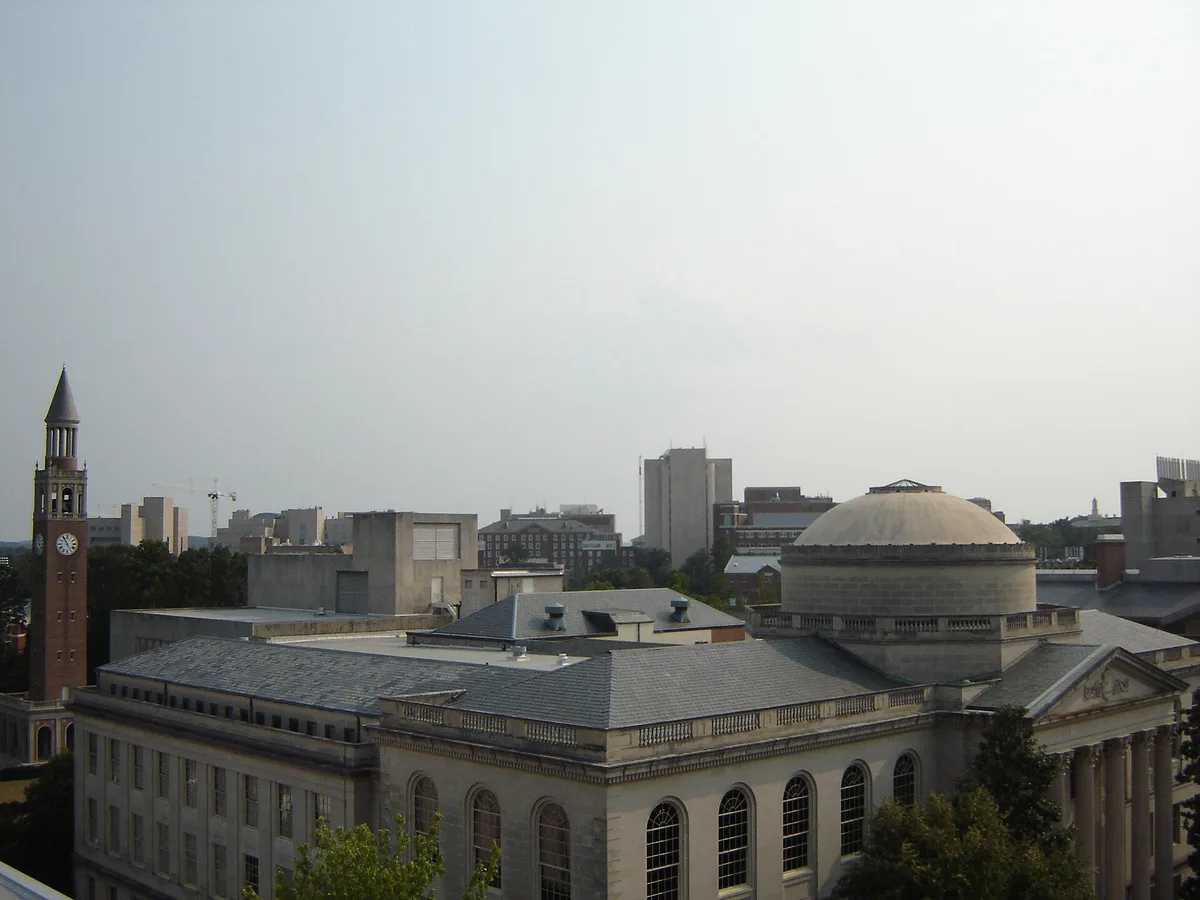
Chapel Hill pairs an A+ Niche grade, an A+ school district, and a crime index 42% below the national average — a trifecta few American cities hit — with a $580,000 median home price and living costs about 20% above average, the premium the Research Triangle now commands. The town of 62,000 anchors the Triangle’s southwestern corner, where UNC (the nation’s oldest public university, chartered 1789), Duke in neighboring Durham, and NC State in Raleigh feed one of the country’s leading biotech and pharmaceutical clusters at 3.6% unemployment. The scale is the honest caveat: Chapel Hill is genuinely small, and the full metropolitan menu of jobs, dining, and entertainment lives in Durham and Raleigh next door. This guide is for anyone weighing the move — academics, healthcare and biotech professionals, and families chasing the schools.
Quick Answer — Is Chapel Hill Worth Moving To?
Chapel Hill is a quietly exceptional place to live, known for UNC’s world-class research enterprise, one of North Carolina’s highest-rated public school districts, a mild four-season climate with real spring and fall, and immediate access to the Research Triangle’s rapidly growing job market. The cost of living has risen alongside Research Triangle demand but remains meaningfully more affordable than coastal metros of comparable quality. It’s an especially strong fit for academics, healthcare and biotech professionals, and families who want top schools and a walkable college-town character — though Chapel Hill is a small city, and those seeking a full metropolitan lifestyle will need to rely on nearby Durham and Raleigh for the breadth of dining, entertainment, and employment that a larger city provides.
At a Glance: Chapel Hill by the Numbers (2025)
| Metric | Chapel Hill |
|---|---|
| Population | ~62,000 (city); ~630,000 (Research Triangle metro) |
| Median home price | $580,000 |
| Cost of living index | 120 (U.S. avg = 100) |
| Median household income | $72,000 |
| Unemployment rate | 3.6% |
| Average commute | 23 minutes |
| Walk Score | 38/100 |
| Niche overall grade | A+ |
| Crime index | 58 (U.S. avg = 100; lower = safer) |
| School district grade | A+ |
| Average summer high | 88°F |
| Average winter low | 30°F |
| Annual sunshine days | 213 |
Chapel Hill’s A+ Niche grade and A+ school district rating reflect a community that consistently delivers exceptional outcomes on the metrics that matter most to families with children. The crime index of 58 — well below the national average — makes it one of the safer small cities in the South. The population figure of 62,000 is worth noting: Chapel Hill is genuinely small, and its appeal is inseparable from the Research Triangle’s broader employment base in Raleigh and Durham.
Cost of Living in Chapel Hill
As of 2025, Chapel Hill’s cost of living index sits at approximately 120 — about 20% above the national average, according to BestPlaces/Sperling’s. That premium reflects the combination of UNC demand, Research Triangle employment growth, and the city’s exceptional school district and quality of life. Housing is the dominant driver: the median home price has reached $580,000, driven by persistent demand from UNC faculty and staff, Research Triangle Park employers, and in-migration from higher-cost metros. Groceries run about 5–8% above the national average. Utilities are moderate, and transportation costs are meaningful given the car-dependent nature of most of the Research Triangle. Healthcare costs are near the national average, with UNC Medical Center providing world-class, research-affiliated care. North Carolina imposes a flat 4.5% income tax — one of the more moderate rates nationally — and the overall tax burden remains significantly lower than comparable-quality metros in the Northeast or California.
Housing Market Snapshot
Chapel Hill’s housing market is competitive and has appreciated significantly since 2019, reflecting the broader Research Triangle boom. The median home price as of 2025 is approximately $580,000, with homes in the most desirable neighborhoods — particularly in the Chapel Hill-Carrboro City School District attendance zones — frequently exceeding $700,000. Renters face a tight market: one-bedroom apartments average $1,500–$1,900 per month, and two-bedrooms typically run $1,900–$2,500. Adjacent Carrboro tends to run 10–15% more affordable while remaining in the same school district. The market consistently favors sellers, and well-priced listings typically attract multiple offers. Data sourced from Zillow and Realtor.com.
## Jobs and EconomyUNC Chapel Hill and UNC Health are the dominant employers in Chapel Hill itself, together employing tens of thousands of people across academic, research, clinical, and administrative roles. UNC Health is consistently ranked among the best hospital systems in the Southeast, and the university’s research enterprise — spanning medicine, public health, law, and the sciences — anchors a research economy that extends throughout the Triangle. Research Triangle Park (RTP), located 15 miles east and accessible via US-15/501, is the world’s largest research park, housing the North Carolina operations of companies including Cisco, IBM, Biogen, and GlaxoSmithKline. As of 2025, the broader Triangle unemployment rate sits at approximately 3.6%, according to the Bureau of Labor Statistics, and the region has been among the fastest-growing tech and biotech economies in the Southeast for the past decade. The median household income of $72,000 reflects the mix of university employees, healthcare workers, and the student population that shapes Chapel Hill’s demographics. Dominant industries are research and higher education, healthcare and biotech, technology, and pharmaceutical manufacturing. The Research Triangle’s reputation for remote-work friendliness — supported by abundant co-working spaces and strong broadband infrastructure — has attracted significant in-migration from coastal metros since 2020.
Neighborhoods in Chapel Hill: Where to Live
Chapel Hill is a small city by American standards, and its neighborhoods blend somewhat fluidly into each other and into neighboring Carrboro to the west. The city’s character is shaped almost entirely by UNC’s presence, and neighborhoods range from dense, walkable student zones near Franklin Street to quiet, family-oriented suburbs with large lots and mature trees. Many newcomers also consider Carrboro — Chapel Hill’s immediately adjacent sister city — which offers a more eclectic, progressive character at slightly lower prices while remaining within the same exceptional school district.
Northside / Airport Road Corridor represents Chapel Hill’s most accessible and racially diverse neighborhood — a mixed community of older single-family homes, apartments, and townhomes within easy walking or biking distance of UNC’s campus. The area is undergoing gradual reinvestment and offers entry-level single-family homes well below the citywide median, making it the most accessible neighborhood for first-time buyers who want proximity to campus. The UNC campus’s amenities — pools, libraries, arts venues — are effectively public goods for this neighborhood.
Southern Village is a new-urbanist planned community on Chapel Hill’s south side, built around a town center of shops, restaurants, and a neighborhood theater. Single-family homes and townhomes from the late 1990s and early 2000s attract families who want a walkable neighborhood with good schools and easy access to I-40. The community has aged gracefully and maintains a strong neighborhood identity through an active homeowners association and community events calendar.
Carrboro deserves its own entry despite being a separate municipality — it sits directly west of Chapel Hill’s downtown, shares the Chapel Hill-Carrboro City School District, and has developed one of the most distinctive independent-business cultures in the Triangle. Weaver Street Market (a worker-owned cooperative grocery) anchors a commercial center of independent restaurants, music venues, and locally owned shops. Housing runs 10–15% below Chapel Hill median prices, and Carrboro’s Niche grade mirrors Chapel Hill’s A+ rating. It is the top choice for newcomers who want the school district and college-town character with slightly more bohemian energy.
East Chapel Hill comprises the newer, more suburban residential areas east of downtown, with larger lots, newer construction, and some of the school district’s most sought-after elementary and middle school attendance zones. It is the neighborhood most comparable to a traditional American suburb within the Chapel Hill context — quieter, more car-dependent, and typically attracting families with school-age children who prioritize square footage and outdoor space over walkability.
## Schools, Safety, and Quality of LifeSchools: The Chapel Hill-Carrboro City Schools (CHCCS) earns an A+ from Niche and is consistently ranked among the top public school districts in North Carolina and the Southeast. Graduation rates exceed 95%, AP course participation is among the highest in the state, and the district’s alumni consistently gain admission to selective universities at rates far above state averages. Chapel Hill High School and East Chapel Hill High School are among the most academically competitive public high schools in the region. UNC Chapel Hill — the nation’s first public university and a member of the Association of American Universities — offers graduate and professional programs that draw researchers and students from around the world, and its faculty presence in the community creates an unusually intellectually engaged civic culture.
Safety: Chapel Hill is a safe city by virtually any measure. Its crime index of approximately 58 — compared to the national average of 100 — reflects both violent and property crime rates well below national norms, according to FBI Uniform Crime Reports. The most common crime category is property crime in student-adjacent housing areas near Franklin Street, which is typical of college towns. The broader community experiences low violent crime rates, and families relocating from larger metros routinely cite safety as one of the city’s most appreciated qualities.
Quality of Life: UNC Medical Center, ranked among the best hospitals in the Southeast by U.S. News, provides world-class healthcare within the city — a significant quality-of-life factor and a major employment anchor. The Triangle Transit and Chapel Hill Transit bus networks connect the city to Raleigh and Durham, and the Tobacco Trail extends south from Chapel Hill as part of the Research Triangle’s expanding greenway network. The Ackland Art Museum on UNC’s campus offers free admission and a permanent collection of over 19,000 objects. PlayMakers Repertory Company, UNC’s professional theater company, provides one of the finest regional theater programs in the Southeast.
Climate and Weather in Chapel Hill
Chapel Hill enjoys one of the more pleasant climates in the eastern United States — a four-season pattern with warm summers, mild winters, spectacular spring and fall seasons, and approximately 213 sunshine days per year, according to WeatherSpark and NOAA data. Summer highs average around 88°F with meaningful humidity, and the period from late June through August can be genuinely hot and muggy — outdoor activities are most comfortable in the early morning and evening. Winters are mild by Midwestern or Northeastern standards: average January lows reach 30°F, and snow accumulation is modest in most years. The region does experience occasional winter ice storms — which, unlike snow, can create genuinely hazardous driving conditions and occasionally disrupt the area for several days. Spring and fall are exceptional: mild temperatures, low humidity, and the blooming dogwoods and fall color that make Piedmont North Carolina genuinely beautiful. For housing decisions, air conditioning is a necessity from May through September, and energy costs in summer are higher than in many Northern cities.
Things to Do in Chapel Hill: Top Attractions and Day Trips
Chapel Hill’s leisure character is shaped by UNC’s presence, Franklin Street’s independent business community, and the broader outdoor and cultural offerings of the Research Triangle. The city is small, and residents who want the full menu of a major metropolitan area — large concert venues, professional sports, a diverse restaurant scene — will rely on Durham (15 minutes) and Raleigh (30 minutes) to fill those gaps. Within Chapel Hill itself, the combination of a world-class university, beautiful campus, and a genuinely independent commercial culture makes for a remarkably sustaining day-to-day life.
-
UNC Campus & the Old Well — The University of North Carolina’s campus is one of the most beautiful in the American South — a collection of historic brick buildings, enormous hardwood trees, and open quads anchored by the Old Well, the university’s iconic symbol since 1897. The campus is open to the public, and a walk from the Bell Tower through Polk Place and down to the Kenan Stadium area provides one of the finest university campus experiences in the country. The Wilson Library’s North Carolina Collection and the Morehead Planetarium (free public programming) are particularly worth seeking out.
-
Franklin Street — Chapel Hill’s main commercial corridor is a walkable strip of independent restaurants, coffee shops, bookstores, and bars that runs east from the Carrboro town center through the edge of the UNC campus. It is the social and commercial heart of the community, and its mix of longtime institutions (like Carolina Coffee Shop, operating since 1922) and newer independent businesses reflects the town’s commitment to local character. Saturday mornings and game days create an energy that’s quintessentially college-town North Carolina.
-
Jordan Lake State Recreation Area — Located 15 minutes south of Chapel Hill, Jordan Lake is a 14,000-acre reservoir managed by the NC Division of Parks and Recreation, offering boating, swimming, fishing, hiking, and bald eagle watching in one of the most accessible natural areas in the Triangle. The lake’s beaches draw families throughout the summer, and the surrounding forest trails are popular year-round with hikers, mountain bikers, and bird watchers. Day-use fees are modest.
-
Ackland Art Museum — UNC’s on-campus art museum houses a permanent collection of over 19,000 objects spanning 5,000 years of human creativity, with particular strengths in Asian art, European paintings, and works on paper. Admission is free, exhibitions rotate regularly, and the museum’s scale — large enough to be genuinely rewarding, small enough to explore thoroughly in two hours — makes it ideal for recurring visits throughout the year.
-
Carrboro Farmers’ Market & Weaver Street Market — The Carrboro Farmers’ Market, held Saturday mornings on Roberson Street, is one of the longest-running and most beloved markets in the Triangle — a weekly community gathering of local farms, bakers, and artisans that captures the agricultural richness of Piedmont North Carolina. The adjacent Weaver Street Market’s outdoor lawn is the informal social center of Carrboro, with community events, live music, and the kind of spontaneous neighborly gathering that defines the area’s civic culture.
For day trips, Durham (15 minutes east via US-15/501) offers the Research Triangle’s most dynamic food and arts scene — the Durham Performing Arts Center, the American Tobacco Campus, and a restaurant culture that has become one of the South’s most celebrated. Raleigh (30 minutes east via I-40) provides full metropolitan scale — the NC Museum of Natural Sciences (free, world-class), the NC Museum of Art, and major concert venues. The North Carolina Outer Banks (3 hours east) offer some of the East Coast’s most dramatic barrier island beaches — Cape Hatteras, Ocracoke, and the Wright Brothers National Memorial are all within a day-trip range from Chapel Hill.
## Moving to Chapel Hill: Your 90-Day Checklist90–60 days before:
- Research Chapel Hill and Carrboro neighborhoods — both are in the same top-rated school district
- Get at least three moving company quotes (PODS, Allied, HireAHelper, or local movers)
- Research Chapel Hill-Carrboro City Schools enrollment deadlines — the district is highly rated and competitive
- Review North Carolina’s 4.5% flat income tax
- Begin decluttering — book a self-storage unit if needed
60–30 days before: 6. Confirm moving company and lock in dates 7. Transfer medical and dental records; UNC Medical Center is a world-class option 8. Notify employer, bank, and subscriptions of address change 9. Research utility providers (Duke Energy, OWASA for water) and set up accounts 10. Arrange short-term lodging if permanent housing won’t be ready immediately
First 30 days after arrival: 11. Transfer driver’s license and vehicle registration to North Carolina 12. Register to vote at new address 13. Walk Franklin Street and explore the UNC campus using the attractions section above 14. Join local Facebook groups or Nextdoor for your neighborhood 15. File change of address with USPS if not already done
## Frequently Asked Questions About Living in Chapel HillQ: Is Chapel Hill a good place to live? A: Chapel Hill earns an A+ from Niche and consistently ranks among the top small cities in the Southeast — a verdict reflecting its exceptional public schools, safe streets, UNC’s cultural and economic anchor, and a mild climate that makes outdoor life viable year-round. The honest trade-offs are a housing market that has gotten meaningfully more expensive over the past five years, a small-city scale that requires relying on Durham and Raleigh for big-city amenities, and summer heat and humidity that can be demanding from June through August.
Q: What is the cost of living in Chapel Hill? A: Chapel Hill’s cost of living index of approximately 120 places it about 20% above the national average — a premium that reflects its exceptional schools, low crime, and Research Triangle employment access. The median home price of $580,000 is significant but still substantially more affordable than comparable-quality college towns in California, the Mid-Atlantic, or New England. North Carolina’s 4.5% flat income tax is among the more moderate state rates nationally.
Q: Is Chapel Hill safe? A: Chapel Hill is a safe community by virtually any measure, with a crime index of approximately 58 compared to the national average of 100. Both violent and property crime rates are well below national norms, according to FBI Uniform Crime Reports. The most common concerns are property crime in student-adjacent housing areas, which is standard for college towns. Families and individuals relocating from larger metros consistently cite Chapel Hill’s safety as one of its most valued characteristics.
Q: What are the best neighborhoods in Chapel Hill? A: Carrboro offers the best combination of school district access, independent character, and relative affordability — particularly for newcomers who want Franklin Street energy without paying the highest Chapel Hill premiums. Southern Village is ideal for families seeking a walkable, new-urbanist neighborhood with good schools and a tight community feel. East Chapel Hill attracts families seeking larger lots and newer construction within the school district. The Northside and UNC-adjacent neighborhoods offer the best walkability and campus access at more accessible price points.
Q: What is the job market like in Chapel Hill? A: UNC Chapel Hill and UNC Health together are the city’s dominant employers, but the broader Research Triangle economy — anchored by Research Triangle Park, one of the world’s largest research parks — provides employment depth across biotech, pharmaceutical, tech, and financial services sectors. The Triangle’s unemployment rate of approximately 3.6% reflects a strong regional economy, and the area has experienced sustained in-migration of major employers and remote workers since 2018.
Q: How far is Chapel Hill from Raleigh? A: Chapel Hill is approximately 28 miles southwest of downtown Raleigh — a 30 to 40-minute drive via I-40 in normal conditions, though peak-hour commutes can run 45–60 minutes. Triangle Transit operates bus service between Chapel Hill, Durham, and Raleigh, with service frequencies that have improved significantly in recent years but remain most practical for commuters with flexible schedules. A light rail project connecting Chapel Hill to Durham has been in planning stages for years; as of 2025, bus rapid transit (BRT) remains the primary regional transit investment.
Chapel Hill vs. Nearby Cities
Durham, 15 minutes east, is Chapel Hill’s natural complement — more diverse, more urban, with a larger and more varied job market, a nationally acclaimed food scene, and housing costs that run 15–20% below Chapel Hill’s median while still providing access to the same Research Triangle economy. Raleigh, the state capital 30 minutes east, provides the full metropolitan experience — larger employers, more entertainment options, and a broader housing market — at a modest cost premium to Durham but with less of Chapel Hill’s intimate college-town character. Charlotte, two hours southwest, is North Carolina’s economic powerhouse — a major financial and logistics hub at a similar or slightly lower overall cost of living, but with a very different urban character and less of the academic culture that defines Chapel Hill. For full profiles of these cities, see our guides to Durham, Raleigh, and Charlotte.
Sources and Data Notes
Data for this guide was drawn from the U.S. Census Bureau American Community Survey (2024), Bureau of Labor Statistics (2025), Niche.com, BestPlaces.net/Sperling’s Cost of Living Index, FBI Uniform Crime Reports, WeatherSpark, Walk Score, and Zillow/Realtor.com. Statistics reflect 2024–2025 data where available.