
Moving to New Jersey: City Guides, Checklist & Tips
Updated July 2026
New Jersey carries the highest property taxes in the country — an effective rate near 2.42% and a median homeowner bill around $10,570 a year, according to 2025 data — funding a school system that relies on local property tax for 40%-50% of its cost. State income tax is progressive, from 1.4% up to 10.75% on income above $1 million, and sales tax runs 6.625% statewide, though groceries and most clothing are exempt. Newark, the state's largest city at roughly 310,000 residents, runs a cost of living about 35% above the national average; Trenton, the capital, sits close to the national average; and Atlantic City runs below both the state and national averages. The state's defense economy centers on Joint Base McGuire-Dix-Lakehurst near Trenton — the only tri-service joint base in the Department of Defense — and Picatinny Arsenal in Morris County, where about 6,000 scientists and engineers develop the bulk of the Army's armaments and ammunition. This hub collects our city-by-city relocation guides for New Jersey, plus the practical steps to become a resident.
New Jersey City Guides
Newark
New Jersey's largest city, a Manhattan-adjacent transit hub with a cost of living well above the state average.
Guide coming soonTrenton
The state capital, close to the national average cost of living and about 18 miles from Joint Base McGuire-Dix-Lakehurst.
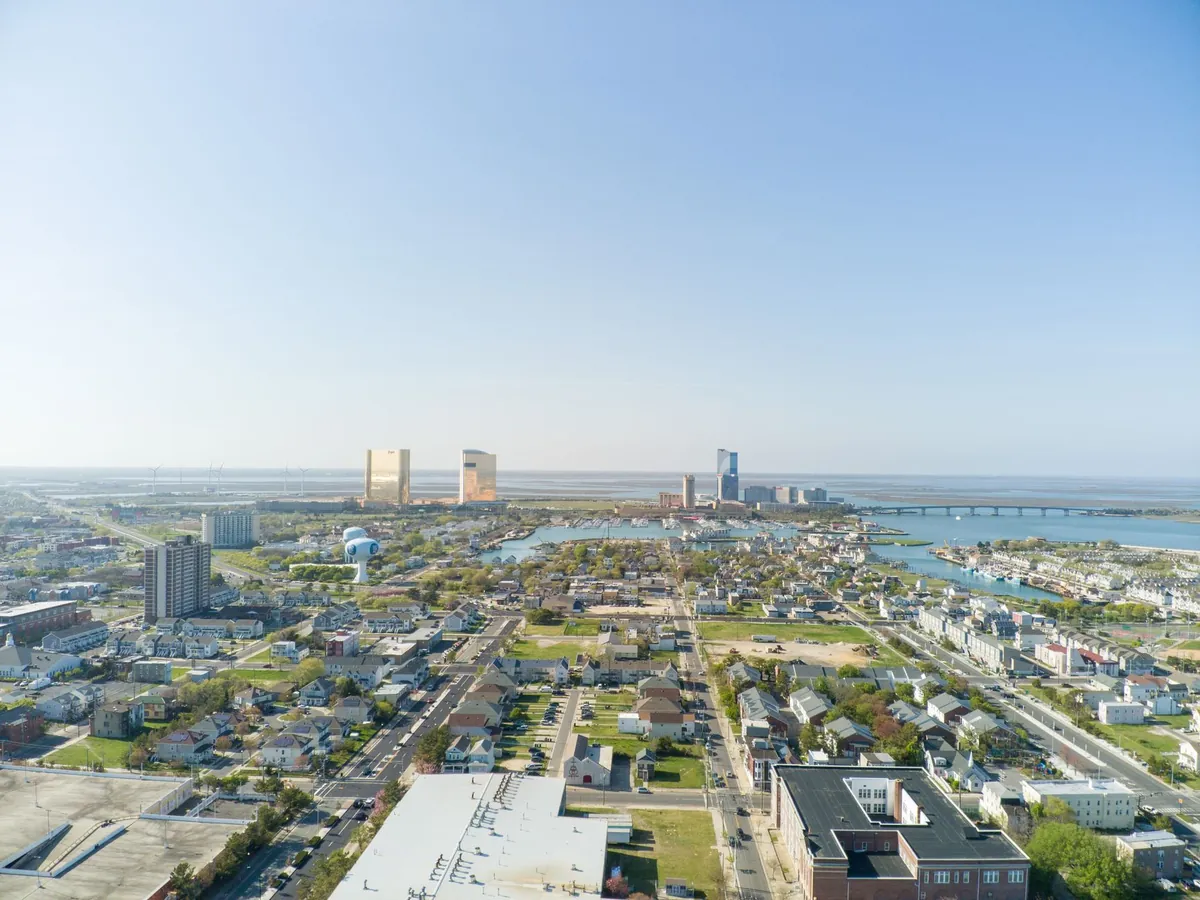
Guide coming soonAtlantic City
A shore city built on tourism and casinos, with the cheapest housing of New Jersey's major cities.
Guide coming soon

New Jersey Living and Vacationing Quick Reference
Living here
- State income tax
- Progressive, 1.4% to 10.75% as of 2026 — the top rate applies only above $1 million in income
- Sales tax
- 6.625% statewide, with groceries and most clothing exempt
- Median home price
- About $569,000 statewide as of 2026, per Zillow — roughly $479,000 in Newark, $350,000 in Trenton, and low-$200,000s in Atlantic City
- Property taxes
- The highest in the nation — an effective rate near 2.42% and a median homeowner bill around $10,570 a year, per 2025 data
- Driver's license deadline
- 60 days after establishing residency — vehicle registration runs on the same 60-day clock, plus an inspection within 14 days of registering
- Population
- About 9.55 million as of 2025 — the 11th most populous state despite ranking near the bottom in land area
Visiting first
- Main airport
- Newark Liberty International (EWR), one of the busiest airports serving the New York metro area
- Signature outdoors
- The Pine Barrens, roughly 22% of the state and largely unpopulated forest, plus 127 miles of Jersey Shore beaches
- Best scouting months
- May and June, or September through October — warm enough for the shore, before or after peak summer crowds and prices
- The stereotype, honestly
- The "armpit of America" reputation comes from one industrial stretch of the Turnpike near Newark Airport — it says nothing about the Pine Barrens, the Cape May Victorian district, or the shore towns most visitors never see from the highway
- Military and defense
- Joint Base McGuire-Dix-Lakehurst near Trenton is the only tri-service joint base in the country; Picatinny Arsenal in Morris County develops most of the Army's armaments and ammunition
- Getting around
- The New Jersey Turnpike and Garden State Parkway carry most north-south traffic; NJ Transit rail connects much of the state directly into Manhattan

How New Jersey Got Its Name
New Jersey takes its name from the Isle of Jersey in the English Channel, honoring Sir George Carteret, one of the two proprietors King Charles II granted the territory to in 1664 — Carteret had defended the island of Jersey during the English Civil War. The other proprietor, Lord John Berkeley, left no namesake nearly as durable. Three centuries later, the state's defense identity would come from an unrelated merger: in 2009, the Air Force's McGuire Air Force Base, the Army's Fort Dix, and the Navy's Naval Air Engineering Station Lakehurst combined into Joint Base McGuire-Dix-Lakehurst, the only installation in the country hosting all six armed service branches under one command.

How to Become a New Jersey Resident
Establishing residency unlocks a New Jersey driver's license, vehicle registration, in-state tuition, and resident access to state parks and programs. You establish residency in New Jersey by doing any one of the following — you don't need all of them:
- Renting or buying a home in New Jersey
- Working for a New Jersey employer
- Registering to vote in New Jersey
- Operating a business located in New Jersey
- Enrolling children in a New Jersey primary or secondary school
New Jersey Moving Checklist
- Transfer your driver's license and register your vehicle — both due within 60 days, see the quick reference above
- Get your vehicle inspected within 14 days of registering it — New Jersey requires an emissions inspection at registration and every 2 years after
- Register to vote at your new address
- Update health insurance and find new providers
- Transfer medical, dental, and school records
- Register pets and find a veterinarian
- Set up utilities and file your change of address with USPS

Questions Movers Ask About New Jersey
Does New Jersey have a state income tax?
Yes — a progressive tax from 1.4% to 10.75% as of 2026. The top rate applies only to income above $1 million, so most residents pay well below that. Sales tax is 6.625% statewide, with groceries and most clothing exempt from it.
Why are New Jersey property taxes so high?
New Jersey has the highest property taxes in the country, with an effective rate near 2.42% and a median homeowner bill around $10,570 a year as of 2025. The main driver is school funding — the state relies on local property tax for 40%-50% of K-12 education costs, far more than most states, with federal funding covering under 10%.
How long do I have to get a New Jersey driver's license after moving?
60 days. New Jersey's Motor Vehicle Commission requires new residents to transfer their driver's license and register their vehicle within 60 days of establishing residency, and any registered vehicle must pass a state inspection within 14 days of that registration.
How expensive is it to live in New Jersey?
It varies sharply by city. Newark runs about 35% above the national average cost of living, while Trenton sits close to the national average and Atlantic City runs below it. The statewide typical home value is about $569,000 as of 2026, per Zillow; Atlantic City has typical home values in the low $200,000s and Trenton around $350,000.
What military bases are in New Jersey?
Joint Base McGuire-Dix-Lakehurst, about 18 miles southeast of Trenton, merged Air Force, Army, and Navy installations in 2009 and is the only tri-service joint base in the Department of Defense. Picatinny Arsenal in Morris County employs about 6,000 scientists and engineers who develop the majority of the Army's armaments and ammunition systems.
Which New Jersey city should I move to?
It depends on what you're optimizing for. Newark offers the deepest job access to Manhattan and the busiest airport, at the highest cost of living of the three. Trenton, the state capital, runs close to the national average and sits closest to Joint Base McGuire-Dix-Lakehurst. Atlantic City offers the cheapest housing, built around tourism and casino employment on the shore.
Sources and Data Notes
Residency options, license and vehicle-registration deadlines, and tax rates on this page reflect requirements published by the New Jersey Motor Vehicle Commission and the New Jersey Division of Taxation. Cost, housing, and job-market figures draw on the public datasets used across ScoutLocale's city guides, including the U.S. Census Bureau, the U.S. Bureau of Labor Statistics, BestPlaces.net, and Niche.com.
Comparing states? Browse moving guides for every state.