
Moving to New Hampshire: City Guides, Checklist & Tips
Updated July 2026
New Hampshire is one of only two states — with Alaska — that levy neither an income tax nor a statewide sales tax, a status it reached in January 2025 when the state finished phasing out its old tax on interest and dividend income. The trade-off shows up in the property tax bill: New Hampshire's effective rate of roughly 1.5%–2.05% ranks among the highest in the country, and the state leans on it hard because the constitution blocks a broad-based income or sales tax. The state's job market runs through the Seacoast, where Pease Air National Guard Base — the former Pease Air Force Base, closed in 1991 — sits alongside Portsmouth International Airport at Pease, and where a large share of the roughly 7,700 civilian workers at Portsmouth Naval Shipyard (across the river in Kittery, Maine) make their homes on the New Hampshire side. This hub collects our city-by-city relocation guides for New Hampshire, plus the practical steps to become a resident.

New Hampshire City Guides
Manchester
New Hampshire's largest city, an old mill town on the Merrimack River rebuilt around healthcare and tech jobs.
Guide coming soonPortsmouth
A Seacoast city built around Pease Air National Guard Base and the shipyard workforce living on the New Hampshire side of the river.
Guide coming soonConcord
New Hampshire's state capital, a smaller, government-anchored city north of Manchester.
Guide coming soon
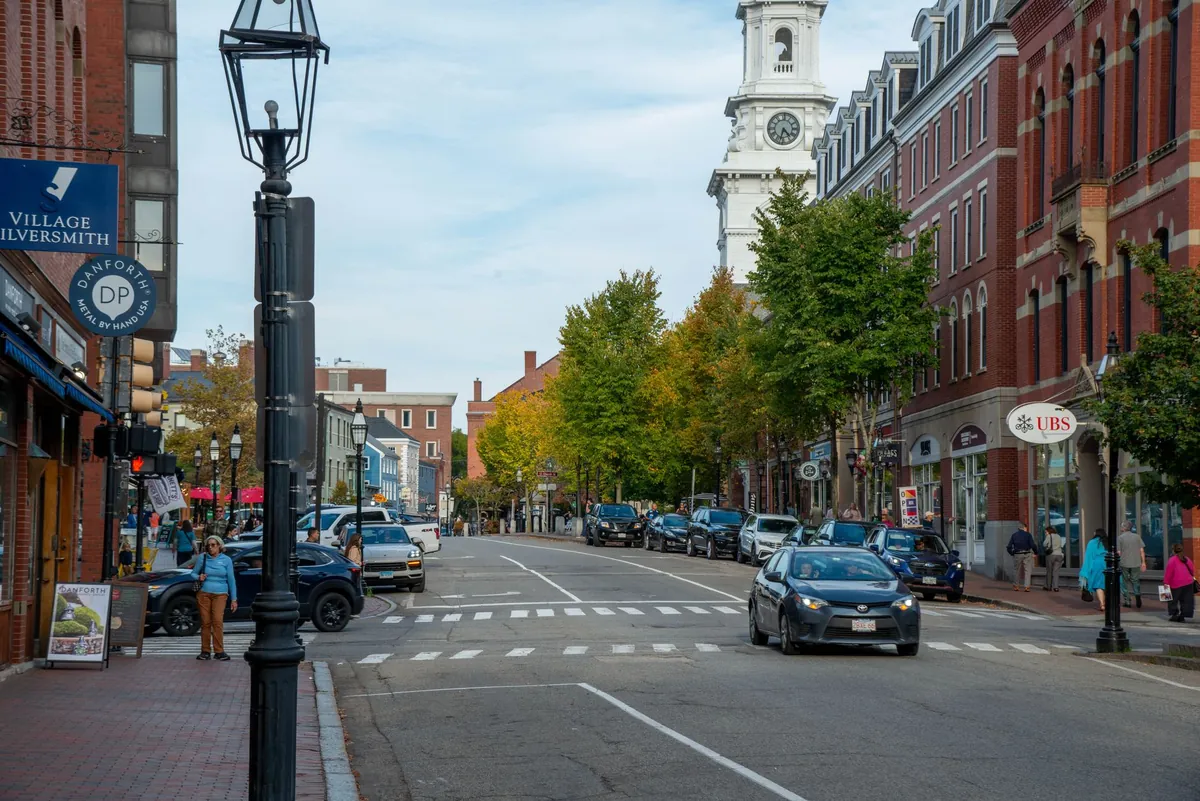
New Hampshire Living and Vacationing Quick Reference
Living here
- State income tax
- None — the tax on interest and dividend income was fully repealed effective January 1, 2025
- Sales tax
- None — no state or local sales tax anywhere in New Hampshire
- Median home price
- About $516,000 statewide as of 2026, per Zillow — roughly $442,000 in Manchester, $678,000 in Portsmouth, $450,000 in Concord
- Property taxes
- Among the highest in the country — an effective rate near 1.5%-2% and a median annual bill around $6,700, the trade-off for having no income or sales tax
- Driver's license deadline
- 60 days after establishing residency — vehicle registration runs on the same 60-day clock
- Population
- About 1.42 million as of 2025, with Massachusetts transplants driving most of the growth
Visiting first
- Main airport
- Manchester-Boston Regional (MHT), though many residents fly out of Boston Logan, about an hour south
- Signature outdoors
- The White Mountain National Forest — 1,225 square miles of peaks, waterfalls, and the Kancamagus Highway scenic drive
- Best scouting months
- Late September through early October for foliage in the White Mountains; July and August for reliably warm, dry weather statewide
- The tax picture, honestly
- No income or sales tax doesn't mean no taxes — New Hampshire collects instead through property tax bills that rank among the nation's highest, so renters see the savings more directly than homeowners
- Military and defense
- Pease Air National Guard Base at Portsmouth, the former Pease Air Force Base, plus a large share of the Portsmouth Naval Shipyard workforce commuting from the New Hampshire side of the Piscataqua River
- Getting around
- Interstate 93 runs north-south through Manchester and Concord to the White Mountains; the Seacoast and Lakes Region fill with weekend traffic from Boston in summer

How New Hampshire Got Its Name
New Hampshire was named in 1629 by Captain John Mason, who received a land grant from the Council for New England and named the territory after Hampshire, the English county where he had spent much of his childhood. Mason never set foot in the colony he named — he died in 1635 planning his first voyage there. The state's motto, "Live Free or Die," came much later, from a toast General John Stark sent to an 1809 reunion of his Revolutionary War soldiers too ill to attend himself; New Hampshire adopted the phrase for its license plates in 1945, and it remains the only state motto that doubles as a civil-liberties test case — the U.S. Supreme Court ruled in 1977 that residents cannot be forced to display it.

How to Become a New Hampshire Resident
Establishing residency unlocks a New Hampshire driver's license, vehicle registration, in-state tuition, and resident access to state parks and programs. You establish residency in New Hampshire by doing any one of the following — you don't need all of them:
- Renting or buying a home in New Hampshire
- Working for a New Hampshire employer
- Registering to vote in New Hampshire
- Operating a business located in New Hampshire
- Enrolling children in a New Hampshire primary or secondary school
New Hampshire Moving Checklist
- Transfer your driver's license and register your vehicle — both due within 60 days, see the quick reference above
- Register to vote at your new address
- Update your car insurance to meet New Hampshire requirements — the state does not mandate auto insurance, but lenders and lienholders typically do
- Update health insurance and find new providers
- Transfer medical, dental, and school records
- Register pets and find a veterinarian
- Set up utilities and file your change of address with USPS

Questions Movers Ask About New Hampshire
Does New Hampshire have an income tax or sales tax?
Neither, as of 2025. New Hampshire finished repealing its old tax on interest and dividend income on January 1, 2025, making it one of only two states — with Alaska — that levy no state income tax and no statewide sales tax. There is also no local sales tax anywhere in the state.
If New Hampshire has no income or sales tax, how does it pay for services?
Property taxes. New Hampshire's constitution restricts broad-based income and sales taxes, so property tax carries most of the load — the effective rate runs roughly 1.5% to 2.05% depending on the source, among the highest in the country, with a median annual bill near $6,700. Renters feel the tax advantage more directly than homeowners.
How long do I have to get a New Hampshire driver's license after moving?
60 days. New Hampshire requires new residents to obtain a New Hampshire driver's license and register any vehicles within 60 days of establishing residency, and you cannot renew or add vehicle registrations until the license transfer is done.
How expensive is it to live in New Hampshire?
The statewide median home price is about $516,000 as of 2026, per Zillow, with Manchester and Concord both under $450,000 and Portsmouth closer to $678,000. Overall cost of living runs roughly 10-15% above the national average, driven mainly by housing and property taxes rather than everyday goods, since there is no sales tax to inflate the cost of purchases.
What military bases are in New Hampshire?
Pease Air National Guard Base in Portsmouth is the main active installation — the successor to Pease Air Force Base, a Strategic Air Command base closed in the 1991 round of base closures. Portsmouth Naval Shipyard itself sits just across the Piscataqua River in Kittery, Maine, but a large share of its roughly 7,700 civilian workers commute from and live on the New Hampshire side.
Which New Hampshire city should I move to?
It depends on what you're optimizing for. Manchester is the state's largest city and job market, with the most affordable housing of the three. Portsmouth offers Seacoast living and the shortest commute to Pease and the shipyard workforce, at the highest price point. Concord, the state capital, is smaller and government-anchored, a quieter option within easy reach of both.
Sources and Data Notes
Residency options, license and vehicle-registration deadlines, and tax rates on this page reflect requirements published by the New Hampshire DMV and the New Hampshire Department of Revenue Administration. Cost, housing, and job-market figures draw on the public datasets used across ScoutLocale's city guides, including the U.S. Census Bureau, the U.S. Bureau of Labor Statistics, BestPlaces.net, and Niche.com.
Comparing states? Browse moving guides for every state.