
Living in Billings, MT: The Complete 2026 Relocation and Visitor Guide
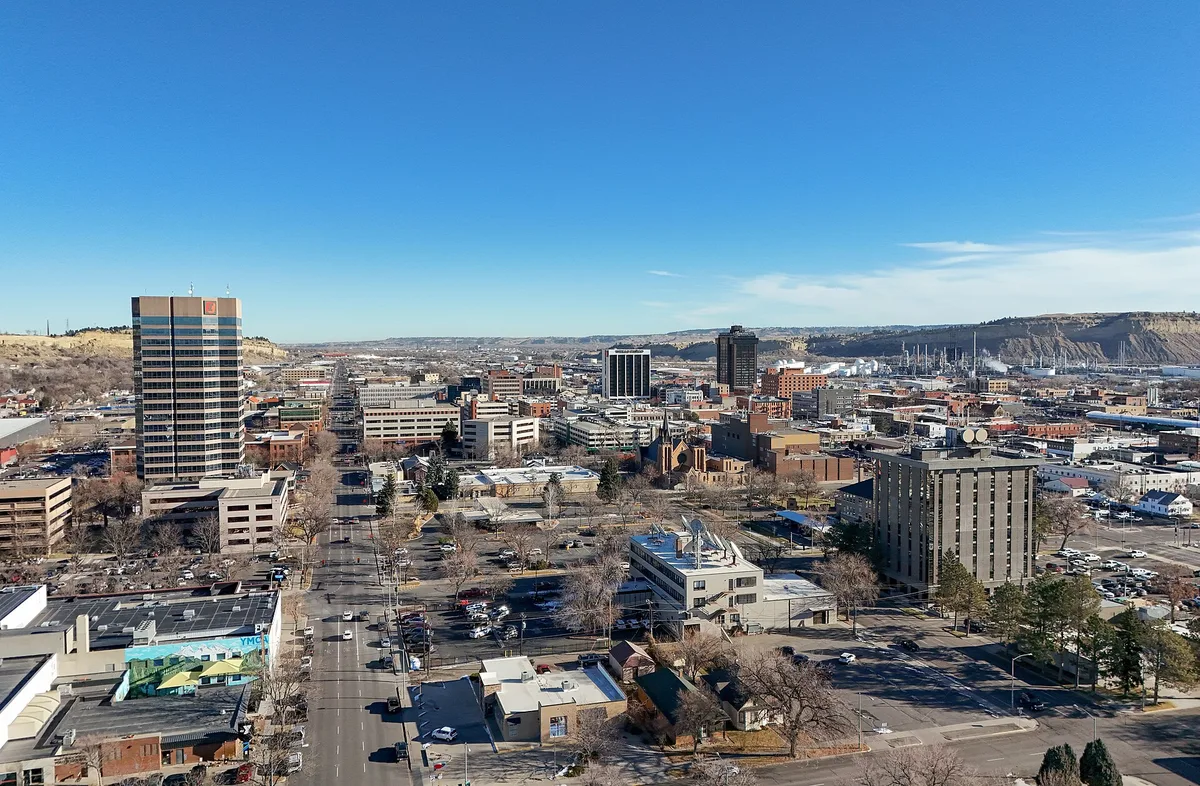
Billings offers what most Mountain West cities lost a decade ago: a cost of living 5% below the national average, a $379,000 median home, and a 16-minute average commute — in Montana’s largest city (roughly 121,000 residents) and the medical and commercial hub for a trade area spanning eastern Montana, northern Wyoming, and western South Dakota. Employment is steady at 3.6% unemployment as of 2025, anchored by healthcare and energy. The trade-offs are real: property crime runs well above the national average, and big-city dining and nightlife are limited. For healthcare workers, remote workers, and families priced out of Bozeman or Denver — with Yellowstone within day-trip range and the Rimrocks’ 400-foot sandstone cliffs framing the skyline — this guide covers everything Billings asks and offers.
Quick Answer — Is Billings Worth Moving To?
Billings is a practical, unpretentious Western city known for affordable housing, a strong healthcare and energy job market, and unbeatable access to outdoor recreation. The cost of living sits about 5% below the national average, and the job market is stable with low unemployment around 3.6%. It’s an especially good fit for healthcare workers, outdoor enthusiasts, and families seeking a low-cost Western lifestyle without the price inflation of Bozeman or Denver. The honest trade-off: Billings has elevated property crime relative to the national average, and those who arrive expecting big-city dining, nightlife, or cultural amenities may find the options limited.
At a Glance: Billings by the Numbers (2025)
| Metric | Billings |
|---|---|
| Population | ~121,000 |
| Median home price | $379,000 |
| Cost of living index | 94.6 (U.S. avg = 100) |
| Median household income | $69,692 |
| Unemployment rate | 3.6% |
| Average commute | 16 minutes |
| Walk Score | 35/100 |
| Niche overall grade | B |
| Crime index | ~185 (U.S. avg = 100; lower = safer) |
| School district grade | B+ (High School District) |
| Average summer high | 85°F |
| Average winter low | 18°F |
| Annual sunshine days | 205 |
Billings punches above its size as a regional economic hub — the short commute times and below-average cost of living reflect a city that hasn’t yet priced out everyday residents, though the crime figures are a meaningful consideration that shouldn’t be dismissed when choosing a neighborhood.
Cost of Living in Billings
As of 2025, Billings carries a cost of living index of 94.6 according to BestPlaces/Sperling’s, meaning the overall cost of goods and services runs about 5% below the national average — a meaningful advantage compared to larger Western cities like Denver (COL index ~121) or Bozeman, which has seen housing costs spike dramatically. Housing tracks close to that composite, with a housing sub-index near 95. Groceries are roughly at or just below the national average; utilities run slightly above due to heating demands in winter. Healthcare costs are near the national average, supported by Billings Clinic and St. Vincent Healthcare, two of the largest medical facilities in the Northern Rockies region. Transportation costs are modest given the short average commute of 16 minutes. One significant advantage: Montana has no state sales tax, so every retail purchase lands at sticker price — a perk that adds up over time. Note that Montana does levy a state income tax (top rate of 6.75%), so factor that into take-home pay calculations.
Housing Market Snapshot
The median sale price in Billings was approximately $379,000 as of early 2025 (Redfin/Norada), up roughly 8% year-over-year in late 2024 before showing signs of stabilization. The rental market runs from about $1,100–$1,300/month for a one-bedroom apartment and $1,290–$1,640/month for a two-bedroom, according to Zillow and ApartmentList data. The market currently leans toward a moderate seller’s market, though improved inventory gives buyers more options than the tight pandemic-era years. Buyers coming from high-cost coastal markets will find Billings’ prices refreshingly accessible.
---Jobs and Economy
Billings serves as the economic engine for a five-state trade area, and that regional hub status provides real employment depth for a city its size. Healthcare dominates: Billings Clinic (a nationally recognized health system) and St. Vincent Healthcare (a Billings Clinic affiliate) together form the largest employment cluster in the city. Montana State University Billings adds education and research jobs. The energy sector — anchored by ExxonMobil’s Billings Refinery, one of the largest in the region — contributes a significant layer of skilled manufacturing and technical employment. Retail trade ranks third by sector employment, reflecting the city’s role as a regional shopping destination. Government and agricultural services round out the top industries. The unemployment rate held at 3.6% as of 2025 (BLS Billings MSA), and employment grew 1.35% from 2023 to 2024, outpacing many comparable-sized cities. Median household income is approximately $69,692 (Census ACS). Remote workers should note that while downtown and West End areas have solid broadband connectivity, some outer neighborhoods have limited fiber internet options — verify coverage before committing to a neighborhood.
Neighborhoods in Billings: Where to Live
Billings is compact enough that most areas are within a 15-minute drive of downtown, but each part of the city has a distinct character worth understanding before you sign a lease or make an offer.
West End is Billings’ most popular suburban district, featuring newer construction, wider streets, and contemporary floor plans. Best for families and professionals seeking newer builds near top-rated schools and convenient retail. Home prices typically range $350,000–$600,000+. Rimrock Mall and most major chain retailers anchor the area.
Billings Heights sits north of the Rimrocks — physically separated from the rest of the city by the cliffs — and has a strong community identity that residents are proud of. Best for families and working-class households seeking more affordable single-family homes with a genuine neighborhood feel. Heights parks and trailheads provide easy access to hiking along the Rim’s northern face.
Downtown/Rimrock Adjacent offers the most urban experience Billings has to offer: walkable to restaurants, the Yellowstone Art Museum, breweries on the Billings Brew Trail, and the Billings Depot event space. Best for young professionals and those who want to be in the middle of city life. Housing skews toward older bungalows, condos, and renovated historic homes.
Josephine Crossing/Southwest Billings is a master-planned community with organized walking trails, parks, block parties, and a strong events calendar. Best for families who want a connected neighborhood culture and proximity to Billings Clinic. Newer townhomes and single-family construction dominate.
For profiles of communities just outside Billings, see our guides to Bozeman, Missoula, and Casper.
---Schools, Safety, and Quality of Life
Schools: Billings Public Schools is the largest school district in Montana. The Billings High School District earns a B+ grade on Niche.com, with Billings Senior High School and Skyview High School serving the bulk of secondary students. The Billings Elementary School District grades out at C+ on Niche — serviceable but uneven across schools. Families with strong academic priorities should research individual school attendance zones carefully, as quality varies by area. Montana State University Billings (MSUB) anchors higher education locally, offering undergraduate and graduate programs in business, education, and the arts.
Safety: Crime is the most significant caveat in any honest Billings assessment. Property crime is substantially elevated — NeighborhoodScout and AreaVibes data suggest a crime index of roughly 185 against the national average of 100 (lower is safer), driven largely by motor vehicle theft and property crimes. Violent crime is also above the national average, though it has been trending downward in recent years. To put it plainly: Billings is not one of Montana’s safer cities. The West End and Josephine Crossing areas are considered among the more secure residential options. The Heights also tends to be quieter than downtown. Residents who are mindful of their surroundings, park in covered areas, and choose neighborhoods strategically can navigate the environment reasonably well — but it is a real consideration, not a footnote.
Quality of Life: Despite the crime caveat, Billings scores well on livability factors that matter to most households. Billings Clinic ranks among the top regional medical centers in the Mountain West. Average commutes of 16 minutes mean workers reclaim hours that residents of larger metros sacrifice daily. The city functions as a legitimate regional hub — concerts, rodeos, minor league baseball (the Billings Mustangs), and a surprisingly active craft beer scene fill the events calendar. Public transit is limited and the city is functionally car-dependent (Walk Score 35/100), so a personal vehicle is a necessity.
Climate and Weather in Billings
Billings has a semi-arid continental climate with four genuinely distinct seasons and dramatic temperature swings that take some newcomers by surprise. Summers are hot and dry — July highs average 85°F and regularly push into the low 90s, with low humidity making the heat bearable. Winters are cold and snowy, with January lows averaging 18°F and highs around 33°F, though Chinook winds (warm, dry air flowing down from the Rockies) can push temperatures into the 50s or 60s°F even in January, sometimes within hours of a hard freeze. Annual snowfall averages 54 inches. Spring delivers severe thunderstorms, occasional hail, and the welcome return of warmth. One pleasant surprise for arrivals: Billings logs about 205 sunny days per year — considerably more than Seattle, Chicago, or New York — making Montana’s outdoor lifestyle far more year-round than the state’s reputation suggests, according to WeatherSpark and NOAA data.
Things to Do in Billings: Top Attractions and Day Trips
Billings earns its “Trailhead City” nickname honestly. The Rimrocks frame every sunset; Yellowstone is a half-day drive; and the city’s Western heritage runs deep enough to fill a weekend of museums, battlefield tours, and cave art. The food and beer scene has matured steadily — the Billings Brew Trail now counts over a dozen craft breweries — and ZooMontana provides one of the more underrated family experiences in the Northern Rockies. This is not a city for nightlife or gallery-hopping, but for those who orient their leisure time around the outdoors and authentic regional culture, the options are genuinely rich.
-
The Rimrocks — The sandstone cliffs towering 400 feet above the city are both a defining landmark and a practical recreation resource. Trails run along the rim face, offering panoramic views of the Yellowstone River valley and the Beartooth Mountains to the south. Access is free, trailheads are well-marked, and the Rimrocks are accessible year-round for hiking, trail running, and cycling. Sunrise and sunset views from the rim are among the best in the state.
-
Pictograph Cave State Park — Three prehistoric caves containing rock art spanning 200 to 2,100 years hold among the finest pictographs in the American West. The site is operated by Montana State Parks and charges a modest day-use fee (approximately $6 for Montana residents, $8 for non-residents). Best visited May through September when facilities are staffed; the turtle pictograph, estimated at 2,100 years old, is the undisputed highlight. A genuinely moving stop for history enthusiasts and families alike.
-
Western Heritage Center — Housed in a stunning Romanesque Revival building, this regional museum preserves and interprets the history and culture of the Northern Plains, with particular depth on Native American heritage and frontier-era settlement. Entry is free most days, making it one of the best free cultural experiences in the city. Rotating exhibitions complement a strong permanent collection.
-
ZooMontana — A 70-acre botanical and wildlife park featuring grizzly bears, a wolf pack, lynx, red pandas, and more than 100 animals across North American and Eurasian species. Admission runs approximately $10 for adults, less for children. Open year-round with seasonal programming. One of the region’s most family-friendly destinations and a genuine draw for visitors from across eastern Montana and Wyoming.
-
The Billings Brew Trail — With more than a dozen craft breweries scattered across the city, Billings has developed one of the most active craft beer scenes in Montana relative to its size. Uberbrew, Angry Hank’s, and Thirsty Street Brewing are local favorites. The Brew Trail map is free and available through VisitBillings.com — it makes for an easy self-guided afternoon through downtown and the surrounding corridors.
Day Trips Worth the Drive
Yellowstone National Park sits about 130 miles southwest — roughly a 2.5-hour drive to the north entrance at Gardiner via US-89. For a more spectacular (and seasonal) approach, the Beartooth Highway route to the Northeast Entrance transforms the drive into a world-class mountain experience, though that road is only open roughly late May through October. Little Bighorn Battlefield National Monument is just 65 miles east on I-90 (about one hour), the NPS-preserved site of the 1876 battle on the Crow Indian Reservation — a sobering and historically essential visit. Red Lodge, just 60 miles south, is a charming mountain town with excellent restaurants and a ski area; the Beartooth Highway climbs from there to 10,947 feet before dropping into Wyoming, offering some of the most dramatic road scenery in the lower 48.
---Moving to Billings: Your 90-Day Checklist
90–60 days before:
- Research neighborhoods and set housing budget using Zillow or Realtor.com — compare West End, Heights, and Southwest Billings for your lifestyle and budget
- Get at least three moving company quotes (PODS, Allied, HireAHelper, or local movers — Billings is remote, so long-haul rates vary widely; book early)
- Research school enrollment deadlines if you have children — Billings Elementary and High School Districts have separate enrollment processes
- Review Montana state income tax implications (top rate 6.75%; no state sales tax is a meaningful offset)
- Begin decluttering — book a self-storage unit if needed before the move
60–30 days before: 6. Confirm moving company and lock in dates — especially important if moving in winter, when I-90 and I-94 can see blizzard closures 7. Transfer medical and dental records; Billings Clinic and St. Vincent Healthcare both have new-patient intake processes worth starting early 8. Notify employer, bank, subscriptions, and insurance carriers of your forthcoming address change 9. Research utility providers in Billings (NorthWestern Energy for gas/electric; set up internet service — verify fiber availability at your specific address) 10. If moving in winter, ensure your vehicle is equipped for Montana road conditions (snow tires are strongly recommended)
First 30 days after arrival: 11. Transfer driver’s license and vehicle registration to Montana — the DMV recommends doing this within 60 days of establishing residency 12. Register to vote at your new address through the Montana Secretary of State 13. Explore the Rimrocks trails and download the VisitBillings Brew Trail map to start getting oriented 14. Join local Facebook groups or Nextdoor for your specific neighborhood — Billings has active neighborhood communities online 15. File change of address with USPS if not completed before departure
---Frequently Asked Questions About Living in Billings
Q: Is Billings a good place to live? A: Billings earns a B overall grade on Niche.com, reflecting genuine strengths in affordability, outdoor access, and employment alongside real trade-offs in crime and limited urban amenities. For outdoor enthusiasts, healthcare professionals, and families seeking affordable Western living, it is a strong choice. Those who prioritize urban culture, walkability, or a low crime environment may find it frustrating.
Q: What is the cost of living in Billings? A: As of 2025, Billings carries a cost of living index of 94.6 (BestPlaces/Sperling’s), about 5% below the national average of 100. Housing is the primary driver of affordability, with a median home price of $379,000 — notably lower than Bozeman or Missoula. Montana’s lack of a state sales tax adds additional savings on everyday purchases.
Q: Is Billings safe? A: Billings has an elevated crime rate relative to the national average, with a crime index of approximately 185 against the U.S. benchmark of 100 (where lower equals safer), driven primarily by property crime and motor vehicle theft (NeighborhoodScout/AreaVibes). The West End, Josephine Crossing, and portions of the Heights are considered among the safer residential options. Crime has been trending downward year-over-year, but it remains a meaningful factor to weigh when selecting a neighborhood.
Q: What are the best neighborhoods in Billings? A: The West End is the most popular choice for families seeking newer construction and good school access. Josephine Crossing in Southwest Billings offers a master-planned community feel with trails and active neighborhood events. Billings Heights attracts families and long-term residents who prefer a quieter, more affordable setting north of the Rimrocks.
Q: What is the job market like in Billings? A: The Billings job market is stable and broad for a city its size. The unemployment rate was 3.6% as of 2025 (BLS), and employment grew 1.35% from 2023 to 2024. Healthcare (Billings Clinic, St. Vincent Healthcare), energy (ExxonMobil refinery), retail, and education anchor the economy. Billings’ role as a regional hub for a 500,000-person trade area sustains consistent demand across most professional sectors.
Q: How far is Billings from Yellowstone National Park? A: The north entrance to Yellowstone at Gardiner is approximately 130 miles southwest of Billings, a drive of about 2.5 hours via US-89 under normal conditions. The more scenic Beartooth Highway route to the Northeast Entrance adds distance but delivers world-class mountain scenery — that road is seasonal, open roughly late May through October, and should be avoided in adverse weather due to its high-elevation exposure.
Billings vs. Nearby Cities
Billings is Montana’s most affordable major city for housing and offers the strongest job market in the state, but it trades away the college-town energy of Missoula and the tech-sector growth of Bozeman to get there. Bozeman (140 miles west) has a much stronger tech and startup scene and top-ranked schools, but median home prices have soared well above $600,000, making Billings substantially more accessible. Missoula (340 miles west) blends university culture with outdoor access at prices between Bozeman and Billings. Casper, Wyoming, just across the state line to the south, offers lower housing costs and no state income tax but a smaller economy and fewer healthcare and cultural amenities. For full profiles of these cities, see our guides to Bozeman, Missoula, and Casper.
Sources and Data Notes
Data in this guide reflects 2024–2025 figures where available. Population from U.S. Census Bureau QuickFacts; median household income from Census ACS 5-year estimate (2022 baseline, likely modestly higher in 2025). Median home price from Redfin/Norada Real Estate. Cost of living index from BestPlaces.net/Sperling’s. Unemployment rate from BLS Billings MSA. Crime index estimated from NeighborhoodScout and AreaVibes; FBI UCR data used for trend context. Climate data from WeatherSpark and NOAA. School grades from Niche.com. Rental prices from Zillow Rental Manager, ApartmentList, and RentCafe. Walk Score from WalkScore.com.