
Living in Grand Rapids, Michigan: The Complete 2026 Relocation and Visitor Guide
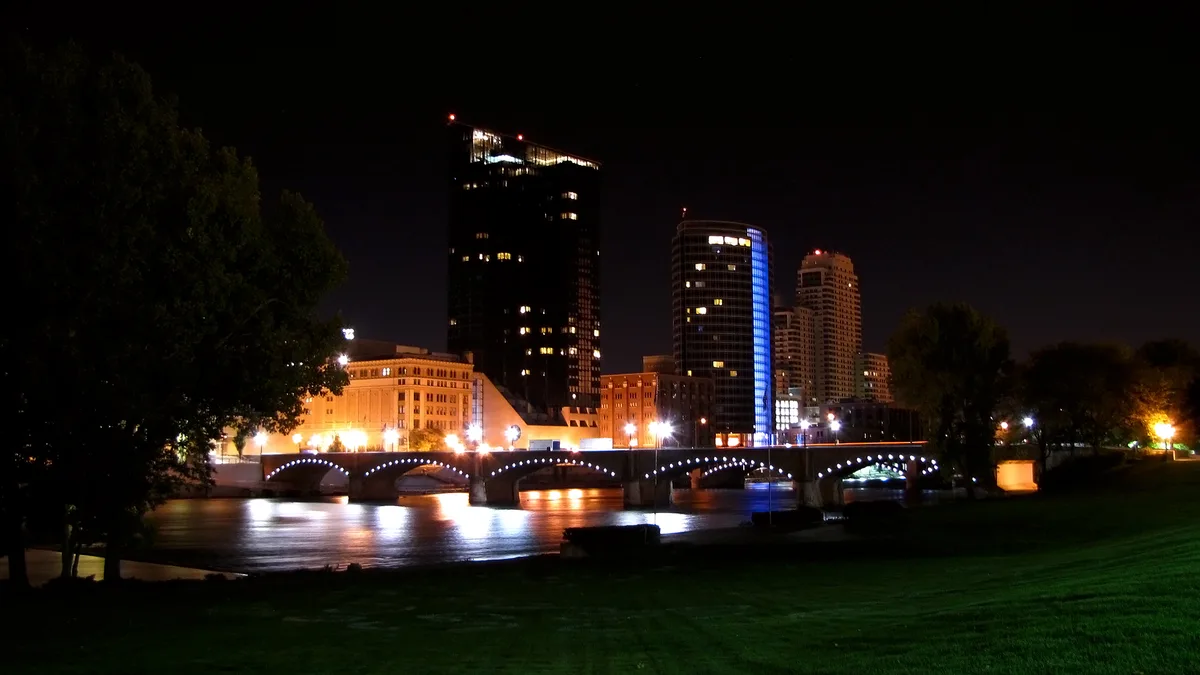
Grand Rapids matches the national average cost of living almost exactly — index 98, median home $290,000 as of 2025 — while anchoring a 1.1-million-person regional economy built on Corewell Health, one of the country’s largest health systems. Michigan’s second-largest city (roughly 200,000 residents) adds the “Beer City USA” craft scene, a furniture-manufacturing heritage turned design economy, and Lake Michigan’s shoreline 30 miles west. Unemployment holds at 3.2%. The trade-offs are seasonal and structural: severe winters with little sun from November through March, and a car needed for most daily life. For healthcare professionals, remote workers from pricier metros, and families wanting safe neighborhoods at Midwest prices, this guide maps what West Michigan actually offers.
Quick Answer — Is Grand Rapids Worth Moving To?
Grand Rapids is one of the Midwest’s most livable mid-size cities — known nationally as “Beer City USA,” home to a dominant healthcare economy, and priced well below the national average for housing while delivering genuine neighborhood character and cultural investment. The cost of living index sits around 98, nearly identical to the national average, with median home prices of $290,000 that leave most coastal city budgets with significant room to spare. The job market is stable and diverse, with unemployment around 3.2%. It’s an especially good fit for healthcare professionals, manufacturing and supply chain workers, remote workers from more expensive metros, and families seeking safe neighborhoods with strong schools — though Grand Rapids winters are severe, sunshine is limited from November through March, and the city requires car ownership for most daily needs.
At a Glance: Grand Rapids by the Numbers (2025)
| Metric | Grand Rapids |
|---|---|
| Population | ~200,000 city / 1.1 million metro |
| Median home price | $290,000 |
| Cost of living index | 98 (U.S. avg = 100) |
| Median household income | $58,000 |
| Unemployment rate | 3.2% |
| Average commute | 21 minutes |
| Walk Score | 55/100 |
| Niche overall grade | B+ |
| Crime index | 120 (U.S. avg = 100; lower = safer) |
| School district grade | B- |
| Average summer high | 82°F |
| Average winter low | 18°F |
| Annual sunshine days | 165 |
Grand Rapids’s Walk Score of 55 is among the higher figures for a Midwestern city of its size, reflecting genuine neighborhood walkability in Heritage Hill, East Hills, and the Fulton Street corridor. The 165 annual sunshine days — one of the lower counts among major metros — is the single most important climate fact for prospective residents to internalize before moving.
Cost of Living in Grand Rapids
Grand Rapids’s cost of living index of 98 puts it essentially at the national average — meaning residents pay about 2% less than a typical American city, a figure that understates the value relative to comparable metros. Median home prices of $290,000 are well below national medians for a city with genuine urban character, a thriving restaurant scene, and a major regional economy. Groceries run within 1–2% of the national average. Utilities average around $155/month, with heating costs elevated in winter (natural gas bills of $150–$250/month from December through February). Car ownership is required for most residents outside the Heritage Hill and East Hills walkability zones. Michigan has a flat 4.25% state income tax, and Grand Rapids levies a city income tax of 1.5% for residents (0.75% for nonresidents who work in the city) — a factor worth including in budget comparisons.
Housing Market Snapshot
Grand Rapids’s housing market is competitive for its price tier. Median home prices sit around $290,000 as of Q1 2025 (per Zillow), with the most affordable options in Wyoming, Kentwood, and Walker, and the most sought-after in East Grand Rapids, Ada/Cascade, and Heritage Hill. Median rent for a 1-bedroom apartment runs approximately $1,100–$1,300/month; a 2-bedroom averages $1,350–$1,650. East Grand Rapids — a separate city within the metro — is the premier school district address, with home prices ranging $400K–$800K. The market has appreciated steadily since 2020, with particular demand for Heritage Hill Victorians and newer suburban construction in Ada and Cascade Township.
---Jobs and Economy
Grand Rapids’s five largest employers reflect its healthcare dominance and industrial heritage: Corewell Health (formerly Spectrum Health — a 64,000-employee integrated health system and the largest private employer in Michigan), Amway/Alticor (direct-sales giant headquartered in Ada), Meijer (regional grocery and retail chain, HQ in Walker), Steelcase (globally dominant office furniture manufacturer), and Gordon Food Service (the largest family-operated foodservice distributor in North America). Healthcare is the metro’s defining economic sector, with Corewell Health, Trinity Health Michigan, and Pine Rest Christian Mental Health Services together employing well over 70,000 people in the region. Manufacturing remains significant: West Michigan is the global capital of office furniture, with Steelcase, Herman Miller (Zeeland, 30 min west), Haworth, and dozens of suppliers providing stable, often well-compensated employment. The technology sector has grown steadily, with Mercantile Bank, Accenture, and a cluster of software companies establishing Grand Rapids operations. Unemployment sits at 3.2%. (Sources: BLS; The Right Place economic development.)
Neighborhoods in Grand Rapids: Where to Live
Grand Rapids’s neighborhoods offer genuine variety in character and price. Here are four worth knowing before you choose.
Heritage Hill is Grand Rapids’s most architecturally distinguished neighborhood — a National Historic District just east of downtown with the largest collection of Victorian homes in the United States outside of a museum setting. It houses professors, healthcare professionals, and young families who value urban character and walkability to Wealthy Street’s restaurant corridor. Best for those who want the most city-like living experience Grand Rapids offers. Median home prices range $300K–$550K, with significant variation based on renovation level.
East Hills / Eastown is a bohemian neighborhood southeast of downtown known for its Wealthy Street corridor of independent restaurants, vintage shops, yoga studios, and craft breweries. It’s best for young professionals and creatives who want neighborhood energy at moderate prices. Median home prices range $250K–$425K; rental supply is strong. The neighborhood’s walk-to-coffee-shop character is unusual in West Michigan and broadly appreciated by urban transplants.
East Grand Rapids is the metro’s premier suburban school district community — a separate city within the Grand Rapids metro, with top-rated East Grand Rapids Public Schools (Niche A+), Reeds Lake, and an upscale Gaslight Village commercial district. Best for families with children who prioritize school quality above all. Median home prices range $400K–$800K+. It fills quickly; buyers should be prepared to move fast.
Ada / Cascade Township is an eastern suburban corridor that combines Amway world headquarters with attractive new construction, strong township schools, and the Thornapple River greenway. Best for professionals commuting to Amway or Steelcase, and families seeking suburban comfort with outdoor recreation access. Median home prices range $350K–$650K, with newer construction communities available.
For context on comparable Midwestern metros, see our guides to [Ann Arbor, Michigan], [Columbus, Ohio], and [Indianapolis, Indiana].
---Schools, Safety, and Quality of Life
Schools: Grand Rapids Public Schools earns a Niche B-, reflecting wide variation between magnet and gifted programs and neighborhood schools — a pattern common to most urban Michigan districts. Standout options include the Grand Rapids University Prep Academy and various charter schools. Suburban options dramatically outperform: East Grand Rapids Public Schools earns a Niche A+, Forest Hills Public Schools earns an A, Northview Public Schools a B+, and Rockford Public Schools (northwest suburbs) an A-. Grand Valley State University (Allendale, 15 min west) is the region’s primary undergraduate institution; Aquinas College, Calvin University, and Davenport University add further options. The Gerald R. Ford Presidential Museum is on the Grand River in downtown Grand Rapids.
Safety: Grand Rapids’s crime index of 120 is modestly above the national average, with property crime and some violent crime concentrated in specific urban corridors. East Grand Rapids, Ada, Cascade, Rockford, and most suburban townships post crime rates well below national norms. Heritage Hill and Eastown, despite their urban character, are generally considered safe neighborhoods day and night. Crime is highest in specific pockets of the city’s southwest side. (Source: FBI UCR 2023.)
Quality of Life: Corewell Health’s hospital system provides world-class tertiary care and is routinely recognized for cardiac, cancer, and children’s medicine. Grand Rapids ranks among the top five U.S. cities per capita for charitable giving — a legacy of its Dutch Reformed community roots that translates into strong nonprofit arts and social services infrastructure. ArtPrize, held every fall, transforms downtown Grand Rapids into the world’s largest open-submission art competition, drawing over 400,000 visitors. The Grand Rapids Symphony, Ballet Grand Rapids, and DeVos Performance Hall anchor the performing arts. Lake Michigan’s beaches at Holland, Grand Haven, and Saugatuck are 30–45 minutes west — one of the metro’s most distinctive quality-of-life assets.
Climate and Weather in Grand Rapids
Grand Rapids’s climate is one of the most challenging in the contiguous United States for sunshine-seekers. The city averages only 165 sunshine days per year, largely due to lake-effect cloud cover from Lake Michigan that settles over the region from October through March. Winter highs average in the low 30s°F; lows regularly drop to 18°F or below in January and February. Annual snowfall averages 72 inches — one of the highest figures for any U.S. city outside the Great Lakes snowbelt. Summers are genuinely pleasant: highs average 82°F in July with moderate humidity, and the Lake Michigan shoreline provides a natural cooling influence. Spring and fall arrive briefly but beautifully. The honest truth: winter lasts from November through mid-March, and residents who thrive in Grand Rapids have made peace with this — skiing, snowshoeing, hockey, and indoor social life fill the months. Those who need regular sunshine should factor this seriously. (Source: NOAA; WeatherSpark.)
Things to Do in Grand Rapids: Top Attractions and Day Trips
Grand Rapids has developed into one of the Midwest’s most rewarding mid-size city leisure destinations, led by its extraordinary craft brewery density, a revitalized downtown riverfront, and the cultural infrastructure funded by generations of West Michigan philanthropy.
-
ArtPrize — Held each fall in downtown Grand Rapids, ArtPrize is the world’s largest open-submission art competition — any artist can enter and the public votes on winners alongside a juried panel. Over 400,000 people attend the multi-week event, with hundreds of art installations placed in venues and outdoor spaces throughout downtown. It’s genuinely unlike any other American art event. If your move timing allows it, attend before committing — it captures Grand Rapids’s civic character as well as anything.
-
Beer City USA — The Craft Brewery Trail — Grand Rapids holds a legitimate claim to being America’s best craft beer city per capita, with over 80 breweries in the metro area. Flagship destinations include Founders Brewing (downtown, nationally acclaimed for All Day IPA and Backwoods Bastard), Brewery Vivant (in a historic chapel in Heritage Hill), Mitten Brewing (in a former fire station), and New Holland Brewing (Holland, 30 min west). The Beer City Ale Trail mobile app maps the full circuit; most are walkable from downtown.
-
Frederik Meijer Gardens & Sculpture Park — One of the finest botanical gardens and sculpture parks in the United States, Meijer Gardens operates a 158-acre facility with world-class outdoor sculpture (Rodin, Degas, Jaume Plensa), a Victorian glass conservatory, and a summer concert series that books national acts. Among the most impressive publicly accessible cultural institutions in any American metro of Grand Rapids’s size. Admission approximately $14 for adults.
-
Grand River Greenway and Downtown Riverfront — The Grand River runs through the heart of downtown Grand Rapids, flanked by the JW Marriott, DeVos Place convention center, and a developing network of riverfront paths and parks. The Blue Bridge pedestrian crossing connects downtown to Ah-Nab-Awen Park on the west bank. The riverfront is Grand Rapids’s living room and has seen significant investment since 2015.
-
Gerald R. Ford Presidential Museum — The Gerald R. Ford Presidential Museum in downtown Grand Rapids offers a thoughtful, well-curated exploration of the Ford presidency and the post-Watergate era of American politics. Free parking; admission approximately $12. The museum’s design is understated and honest, like the president it commemorates.
-
Lake Michigan Beaches (Holland, Grand Haven, Saugatuck) — The Lake Michigan shoreline 30–45 minutes west of Grand Rapids is one of the most spectacular freshwater coastal environments in North America — dunes, lighthouse-capped piers, and clear blue-green water that reads like a Caribbean poster. Holland’s Tulip Time Festival in May is a genuine spectacle; Grand Haven’s Coast Guard Festival draws 350,000 people. Saugatuck is the arts and wine crowd’s preferred destination. Summer weekends fill fast — early morning visits reward.
Day Trips: Ann Arbor is 2 hours east — University of Michigan, world-class bookstores, and an excellent food scene. Detroit is 2.5 hours east — remarkable architecture, a genuine music and arts renaissance, and Corktown’s restaurant explosion. Chicago is 3 hours south on I-94 — a natural long weekend destination. Traverse City is 3 hours north — cherry country, wineries, and one of Michigan’s best vacation towns. Sleeping Bear Dunes National Lakeshore is 3.5 hours north along the Lake Michigan coast.
---Moving to Grand Rapids: Your 90-Day Checklist
90–60 days before:
- Research neighborhoods and set housing budget using Zillow or Realtor.com — compare Heritage Hill/East Hills (urban) with Ada, Cascade, and East Grand Rapids (suburban, top schools)
- Get at least three moving company quotes (PODS, Allied Van Lines, HireAHelper, or local movers)
- Research school enrollment deadlines if you have children — East Grand Rapids and Forest Hills school of choice windows are competitive
- Review Michigan’s 4.25% flat state income tax and Grand Rapids’s 1.5% city income tax on residents
- Begin decluttering — book a self-storage unit if needed; West Michigan has competitive self-storage options
60–30 days before: 6. Confirm moving company and lock in dates 7. Transfer medical and dental records; find new providers — Corewell Health has a comprehensive primary care network throughout the metro 8. Notify employer, bank, and subscriptions of address change 9. Research utility providers (Consumers Energy for gas and electric in most areas) and set up accounts; budget for natural gas heating in winter 10. Arrange short-term lodging if permanent housing won’t be ready immediately
First 30 days after arrival: 11. Transfer driver’s license and vehicle registration to Michigan — visit a Michigan Secretary of State office within 30 days of establishing residency 12. Register to vote at new address 13. Explore Heritage Hill and the Wealthy Street restaurant corridor on foot — the best first impression of Grand Rapids’s character 14. Download the Beer City Ale Trail app and begin your local exploration 15. File change of address with USPS if not already done
---Frequently Asked Questions About Living in Grand Rapids
Q: Is Grand Rapids a good place to live? A: Grand Rapids earns a Niche B+ grade overall, reflecting affordable housing, a stable healthcare and manufacturing-driven job market, and cultural assets — including ArtPrize and the craft brewery scene — that consistently exceed expectations for a city its size. The honest trade-offs are severe winters with very limited sunshine from November through March, a city income tax that erodes some of the affordability advantage, and limited urban walkability outside select neighborhoods.
Q: What is the cost of living in Grand Rapids? A: Grand Rapids’s cost of living index is approximately 98, essentially at the national average. Median home prices sit around $290,000 as of 2025 — one of the most accessible entry points for homeownership among Midwestern cities with genuine urban character. Michigan’s 4.25% flat state income tax and Grand Rapids’s 1.5% city resident income tax should be factored into net cost comparisons. (Source: BestPlaces/Sperling’s; Zillow Q1 2025.)
Q: Is Grand Rapids safe? A: Grand Rapids’s crime index of 120 is modestly above the national average, with elevated property crime in specific urban corridors. East Grand Rapids, Ada, Cascade, Forest Hills, Rockford, and most suburban townships post crime rates well below national norms. Heritage Hill and Eastown are generally considered safe neighborhoods for pedestrians and residents. As with most Midwestern cities of comparable size, neighborhood selection is the most important safety variable. (Source: FBI UCR 2023.)
Q: What are the best neighborhoods in Grand Rapids? A: Heritage Hill is the premier historic neighborhood, with Victorian architecture and walkable access to the Wealthy Street restaurant corridor. East Hills/Eastown is best for creatives and young professionals seeking neighborhood energy. East Grand Rapids is the top choice for families with children, with A+ rated schools and Reeds Lake access. Ada and Cascade Township offer newer suburban construction and strong township schools for families and Amway-corridor commuters.
Q: What is the job market like in Grand Rapids? A: Grand Rapids’s metro unemployment rate sits at 3.2%, with Corewell Health as the dominant employer and healthcare as the most stable sector. Manufacturing remains significant — Steelcase, Amway, and the global office furniture supply chain employ thousands. Meijer and Gordon Food Service anchor retail and food distribution employment. A growing technology and professional services cluster has emerged, and remote workers have discovered the metro as an affordable alternative to Ann Arbor or Chicago. (Source: BLS; The Right Place.)
Q: How far is Grand Rapids from Detroit and Chicago? A: Grand Rapids is approximately 155 miles west of Detroit — about a 2.5-hour drive on I-96. Chicago is roughly 175 miles south, about a 3-hour drive on I-94 — a very accessible weekend destination. Gerald R. Ford International Airport (GRR) offers direct flights to major U.S. hubs, including Chicago O’Hare, Detroit Metro, Atlanta, and New York.
Grand Rapids vs. Nearby Cities
Grand Rapids (COL 98, median home $290K) competes most directly with Ann Arbor (COL 118, $465K) and Lansing (COL 88, ~$195K) within Michigan. Ann Arbor offers University of Michigan prestige and a more cosmopolitan food scene, but at a significant housing premium. Lansing is cheaper but has fewer private-sector employment anchors. Against Columbus, Ohio (COL 97, $285K), Grand Rapids is nearly identical in cost but smaller, with less job market diversity — offset by proximity to Lake Michigan and a stronger craft beer and arts scene per capita. Indianapolis (COL 95, $275K) is slightly more affordable with a broader job market but lacks Grand Rapids’s walkable historic neighborhoods and lake access. For full profiles of these cities, see our guides to [Ann Arbor, Michigan], [Columbus, Ohio], and [Indianapolis, Indiana].
Sources and Data Notes
Data sourced from U.S. Census Bureau / American Community Survey (2023), Bureau of Labor Statistics (2024), Niche.com (2024–2025 grades), BestPlaces.net / Sperling’s Cost of Living Index, FBI Uniform Crime Reports (2023), WeatherSpark / NOAA climate normals, Walk Score (2024), and Zillow / Realtor.com (home price and rent data, Q1 2025). All figures cited “as of 2025” reflect the most current available data at time of publication.