
Living in Detroit, MI: The Complete 2026 Relocation and Visitor Guide
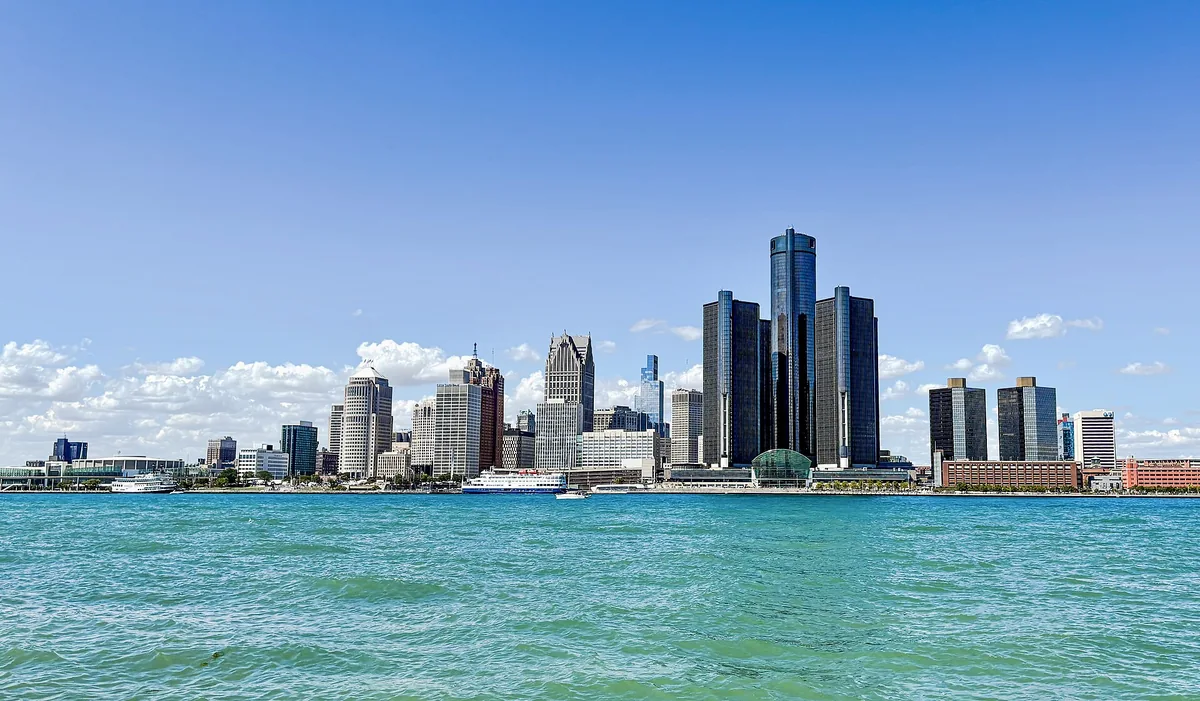
Detroit’s population grew for a third consecutive year in 2025, reaching 649,095 and making it the 26th-largest city in the country — the clearest sign yet that America’s most-watched comeback story is holding, according to the U.S. Census Bureau. The median home sale price crossed $100,000 for the first time in the city’s history in June 2026, hitting roughly $103,000, per RE/MAX of Southeastern Michigan. This guide is for movers weighing Detroit against other Midwest options, PCS families and career changers planning the logistics of a move, and visitors scouting the city before committing to it. What follows covers the real numbers: cost of living, jobs, neighborhoods, schools, safety, and the honest trade-offs that come with a city still rebuilding block by block.
Quick Answer — Is Detroit Worth Moving To?
Detroit is a low-cost, high-momentum big city rebuilding from a historic population and financial collapse, known for its automotive and fintech job base, some of the most affordable big-city housing in the nation, and a genuine cultural depth — a 65,000-work art museum, the birthplace of Motown, and a growing food and brewery scene in neighborhoods like Corktown. The cost of living sits 8.2% below the national average, and the job market has settled near a 4.4% unemployment rate as of April 2026, per the Bureau of Labor Statistics. It’s an especially good fit for buyers priced out of coastal and Sun Belt markets, remote workers, and people drawn to urban reinvention, though violent crime remains well above the national average and median household income in the city proper is low, at roughly $39,200.
At a Glance: Detroit by the Numbers (2026)
| Metric | Detroit |
|—|—|
| Population | 649,095 |
| Median home price | $103,000 |
| Cost of living index | 91.8 (U.S. avg = 100) |
| Median household income | $39,209 |
| Unemployment rate | 4.4% |
| Average commute | 27 minutes |
| Walk Score | 51/100 |
| Niche overall grade | C+ (est.) |
| Crime index | 496 (U.S. avg = 100; lower = safer) |
| School district grade | C+ |
| Average summer high | 83°F |
| Average winter low | 18°F |
| Annual sunshine days | 183 |
The numbers tell a split story: Detroit is genuinely cheap to live in and easy to find a job in, but income and crime figures reflect a city where recovery is real but uneven across neighborhoods. Anyone weighing a move needs to read the housing and safety sections below with that split firmly in mind.
Cost of Living in Detroit
As of 2026, Detroit’s cost of living index sits at 91.8 — meaning everyday expenses run about 8.2% below the national average, according to BestPlaces.net (Sperling’s). Housing is the biggest driver of that gap: a $103,000 median home price is a fraction of the roughly $420,000 U.S. median, though buyers should know that figure is contested — Zillow’s smoothed “typical value” estimate for Detroit sits notably lower, around $78,600, reflecting the difference between actual closed-sale prices and an algorithmic index. Groceries and utilities in the Detroit-Warren-Dearborn metro run close to the national average, while transportation costs stay low thanks to short in-city commutes and no toll roads on the main interstates. Healthcare costs track near parity nationally, aided by the presence of Henry Ford Health and the Detroit Medical Center. Michigan’s flat 4.25% state income tax applies regardless of where in the state you land, so Detroit offers no additional state-tax advantage over its suburbs.
Housing Market Snapshot
Detroit crossed the six-figure median home price threshold for the first time in June 2026 at roughly $103,000, a 32.6% single-month surge reported by RE/MAX of Southeastern Michigan, with Redfin’s three-month average through May 2026 confirming a similar $100,000 level, up 4.1% year-over-year. Rent for a one-bedroom apartment runs $950 to $1,275 a month, and a two-bedroom runs $1,100 to $1,500, with the citywide average near $1,337, according to RentCafe. It remains a buyer- and landlord-friendly market by national standards, though redeveloping pockets — Corktown, Midtown, and downtown — already command prices well above the citywide median.
## Jobs and EconomyDetroit’s economy is anchored by automotive manufacturing, with Stellantis and General Motors running major operations inside city limits and Ford headquartered just west in neighboring Dearborn. Rocket Companies and Ally Financial lead a fast-growing fintech and financial-services sector centered downtown, and Henry Ford Health together with the Detroit Medical Center support more than 245,000 direct healthcare jobs across the region. The city anchors the 16th-largest metro economy in the United States and the third-largest in the Midwest. Unemployment sits at 4.4% as of April 2026 for the Detroit-Warren-Dearborn metro area, per the Bureau of Labor Statistics — close to the national rate and near historic lows for the region, though that figure is a metro-wide average and has historically run higher inside city limits than in the surrounding suburbs. Median household income in the city proper is $39,209 (2024 American Community Survey, ±$2,683), well below the national median — a gap that reflects Detroit’s concentrated urban poverty even as the broader metro economy strengthens. Job growth is concentrated in skilled trades, EV manufacturing, and IT services, fueled partly by Ford’s Michigan Central innovation campus in Corktown; remote-work friendliness is moderate, since the job base still skews toward in-person manufacturing and healthcare roles rather than knowledge work.
Neighborhoods in Detroit: Where to Live
Detroit’s neighborhoods vary sharply in character, price, and housing stock, so where you land matters as much as the citywide averages suggest it should.
Corktown: Detroit’s oldest neighborhood, now a walkable mix of breweries, indie coffee shops, and tech energy centered on Ford’s redeveloped Michigan Central Station campus. Best for young professionals chasing walkability and startup energy. Housing runs mostly to rowhouses and new-build lofts. Landmark: Michigan Central Station.
Midtown: Anchored by Wayne State University, the Detroit Institute of Arts, and the Detroit Medical Center, Midtown draws students, academics, and creatives who want to be near campus and museum culture. Housing mixes historic apartment buildings with newer mid-rises. Landmark: the Detroit Institute of Arts.
Indian Village: Widely considered Detroit’s single nicest historic district, about three miles east of downtown, Indian Village suits families and architecture buffs drawn to pedigree over trend. It holds more than 350 single-family homes designed by noted early-20th-century architects, a density of historic craftsmanship rare anywhere in the Midwest.
Sherwood Forest: A tree-lined, historic enclave near Palmer Park known for Tudor Revival, Colonial, and Georgian homes built in the 1920s and ’30s. Best for established professionals and families wanting quiet, well-preserved streets over urban energy. Housing is single-family estate homes. Landmark: Palmer Park.
Detroit’s neighborhood profiles pair naturally with a look at the surrounding suburbs — Dearborn, Royal Oak, and Sterling Heights each offer a different trade-off between city grit and suburban polish.
## Schools, Safety, and Quality of LifeDetroit’s public schools carry a C+ overall grade from Niche, run by the Detroit Public Schools Community School District, a mark that sits below the metro-area average and reflects the district’s ongoing rebuild after decades of enrollment decline and budget strain. Families researching options should look at the district’s individual school ratings rather than the district average alone, since performance varies significantly by building, and many Detroit families also consider the region’s charter and suburban district options. For adult learners, career changers, and military spouses, Wayne State University and Wayne County Community College District both offer night, extension, and certificate programs inside city limits, plus the University of Michigan-Dearborn a short drive west.
Crime is Detroit’s most serious honest trade-off: the city’s crime index of roughly 496 — derived from a 2024 violent crime rate of 1,781.3 per 100,000 residents against a national rate of 359.1, per FBI Uniform Crime Report data — means violent crime runs about five times the national average. That risk is not spread evenly. Corktown, Midtown, downtown, Indian Village, and Sherwood Forest post noticeably lower crime rates than the citywide figure, and much of the reported violence concentrates in specific corridors outside the neighborhoods newcomers typically consider first. Quality of life is shaped by Henry Ford Health and the Detroit Medical Center’s large hospital systems, a Walk Score of 51 out of 100 citywide (“Somewhat Walkable”) that climbs to 80-plus in Midtown and downtown, and a pace of life that runs slower and more affordable than coastal peer cities, even as new investment concentrates growth in a handful of neighborhoods rather than spreading it evenly.
Climate and Weather in Detroit
Detroit runs a humid continental climate with four sharply distinct seasons rather than a mild year-round pattern. Summers are warm and humid, with a July average high of 83°F, while winters are genuinely cold, with a January average high of just 32°F and lows near 18°F, plus regular snow and ice. The city logs about 183 sunny days and more than 2,300 hours of sunshine a year, with December the darkest month. The main weather risks are lake-effect snow squalls off Lake Erie and Lake St. Clair, occasional severe thunderstorms and isolated tornadoes in spring and summer, and icy roads that periodically disrupt winter commutes — a layered wardrobe and winter-ready driving habits are a practical necessity, not an option. For housing, that means checking a home’s furnace age and insulation quality matters as much as checking its square footage.
Getting In and Out of Detroit
Detroit Metropolitan Wayne County Airport (DTW) sits about 20 miles from downtown, a 25- to 30-minute drive under normal traffic, and functions as a major Delta hub with extensive domestic and international service — a real asset for frequent flyers and anyone with family visiting from out of state. Interstates 75, 94, 96, and 375 converge downtown, giving drivers direct routes toward Chicago, Ann Arbor, and the rest of Michigan, and Amtrak’s Wolverine Service connects Detroit’s New Center station to Chicago and Pontiac via Ann Arbor and Dearborn. There is no ferry service. Military members traveling on orders and remote workers who fly often should weigh DTW’s hub status as a genuine point in Detroit’s favor relative to smaller Midwest metros.
Things to Do in Detroit: Top Attractions and Day Trips
Detroit’s leisure identity runs on art, music history, riverfront green space, and a sports-and-food downtown that stays lively on non-game days.
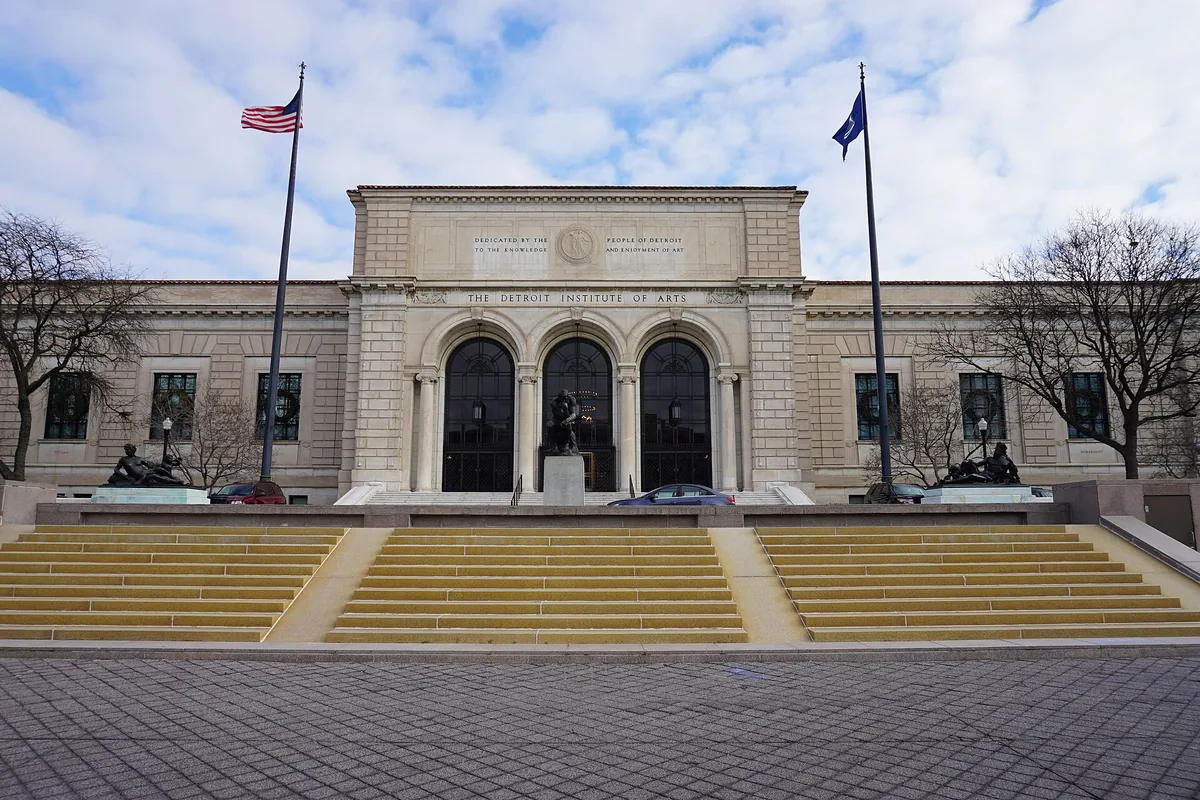
- Detroit Institute of Arts (DIA): A museum spanning more than 100 galleries and 65,000 works, including Diego Rivera’s Detroit Industry Murals. Appeals to art and culture lovers. General admission runs $14–19, though it’s free for residents of Wayne, Oakland, and Macomb counties thanks to a regional millage; closed Mondays.
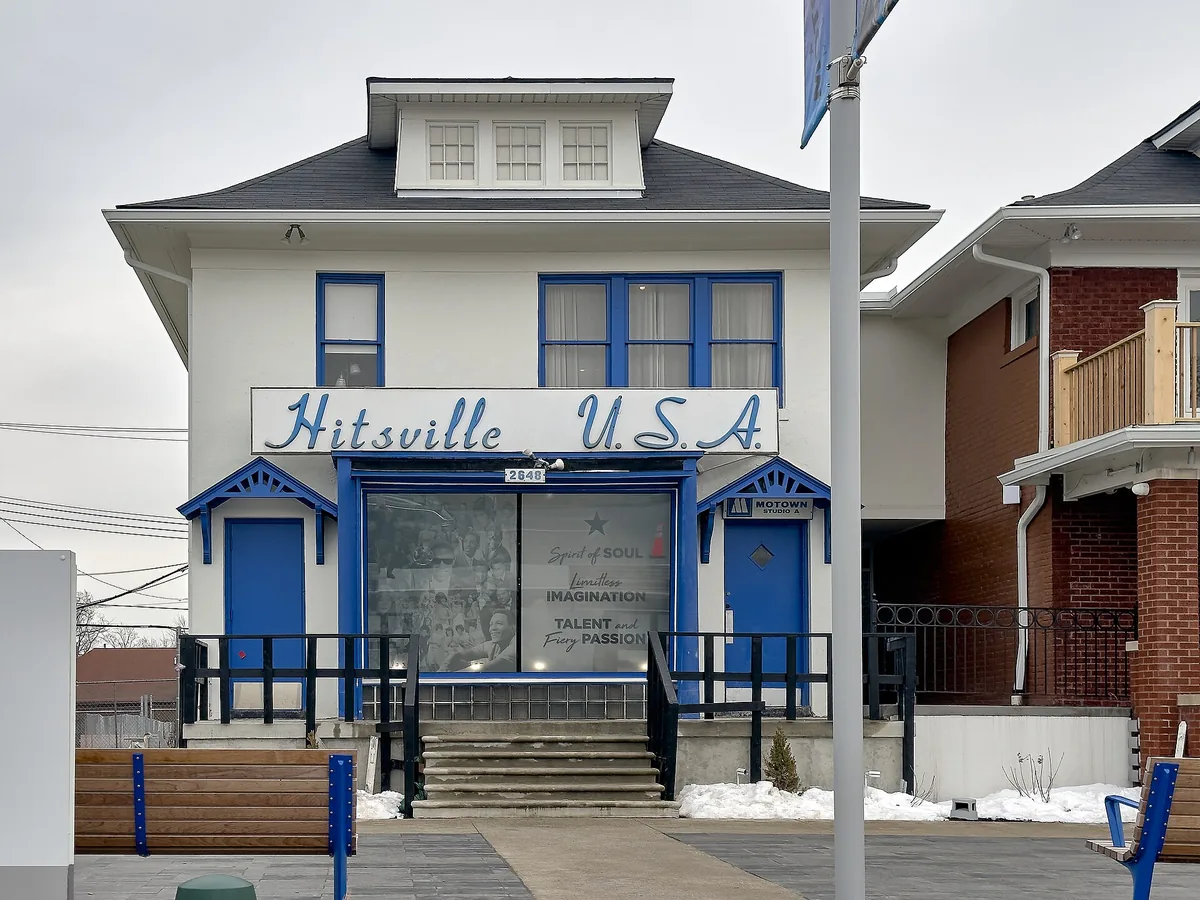
- Motown Museum (Hitsville U.S.A.): The birthplace of Motown Records, where visitors tour the original Studio A where the Supremes and other legends recorded their hits. Appeals to music-history fans. Tickets run about $20, and timed entry is worth booking in advance.
- Belle Isle Park: A 985-acre island park in the Detroit River with beaches, an aquarium, a conservatory, and walking trails. Appeals to families and outdoor lovers. Entry on foot is free; vehicles need a Michigan Recreation Passport, about $14 a year, sold at the park entrance. A park this size functions as one of the city’s main event grounds — summer concerts, fun runs, and festival weekends fill its calendar from May through September.

-
The Henry Ford Museum & Greenfield Village: A 250-acre complex in neighboring Dearborn celebrating American innovation, home to Thomas Edison’s lab and the Wright Brothers’ bicycle shop. Appeals to families and history buffs. Combo tickets run $28–45; book online to skip the line.
-
Comerica Park / Downtown sports district: Home of the Detroit Tigers, with a carousel, a 50-foot Ferris wheel, and a food hall open even on non-game days. Appeals to families and sports fans. Game-day ticket prices vary widely, and stadium tours run during the off-season.
For day trips, Ann Arbor sits about 40 miles and 45 minutes away, a lively college town built around the University of Michigan with farmers markets and a dense downtown dining and museum scene. Frankenmuth, roughly 90 miles and 1.5 hours north, bills itself as “Michigan’s Little Bavaria,” with German cuisine, year-round festivals, and Bronner’s Christmas Wonderland, the world’s largest Christmas store. Kensington Metropark in Milford, about 40 miles and 45 minutes to an hour away, offers 4,400 acres for hiking, biking, kayaking, and boating along a chain of lakes on the Huron River.
## Moving to Detroit: Your 90-Day Checklist90–60 days before:
-
Research neighborhoods and set a housing budget using Zillow or Realtor.com, keeping in mind the gap between transaction-based medians and algorithmic estimates.
-
Get at least three moving company quotes from PODS, Allied, HireAHelper, or a local Detroit-area mover.
-
Research Detroit Public Schools Community School District enrollment deadlines, or begin researching charter and suburban district options, if you have children.
-
Review Michigan’s flat 4.25% state income tax and factor it into your budget.
-
Begin decluttering — book a self-storage unit if needed before the move.
60–30 days before:
-
Confirm your moving company and lock in dates.
-
Transfer medical and dental records, and find new providers within the Henry Ford Health or Detroit Medical Center systems.
-
Notify your employer, bank, and subscriptions of your address change.
-
Research utility providers in Detroit (DTE Energy for power and gas) and set up accounts.
-
Arrange short-term lodging if permanent housing won’t be ready immediately.
First 30 days after arrival:
-
Transfer your driver’s license and vehicle registration to Michigan.
-
Register to vote at your new address.
-
Explore your neighborhood on foot using the attractions section above as a starting map.
-
Join local Facebook groups or Nextdoor for your specific neighborhood.
-
File a change of address with USPS if you haven’t already.
Q: Is Detroit a good place to live?
A: Detroit earns a C+ overall grade from Niche, a middling score that reflects a city genuinely rebuilding — its strongest asset is affordability, with a cost of living index 8.2% below the national average, and its clearest trade-off is a violent crime rate roughly five times the national average as of 2024. It’s a strong fit for buyers prioritizing affordability and urban culture over top school ratings or low crime numbers.
Q: What is the cost of living in Detroit?
A: Detroit’s cost of living index sits at 91.8 as of 2026, meaning everyday expenses run about 8.2% below the national average, according to BestPlaces.net. The median home sale price hit $103,000 in June 2026 — a small fraction of the roughly $420,000 U.S. median.
Q: Is Detroit safe?
A: Detroit’s crime index of about 496 reflects a real challenge — its 2024 violent crime rate of 1,781.3 per 100,000 residents runs nearly five times the national rate of 359.1, per FBI data. That risk concentrates unevenly, and neighborhoods like Corktown, Midtown, Indian Village, and Sherwood Forest post notably lower rates than the citywide figure.
Q: What are the best neighborhoods in Detroit?
A: Corktown offers walkable brewery-and-tech energy near Michigan Central Station; Midtown suits students and academics near Wayne State and the DIA; Indian Village is Detroit’s premier historic district for families and architecture buffs; and Sherwood Forest gives established professionals quiet, tree-lined streets near Palmer Park.
Q: What is the job market like in Detroit?
A: Unemployment sits at 4.4% as of April 2026 for the Detroit-Warren-Dearborn metro, per the Bureau of Labor Statistics, near historic lows for the region. Automotive manufacturing (Stellantis, General Motors), fintech (Rocket Companies, Ally Financial), and healthcare (Henry Ford Health) anchor the job base, alongside growing EV-manufacturing and IT-service hiring.
Q: How far is Detroit from Ann Arbor?
A: Ann Arbor sits about 40 miles west of Detroit, roughly a 45-minute drive via I-94 under normal traffic. Amtrak’s Wolverine Service also connects the two cities by rail, making Ann Arbor a realistic day trip or even a reverse commute for some Detroit-area residents.
Detroit vs. Nearby Cities
Dearborn, immediately west and home to Ford’s headquarters, offers a similar cost of living with notably lower crime and stronger schools, making it a common choice for families who want Detroit-area jobs without Detroit-proper trade-offs. Royal Oak, a walkable, revitalized suburb north of the city, runs more expensive on housing but delivers Detroit’s restaurant-and-nightlife energy with far less crime. Sterling Heights, one of Michigan’s largest suburbs to the northeast, trades urban walkability for larger lots, strong schools, and a lower crime rate, at the cost of a longer commute into downtown. For full profiles of these cities, see our guides to Dearborn, Royal Oak, and Sterling Heights.
Sources and Data Notes
Data for this guide was drawn from the U.S. Census Bureau and American Community Survey (2024–2025), the Bureau of Labor Statistics (April 2026), Niche.com, BestPlaces.net/Sperling’s Cost of Living Index, FBI Uniform Crime Reports (2024), Walk Score, RentCafe, and Zillow/Redfin/RE/MAX of Southeastern Michigan housing data. Statistics reflect 2024–2026 data as noted throughout; the median home price and population figures are the most current available as of mid-2026.