
Living in Ann Arbor, MI: The Complete 2026 Relocation and Visitor Guide
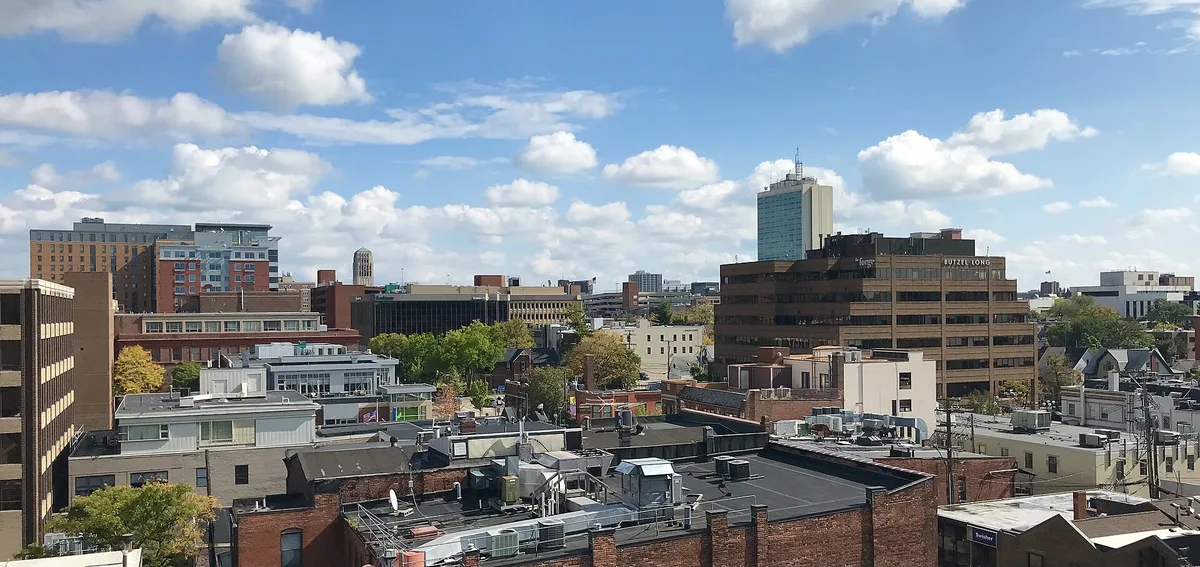
Ann Arbor holds an A+ overall grade from Niche, a crime index 32% below the national average, and the top-ranked public university in the country — a combination few U.S. cities of its 125,000-person size can match. The price of entry: a median home of $465,000 and living costs about 18% above the national average, driven by University of Michigan housing demand but still far below coastal university towns. Situated 45 miles west of Detroit, the city adds a walkable downtown, independent dining, and a tech and medical economy built on UMich research output. This guide is for anyone seriously considering the move — joining the university, working the med-tech corridor, or looking for a Midwestern city that consistently punches above its size.
Quick Answer — Is Ann Arbor Worth Moving To?
Ann Arbor is a genuinely exceptional mid-sized city known for the University of Michigan’s unrivaled academic and athletic culture, a startup and tech ecosystem that has grown steadily around UMich’s research output, and a downtown that offers genuine walkability and independent dining in a region otherwise dominated by sprawl. The cost of living sits above the national average — driven primarily by housing demand from UMich — but remains far below comparable university towns on the coasts. It’s an especially strong fit for academics, healthcare professionals, tech workers, and families who want excellent schools and a culturally rich environment, though Michigan winters are serious and the housing market has tightened meaningfully over the past five years.
At a Glance: Ann Arbor by the Numbers (2025)
| Metric | Ann Arbor |
|---|---|
| Population | ~125,000 (city); ~380,000 (metro) |
| Median home price | $465,000 |
| Cost of living index | 118 (U.S. avg = 100) |
| Median household income | $72,000 |
| Unemployment rate | 3.4% |
| Average commute | 22 minutes |
| Walk Score | 58/100 |
| Niche overall grade | A+ |
| Crime index | 68 (U.S. avg = 100; lower = safer) |
| School district grade | A |
| Average summer high | 82°F |
| Average winter low | 17°F |
| Annual sunshine days | 175 |
Ann Arbor earns an A+ from Niche, reflecting a community that scores exceptionally well on education, quality of life, and livability. The 175 annual sunshine days reflect the Great Lakes cloud cover that is a real feature of Michigan winters — something to factor into the relocation decision alongside the impressive economic and academic assets.
Cost of Living in Ann Arbor
As of 2025, Ann Arbor’s cost of living index sits at approximately 118 — about 18% above the national average, according to BestPlaces/Sperling’s. For a city anchored by a top-three U.S. university and a thriving biotech and tech sector, that premium is modest by national standards. Housing drives the bulk of the premium: the median home price has reached $465,000, and rental demand from the university keeps one-bedroom apartments competitive even far from campus. Groceries run about 5–8% above the national average, utilities are moderate (though heating costs are meaningful in winter months), and transportation costs are lower than average for those who can walk or bike to work or campus. Healthcare costs are near the national average, with Michigan Medicine providing world-class care. Michigan imposes a flat 4.25% state income tax, which is among the more moderate rates nationally and meaningfully lower than states like California, Illinois, or New York.
Housing Market Snapshot
Ann Arbor’s housing market has tightened significantly since 2020, driven by remote workers relocating from Detroit and Chicago, UMich expansion, and Michigan Medicine’s growing workforce. The median home price as of 2025 is approximately $465,000, with single-family homes in desirable neighborhoods like Burns Park and Kerrytown frequently exceeding $600,000. Renters face a competitive market: one-bedroom apartments average $1,400–$1,800 per month, and two-bedrooms typically run $1,800–$2,400. Campus-adjacent apartments command a premium. The market favors sellers, and well-priced listings typically move quickly. Data sourced from Zillow and Realtor.com.
## Jobs and EconomyThe University of Michigan is the dominant economic engine of Ann Arbor, and its influence extends far beyond the classroom. UMich directly employs roughly 30,000 people across its academic, research, and administrative divisions, and Michigan Medicine — the university’s health system and one of the top-ranked hospital systems in the United States — adds thousands more in healthcare positions. As of 2025, Ann Arbor’s unemployment rate sits at approximately 3.4%, according to the Bureau of Labor Statistics, reflecting a stable and educated workforce. Beyond the university, the city has developed a robust technology and startup ecosystem: Google maintains a significant Ann Arbor engineering office, and dozens of companies spun out of UMich research have anchored a local innovation economy. Domino’s Pizza is headquartered in Ann Arbor, and the broader metro’s auto-industry ties bring engineering and supply-chain roles within commuting range. The median household income of $72,000 reflects the mix of university employees, tech workers, and the student population that shapes the city’s demographics.
Neighborhoods in Ann Arbor: Where to Live
Ann Arbor’s neighborhoods each have a distinct identity, shaped by their proximity to the university, the character of their housing stock, and the demographics they attract. The city is compact enough that most neighborhoods feel connected, and the downtown core is accessible from nearly every part of the city within a 15-minute drive. Those seeking more space and lower prices often look to neighboring Ypsilanti or the suburbs of Saline and Dexter.
Burns Park is Ann Arbor’s most beloved family neighborhood — a historic district of craftsman bungalows, colonials, and tudors just southeast of the university campus. The tree-canopied streets, Burns Park itself (a beloved community green with pool and tennis), and proximity to both campus and the Kerrytown market district make it perennially the most sought-after address in the city. Homes here routinely exceed $600,000, and the neighborhood’s walkability is exceptional by Ann Arbor standards.
Kerrytown is Ann Arbor’s most urban, walkable neighborhood — a compact zone of converted warehouses, independent restaurants, and the beloved Kerrytown Market & Shops anchored by the historic Zingerman’s Delicatessen. Condos, lofts, and apartments attract young professionals, empty-nesters, and anyone who wants to live within walking distance of the farmers’ market, the downtown arts scene, and Michigan Stadium. It’s the closest Ann Arbor gets to a genuine urban neighborhood.
The Old West Side is Ann Arbor’s most architecturally diverse historic district — a mix of Victorian-era homes, bungalows, and mid-century houses on quiet residential streets just west of downtown. Walkable to Main Street restaurants and shops, the neighborhood attracts a mix of faculty, young families, and longtime residents who value the independent character and human scale of older Ann Arbor. Entry-level homes exist here that are difficult to find in Burns Park.
Pittsfield / South Ann Arbor represents a more suburban, affordable corner of the broader Ann Arbor area, with newer construction, larger lots, and easier parking than the older neighborhoods closer to campus. Families seeking more square footage and competitive school access at a lower price point often settle here, and the commute to both UMich and the tech-corridor employers along US-23 is manageable. The trade-off is a car-dependent environment with less of the walkable neighborhood character that defines the city’s most desirable areas.
## Schools, Safety, and Quality of LifeSchools: Ann Arbor Public Schools earns an A from Niche and is one of the strongest urban public school districts in the Midwest. The district’s flagship high schools — Pioneer, Huron, and Skyline — regularly place graduates in elite universities at rates far above the state average. The University of Michigan’s proximity creates a pipeline of highly educated teachers and researchers who engage with the public school system, and the city’s demographics reflect a highly educated parent community invested in public education. UMich itself, of course, is the crown jewel: ranked #1 among public universities by U.S. News & World Report and a member of the Association of American Universities, it offers graduate and professional programs across virtually every discipline.
Safety: Ann Arbor is a generally safe city for its size and character, with a crime index of approximately 68 — meaningfully below the national average of 100, according to FBI Uniform Crime Reports. Property crime near the university’s off-campus housing areas is the most common category of concern, as is typical of college towns, but violent crime rates are low and the city maintains a strong community policing culture. Families and individuals relocating from larger metros routinely remark on the sense of personal safety in everyday life.
Quality of Life: Michigan Medicine — consistently ranked among the top 10 hospital systems in the country by U.S. News — provides world-class healthcare within the city, a significant quality-of-life factor for those managing ongoing health conditions or raising families. The city’s walkable downtown, lined with independent restaurants, bookstores, and music venues, provides genuine urban amenity in a compact form. The University Musical Society brings world-class performers to Ann Arbor year-round, and the Michigan Theater (a restored 1927 movie palace) anchors the city’s film culture. The Ann Arbor Art Fair, held each July, draws hundreds of artists and hundreds of thousands of visitors — transforming the downtown for four days into one of the largest outdoor art markets in the country.
Climate and Weather in Ann Arbor
Ann Arbor’s climate is shaped by its Great Lakes location, and honesty demands acknowledging both sides of that picture. Winters are cold and often grey: average January lows reach 17°F, and the Great Lakes cloud cover means that sunshine is genuinely scarce from November through February — the city averages just 175 sunny days per year, one of the lower totals among major Midwestern cities, according to WeatherSpark and NOAA data. Lake-effect snow from Lake Erie can produce significant accumulation, and ice storms occur several times each winter. Summers, however, are warm and genuinely pleasant — average July highs reach 82°F with comfortable humidity — and the fall foliage season across southeastern Michigan is spectacular. For housing, energy-efficient insulation and a reliable furnace are practical necessities, and heating costs should be factored into any annual budget.
Things to Do in Ann Arbor: Top Attractions and Day Trips
Ann Arbor’s leisure identity is shaped almost entirely by the University of Michigan — the Big House, the arts programming, the research culture, and the students who fill the city’s restaurants and bars — but the city has developed genuine independent character beyond the campus. The food scene is disproportionately excellent, the outdoor recreation options in the surrounding region are substantial, and the proximity to Detroit gives residents access to a major city’s cultural offerings without paying major-city prices.
-
Michigan Stadium (“The Big House”) — The largest stadium in the Western Hemisphere, with a capacity of over 107,000 seats, Michigan Stadium is a genuinely awe-inspiring structure and the spiritual center of Ann Arbor’s identity. A Saturday home football game transforms the city into one of the largest single-day gatherings in the United States. Even for casual sports fans, the atmosphere is worth experiencing at least once. Tickets are available through the University’s athletics department; premium games sell out quickly.
-
Zingerman’s Delicatessen — Ann Arbor’s most famous institution that isn’t a university, Zingerman’s is a nationally recognized deli and food community that has spawned a network of eight related businesses (a bakehouse, creamery, coffee roaster, and more) over four decades. The flagship deli on Detroit Street serves extraordinary sandwiches and a curated selection of specialty foods in a famously unpretentious, always-packed space. Plan for a wait on weekends — it is worth it, and is the single best introduction to Ann Arbor’s food culture.
-
University of Michigan Museum of Art (UMMA) — One of the finest university art museums in the country, UMMA houses a permanent collection of over 23,000 objects across a beautifully renovated building on the central campus. Admission is free, exhibitions rotate regularly, and the museum’s programming — lectures, film screenings, community events — makes it one of the city’s genuine cultural anchors accessible to everyone, not just the university community.
-
Nichols Arboretum (“The Arb”) — A 123-acre botanical garden and natural area managed by the University of Michigan, the Arb is one of Ann Arbor’s most beloved outdoor spaces — a network of wooded trails, wildflower meadows, and river overlooks that feels remarkably wild given its location minutes from the campus. It is free to enter, open year-round, and one of the best urban nature escapes in the Midwest. The peony garden in June is worth a specific visit.
-
Ann Arbor Farmers Market — Operating in the Kerrytown district since 1919, the Ann Arbor Farmers Market runs Wednesday and Saturday mornings from May through December and offers a genuine cross-section of southeastern Michigan’s agricultural abundance — produce, meats, cheeses, flowers, baked goods, and crafts from regional farms and artisans. It is the social heart of the neighborhood on Saturday mornings and a reliable ritual for Ann Arbor residents regardless of how long they’ve lived in the city.
For day trips, Detroit (45 minutes east via I-94) offers the full range of a major city’s attractions — the Detroit Institute of Arts (world-class, free Sunday afternoons), the revitalized riverfront, Eastern Market, and a restaurant scene that has become one of the Midwest’s most exciting. Sleeping Bear Dunes National Lakeshore (3 hours north) features some of the most dramatic sand dune scenery in the eastern United States, with Lake Michigan views that feel genuinely otherworldly — best in late summer and early fall. Toledo, Ohio (1 hour south) makes a quick easy day trip with a surprisingly excellent art museum and waterfront district.
## Moving to Ann Arbor: Your 90-Day Checklist90–60 days before:
- Research neighborhoods and set housing budget using Zillow or Realtor.com
- Get at least three moving company quotes (PODS, Allied, HireAHelper, or local movers)
- Research Ann Arbor Public Schools enrollment deadlines — the district is excellent and in demand
- Review Michigan’s 4.25% flat income tax
- Begin decluttering — book a self-storage unit if needed
60–30 days before: 6. Confirm moving company and lock in dates — avoid late August (UMich student move-in) 7. Transfer medical and dental records; Michigan Medicine is a world-class option for new providers 8. Notify employer, bank, and subscriptions of address change 9. Research utility providers (DTE Energy for gas and electric) and set up accounts 10. Arrange short-term lodging if permanent housing won’t be ready immediately
First 30 days after arrival: 11. Transfer driver’s license and vehicle registration to Michigan 12. Register to vote at new address 13. Explore downtown, the UMich campus, and the Nichols Arboretum using the attractions section above 14. Join local Facebook groups or Nextdoor for your neighborhood 15. File change of address with USPS if not already done
## Frequently Asked Questions About Living in Ann ArborQ: Is Ann Arbor a good place to live? A: Ann Arbor earns an A+ from Niche and consistently ranks among the best mid-sized cities in the country — a verdict that reflects the genuine depth of its assets: the University of Michigan, Michigan Medicine, a walkable downtown, strong schools, and a food and arts scene that exceeds what most cities its size can offer. As of 2025, the honest trade-offs are housing costs that have risen sharply over the past five years and winters that are genuinely grey and cold from November through March.
Q: What is the cost of living in Ann Arbor? A: Ann Arbor’s cost of living index sits at approximately 118 — about 18% above the national average — making it meaningfully more affordable than comparable university towns like Boulder, Berkeley, or Cambridge. The median home price of $465,000 and one-bedroom rents of $1,400–$1,800 per month reflect a UMich-driven market that has tightened since 2020. Michigan’s 4.25% flat income tax is among the more moderate state rates nationally.
Q: Is Ann Arbor safe? A: Ann Arbor is a generally safe city, with a crime index of approximately 68 compared to the national average of 100, according to FBI Uniform Crime Reports. The most common crime category is property crime in student-heavy off-campus areas, which is typical of college towns. Violent crime rates are low, and families relocating from larger metropolitan areas consistently cite the sense of everyday safety as one of Ann Arbor’s most appreciated qualities.
Q: What are the best neighborhoods in Ann Arbor? A: Burns Park is the top choice for families — historic homes, excellent schools, and proximity to both campus and downtown. Kerrytown appeals to urban-minded residents who want walkability and independent dining at their doorstep. The Old West Side offers more affordable entry points in a historic setting just west of Main Street. Those seeking more space and newer construction often look south toward Pittsfield or to the neighboring communities of Saline and Dexter.
Q: What is the job market like in Ann Arbor? A: The University of Michigan and Michigan Medicine together employ tens of thousands of people and anchor a stable, education-and-healthcare-anchored economy. Beyond the university, Ann Arbor has developed a genuine tech and startup ecosystem, with Google, Duo Security (acquired by Cisco), and dozens of UMich spinoffs providing private-sector employment. The unemployment rate of approximately 3.4% is below the national average, and the city’s proximity to Detroit’s auto-industry engineering base adds additional employment depth for the broader metro.
Q: How far is Ann Arbor from Detroit? A: Ann Arbor is approximately 45 miles west of downtown Detroit — a 45 to 60-minute drive via I-94 in normal conditions, though peak-hour traffic can extend that meaningfully. The WALLY commuter rail line has been in planning stages for years but remains limited as of 2025. Many Ann Arbor residents work remotely or commute to Detroit for specific roles, treating Detroit’s cultural offerings — the DIA, Eastern Market, the music scene — as an accessible day-trip complement to Ann Arbor’s more self-contained lifestyle.
Ann Arbor vs. Nearby Cities
Detroit, 45 minutes east, offers dramatically more affordable housing and a major city’s full cultural and employment depth, but with higher crime and more uneven neighborhood quality — many Ann Arbor residents work in Detroit while choosing to live in Ann Arbor for the schools and safety. East Lansing, home to Michigan State University, is a direct peer college town 60 miles northwest, with lower housing costs and a similar energy but fewer of Ann Arbor’s independent amenities. Ypsilanti, immediately adjacent to Ann Arbor’s east side, offers a far more affordable entry point — median home prices run 40% lower — and has its own distinct arts and music character, making it a serious consideration for budget-conscious newcomers. For full profiles of these cities, see our guides to Detroit, East Lansing, and Ypsilanti.
Sources and Data Notes
Data for this guide was drawn from the U.S. Census Bureau American Community Survey (2024), Bureau of Labor Statistics (2025), Niche.com, BestPlaces.net/Sperling’s Cost of Living Index, FBI Uniform Crime Reports, WeatherSpark, Walk Score, and Zillow/Realtor.com. Statistics reflect 2024–2025 data where available.