
Living in Shreveport, LA: The Complete 2026 Relocation and Visitor Guide
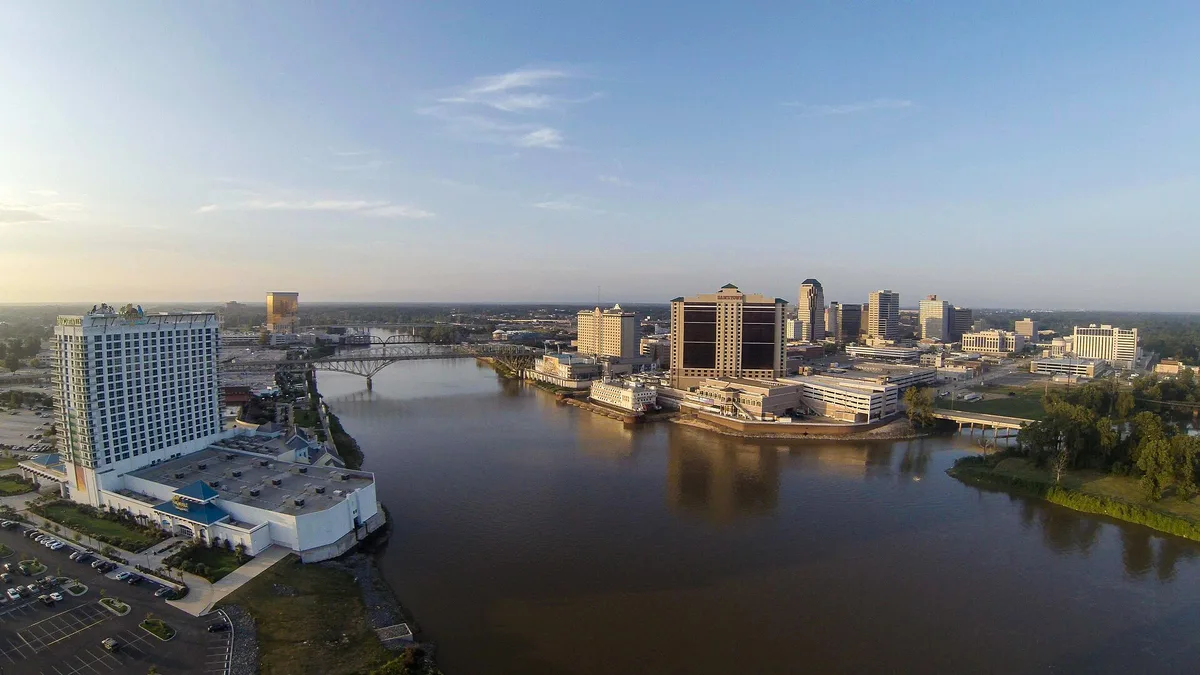
Shreveport pairs a cost of living index of 77.7 — meaning everyday expenses run about 22% below the national average — with a median home price of $174,413, less than half the U.S. median of roughly $393,000. The regional economy is anchored by Barksdale Air Force Base just across the Red River in Bossier City, headquarters of Air Force Global Strike Command and home to more than 15,000 active-duty and reserve personnel, making the Shreveport-Bossier metro one of the more affordable military and healthcare hubs in the South. The trade-offs get honest treatment throughout this guide: a violent crime rate well above the national average, and a Walk Score of just 31 that makes a car essential. Whether you’re PCSing to Barksdale, relocating for a healthcare or logistics job, or visiting first to scout the twin cities, here is everything on cost of living, jobs, neighborhoods, schools, safety, and things to do in Shreveport.
Quick Answer — Is Shreveport Worth Moving To?
Shreveport is an affordable Ark-La-Tex city that earns a B- overall grade from Niche.com, built around a cost of living 22% below the national average and a median home price of $174,413 as of 2026. The job market centers on Barksdale Air Force Base, healthcare systems, and Caddo Parish’s public sector, with unemployment at 4.6% for the metro as of July 2025. It’s an especially strong fit for military families stationed at or near Barksdale, healthcare workers, and anyone prioritizing housing affordability over walkability, though a violent crime rate well above the national average and a car-dependent layout (Walk Score 31/100) are genuine trade-offs worth weighing.
At a Glance: Shreveport by the Numbers (2026)
| Metric | Shreveport |
|---|---|
| Population | 176,578 |
| Median home price | $174,413 |
| Cost of living index | 77.7 (U.S. avg = 100) |
| Median household income | $48,465 |
| Unemployment rate | 4.6% |
| Average commute | 17 minutes |
| Walk Score | 31/100 |
| Niche overall grade | B- |
| Crime index | Violent crime rate 1,228.5 per 100,000 (2024 FBI UCR data; no normalized index available — see Safety section) |
| School district grade | B |
| Average summer high | 91°F |
| Average winter low | 39°F |
| Annual sunshine days | 211 |
These numbers describe a genuinely affordable city with a short commute and a below-average cost structure, offset by a crime rate that deserves honest context rather than a single tidy index number. Shreveport’s 17-minute average commute is nearly 10 minutes shorter than the national average, a direct result of the low Walk Score — most residents drive everywhere, but they aren’t driving far.
Cost of Living in Shreveport
As of 2026, Shreveport’s cost of living index sits at 77.7 on the BestPlaces.net scale, where 100 represents the national average — meaning everyday life here costs roughly 22% less than the typical American city. Housing drives most of that gap: the median home price of $174,413 is less than half the national median of about $393,000, according to BestNeighborhood.org market data. Groceries and utilities track close to or modestly below national norms in most Ark-La-Tex cost-of-living breakdowns, while healthcare costs benefit from a competitive regional market anchored by two major hospital systems. Transportation costs run low relative to income since Shreveport has no toll roads and gas prices in Louisiana typically sit near or below the national average, though the near-total reliance on personal vehicles (89.7% of commuters drive alone, per Walk Score data) adds up over time. Louisiana levies a state income tax with rates up to 4.25% as of 2026, a modest but real factor to weigh against the city’s low overall costs — especially for households moving from a no-income-tax state.
Housing Market Snapshot
Sources diverge on Shreveport’s exact home values: BestNeighborhood.org lists a median list price of $174,413, while Redfin reported a median sale price near $188,000 in February 2026, up 7.7% year-over-year, and Zillow’s algorithmic average home value estimate runs lower still at $124,062 — a spread that reflects the real price gap between the city’s more affluent southeast neighborhoods and its more affordable north side. Homes moved quickly in early 2026, with a median of just 13 days to pending, signaling a market that still favors sellers despite the region’s overall affordability. Renters will find one-bedroom units averaging $650–$850 per month and two-bedrooms in the $850–$1,100 range, with Niche.com citing a citywide average rent near $781/month. For military families arriving on PCS orders — a permanent change of station, in military shorthand — that rent range typically sits comfortably within the Barksdale-area BAH (basic allowance for housing) rate.
---Jobs and Economy
Shreveport’s economy runs on five anchor employers: Barksdale Air Force Base, Willis-Knighton Health System, LSU Health Shreveport, Caddo Parish Public Schools, and an Amazon Fulfillment Center. Barksdale, headquartered across the Red River in Bossier City, is by far the region’s largest single employer — it hosts the 2nd Bomb Wing and serves as headquarters for both Air Force Global Strike Command and the 8th Air Force, employing more than 15,000 active-duty and reserve personnel on a base spanning over 22,000 acres. Willis-Knighton Health System employs more than 7,300 people across its hospital network, and LSU Health Shreveport contributes an estimated $600 million in regional economic impact between its medical school, research programs, and clinical operations. Caddo Parish Public Schools, serving over 33,000 students, is the largest K-12 employer in the parish. As of July 2025, the Shreveport-Bossier City metropolitan statistical area unemployment rate stood at 4.6%, according to the Federal Reserve Bank of St. Louis (FRED series SHRE322URN); the metro is gradually diversifying beyond its traditional energy and manufacturing base, with logistics and tech-adjacent roles growing alongside the government, healthcare, and education sectors that already anchor it. Remote-work friendliness is moderate here, tied less to a booming tech scene and more to the region’s low cost of living, which stretches a remote salary further than it would in a coastal metro.
Neighborhoods in Shreveport: Where to Live
Shreveport’s best-known residential areas cluster in the southern half of the city, and the twin-city relationship with Bossier City across the Red River means many residents — especially those tied to Barksdale — weigh both sides of the river when house-hunting. For additional options nearby, see our guides to Bossier City, Minden, and Natchitoches.
South Highlands is a historic, tree-lined district about 10 minutes south of downtown, built around early-20th-century homes on walkable streets near shops and cafes. Best for families and buyers who want an established neighborhood feel without leaving the urban core, South Highlands centers on Columbia Park, a longtime neighborhood gathering spot.
Broadmoor is an established residential subdivision known for pine-lined streets and consistently lower-crime blocks relative to the citywide average. Best for families and retirees seeking quiet suburban living, Broadmoor’s homes cluster around Betty Virginia Park, a well-used green space with walking paths and picnic areas.
Shreve Isle sits close to the Red River with a mix of mid-century homes and proximity to downtown. Best for buyers who want a short commute into the city center along with easier access to the river, Shreve Isle borders the Shreveport Country Club and its surrounding streets.
Southern Hills is a newer, family-oriented area in south Shreveport, close to Shreveport Regional Airport and major shopping corridors. Best for families and commuters — including many who travel for work through the airport — Southern Hills centers on the Southern Hills Business Park corridor, which anchors much of the area’s retail and office growth.
---Schools, Safety, and Quality of Life
Schools: Caddo Parish Public Schools, serving the city of Shreveport, holds a B overall district grade from Niche.com as of 2026. Standout campuses include Caddo Magnet High School, which carries an A+ Niche rating, and C.E. Byrd High School, rated A — both well above the district average and popular draws for families choosing a neighborhood partly on school access. Higher education options include LSU Health Shreveport for medical and health sciences and several community college and extension programs in the metro. For adult learners — including military spouses and service members transitioning out of Barksdale — regional community college and university continuing-education programs offer night and flexible-schedule courses designed to fit around work and deployment schedules.
Safety: Shreveport’s crime picture requires more context than a single index number. Sources reviewed for this guide did not surface a normalized, BestPlaces-style crime index (U.S. average = 100) for the city; instead, FBI Uniform Crime Report data compiled by NeighborhoodScout puts Shreveport’s 2024 violent crime rate at 1,228.5 per 100,000 residents, well above both the national and Louisiana state averages, with a property crime rate of 3,990.5 per 100,000. That is a real and honest challenge, not one to gloss over. At the same time, risk is not evenly distributed: Broadmoor and South Highlands are consistently cited among the city’s lower-crime residential areas, and many Barksdale-affiliated families choose to live in Bossier City or south Shreveport specifically to trade proximity for a quieter block. Careful, address-level research before signing a lease or making an offer is especially important here.
Quality of Life: Willis-Knighton Health System and LSU Health Shreveport anchor a strong regional hospital and healthcare-training presence, giving residents access to specialty care that punches above the weight of a city this size. Walkability is limited — the citywide Walk Score of 31/100 reflects a car-dependent layout, though the Downtown Riverfront district scores as high as 61. The overall pace of life is unhurried and affordable, with the Shreveport-Bossier twin-city relationship shaping much of daily routine: many residents cross the Red River regularly for work, shopping, or entertainment, treating the two cities as one functional metro rather than separate destinations.
Climate and Weather in Shreveport
Shreveport has a humid subtropical climate with hot, humid summers and mild winters. Summer highs (June through September) average 91°F, with heat index values frequently running higher, according to NWS Shreveport-Bossier climate data. Winters are mild, with January highs averaging around 54°F and overnight lows dipping into the high 30s°F; the city sees about 211 sunny days per year. Weather risks include severe thunderstorms and tornadoes in spring, occasional winter ice storms that can disrupt power and roads — the region lacks snow-removal infrastructure, so even a light ice event can shut down travel for a day or two — and remnant tropical systems moving up from the Gulf that bring heavy rain. For house-hunters, this means prioritizing outdoor living space for spring and fall, budgeting for reliable air conditioning through a long, humid summer, and treating winter driving after an ice advisory as a genuine hazard rather than a novelty.
Getting In and Out of Shreveport
Shreveport Regional Airport (SHV) sits about 7 miles from downtown, roughly a 15-minute drive, offering commercial service for regional and connecting flights. Interstate 20 runs east-west through the metro, and I-49/I-220 form a loop connecting north-south traffic, giving the city solid highway access to Dallas, Little Rock, and New Orleans. Amtrak’s Texas Eagle route connects via Thruway bus service through the SporTran Intermodal Terminal, linking Shreveport to the Longview, Texas Amtrak station. This matters most to military members traveling on orders through Barksdale, frequent flyers who don’t want a long airport drive, and residents making regular trips to see family outside the region.
Things to Do in Shreveport: Top Attractions and Day Trips
Shreveport’s leisure scene leans family-friendly and river-oriented, with a cluster of attractions downtown and across the river in Bossier City that make a weekend visit easy to fill without much driving.
-
Shreveport Aquarium — This downtown riverfront aquarium houses roughly 1,000 animals across 300 species, from sharks to local Red River species. It’s a strong pick for families with young kids, and general admission with timed tickets is recommended on weekends when crowds run heavier.
-
Sci-Port Discovery Center — A 92,000-square-foot science center with an IMAX dome and planetarium, Sci-Port appeals to families and school groups looking for hands-on exhibits. Combo tickets that bundle general admission with an IMAX film save money over buying separately.
-
American Rose Center — Run by the American Rose Society, this is the nation’s largest rose garden, drawing garden lovers and photographers especially during spring and fall bloom seasons. A small entry fee applies, and the grounds are at their best on a clear afternoon in April or October.
-
Louisiana Boardwalk — Technically across the river in Bossier City, this riverfront shopping and dining district packs in 60-plus stores and restaurants along the water. It’s free to walk with plentiful parking, making it an easy stop for shoppers and families looking for a low-cost afternoon out.
-
Gators and Friends Adventure Park — This park combines zip-lining over a live alligator lagoon with go-karts and animal encounters, appealing to thrill-seekers and families alike. Zip-line slots are worth booking in advance, and hours shift seasonally, so checking ahead is smart.
The Red River itself functions as the region’s connective tissue — Shreveport and Bossier City face each other across the water, and much of the area’s festival and event calendar, from riverfront concerts to holiday lighting displays, plays out on both banks at once.
Day Trips: Jefferson, Texas sits about 60 miles away, roughly an hour’s drive, and offers a preserved 19th-century river port town with more than 70 historic landmarks and well-regarded Ark-La-Tex barbecue. Natchitoches, Louisiana — the state’s oldest settlement — is about 75 miles away, a 1.25-hour drive, known for its historic riverfront district, meat pies, a beloved holiday light festival, and its role as the real-life setting for “Steel Magnolias.” Caddo Lake, roughly 30 miles and a 45-minute drive, is the largest natural freshwater lake in the South, straddling the Louisiana-Texas line and known for cypress-tree paddling, fishing, and guided boat tours.
---Moving to Shreveport: Your 90-Day Checklist
90–60 days before:
- Research neighborhoods and set housing budget using Zillow or Realtor.com — compare South Highlands, Broadmoor, Shreve Isle, and Southern Hills against your commute needs, including proximity to Barksdale if applicable
- Get at least three moving company quotes (PODS, Allied, HireAHelper, or local movers)
- Research school enrollment deadlines if you have children — Caddo Magnet High School and C.E. Byrd High School have competitive admission processes
- Review Louisiana’s state income tax structure (rates up to 4.25% as of 2026) alongside Shreveport’s below-average cost of living
- Begin decluttering — book a self-storage unit if needed
60–30 days before: 6. Confirm moving company and lock in dates 7. Transfer medical and dental records; find new providers — Willis-Knighton and LSU Health Shreveport both operate extensive regional networks 8. Notify employer, bank, and subscriptions of address change 9. Research utility providers in Shreveport and set up accounts 10. Arrange short-term lodging if permanent housing won’t be ready immediately — Barksdale-bound families should contact base housing early
First 30 days after arrival: 11. Transfer driver’s license and vehicle registration to Louisiana 12. Register to vote at new address 13. Explore your neighborhood on foot using the attractions section above 14. Join local Facebook groups or Nextdoor for your neighborhood 15. File change of address with USPS if not already done
---Frequently Asked Questions About Living in Shreveport
Q: Is Shreveport a good place to live? A: Shreveport earns a B- overall grade from Niche.com and appeals most to buyers and military families prioritizing affordability — the cost of living index of 77.7 puts everyday expenses about 22% below the national average. The honest trade-off is a violent crime rate well above the national average and a car-dependent layout, both of which matter more or less depending on which neighborhood you choose.
Q: What is the cost of living in Shreveport? A: Shreveport’s cost of living index is 77.7 as of 2026 (U.S. average = 100), meaning residents pay roughly 22% less than the national average for everyday expenses. The median home price of $174,413 is less than half the national median of about $393,000, though Redfin and Zillow figures for the city range from roughly $124,000 to $188,000 depending on methodology and month.
Q: Is Shreveport safe? A: Shreveport’s 2024 violent crime rate was 1,228.5 per 100,000 residents according to FBI Uniform Crime Report data compiled by NeighborhoodScout — well above the national and Louisiana averages, and a genuine factor to weigh. Risk varies by neighborhood, with areas like Broadmoor and South Highlands cited as comparatively safer, so researching specific streets and blocks before committing to an address is strongly advised.
Q: What are the best neighborhoods in Shreveport? A: South Highlands offers historic, walkable streets near downtown; Broadmoor provides quiet, pine-lined suburban living with lower relative crime; and Southern Hills suits families and commuters who want newer construction close to the airport. Shreve Isle is a solid option for buyers who want river proximity and a short downtown commute.
Q: What is the job market like in Shreveport? A: The Shreveport-Bossier City metro unemployment rate was 4.6% as of July 2025, according to the Federal Reserve Bank of St. Louis. The job market centers on Barksdale Air Force Base — the region’s largest single employer with more than 15,000 active-duty and reserve personnel — along with Willis-Knighton Health System, LSU Health Shreveport, Caddo Parish Public Schools, and a growing logistics sector anchored by an Amazon Fulfillment Center.
Q: How far is Shreveport from Dallas? A: Dallas sits roughly 190 miles west of Shreveport via I-20, about a 3-hour drive under normal traffic conditions. There is no direct passenger rail connection between the two cities, so a personal vehicle or regional flight through Shreveport Regional Airport are the practical options for the trip.
Shreveport vs. Nearby Cities
Shreveport’s closest comparison is Bossier City, its twin across the Red River and home to Barksdale Air Force Base itself — Bossier generally offers newer housing stock and a stronger connection to base life, while Shreveport has more historic neighborhood character and a larger overall city footprint. Minden, about 30 miles east, is smaller and even more affordable, appealing to buyers who want rural quiet within a manageable commute of Shreveport-area jobs. Natchitoches, roughly 75 miles south, trades big-city amenities for small-town charm and a well-preserved historic district, making it a better fit for retirees or remote workers than for anyone tied to a Shreveport-Bossier employer. For full profiles of these cities, see our guides to Bossier City, Minden, and Natchitoches.
Sources and Data Notes
Data in this article is drawn from the following sources, primarily covering 2024–2026: U.S. Census Bureau / American Community Survey 2019-2023 5-Year Estimates (population, median household income), Federal Reserve Bank of St. Louis FRED series SHRE322URN and BLS Southwest Information Office (unemployment, July 2025 MSA figure), Niche.com (school and city grades), BestPlaces.net (cost of living index), FBI Uniform Crime Reports as compiled by NeighborhoodScout (crime data, 2024), WeatherSpark / National Weather Service Shreveport-Bossier (climate), Walk Score (walkability and commute), Zillow / Redfin / BestNeighborhood.org (housing market data, with source disagreement noted above), and Barksdale Air Force Base public affairs / Choose Shreveport (employer data). Crime is reported here as raw FBI-sourced rates per 100,000 residents rather than a normalized index, since no BestPlaces-style composite crime index was available for Shreveport at the time of research.