
Living in Champaign-Urbana, IL: The Complete 2026 Relocation and Visitor Guide
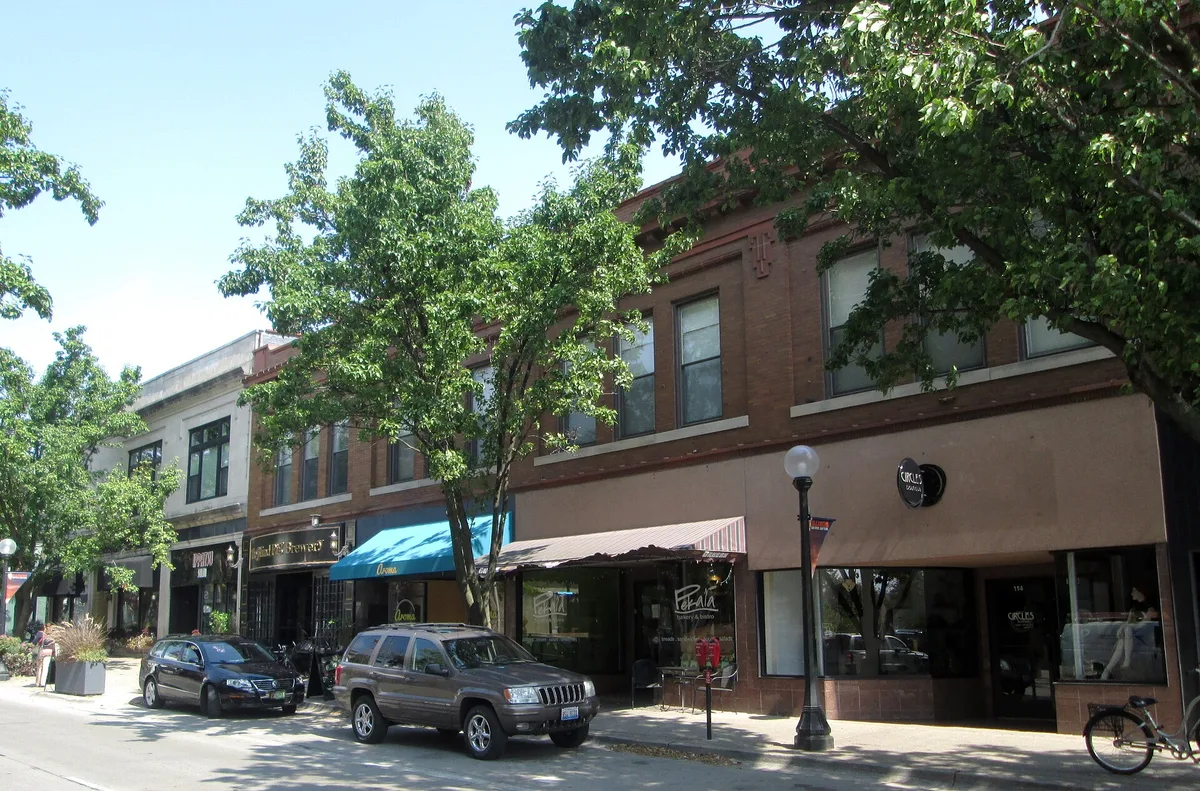
Champaign-Urbana’s cost of living index of 81.1 — nearly 19% below the national average, with a city median home price of $199,000 — makes it one of the most affordable homes for a Big Ten flagship anywhere in the country. The twin cities, known locally as “CU,” hold roughly 133,500 residents in the core and 243,000 across the east-central Illinois metro, anchored by the University of Illinois Urbana-Champaign and its research-driven tech and healthcare economy. Commutes average 18 minutes, and the campus core scores 92–95 on Walk Score. For academics, young professionals, remote workers, and cost-conscious families, this guide covers what those numbers buy — and the honest trade-offs of flat terrain, cold winters, and a college town’s rhythms.
Quick Answer — Is Champaign-Urbana Worth Moving To?
Champaign-Urbana is a thriving college town known for UIUC’s world-class academic and research presence, a cost of living well below the national average, and a cultural calendar that punches far above its size. The cost of living index sits at 81.1 — nearly 19% below the U.S. average — and the job market is stable, anchored by the university and a growing healthcare and tech sector. It’s an especially good fit for academics, graduate students, young professionals, and families seeking affordability without sacrificing intellectual culture or quality amenities. The honest trade-off: big-city luxuries are limited, the flat central Illinois terrain won’t satisfy landscape seekers, winters are genuinely cold, and city-level crime statistics — elevated by the university’s student population and urban concentration — deserve a careful look.
At a Glance: Champaign-Urbana by the Numbers (2025)
| Metric | Champaign-Urbana |
|---|---|
| Population | ~133,574 combined cities; ~243,252 metro MSA |
| Median home price | $199,000 (city); ~$272,450 (metro listing median) |
| Cost of living index | 81.1 (U.S. avg = 100) |
| Median household income | $56,118 (Champaign city); $63,683 (county) |
| Unemployment rate | 4.8% |
| Average commute | 18 minutes (MSA); ~15 min (Champaign city) |
| Walk Score | 52/100 citywide; 92–95 in campus core |
| Niche overall grade | A |
| Crime index | Elevated violent crime (~501/100K); metro property crime near U.S. avg |
| School district grade | B+ (Champaign Unit 4); B+ (Urbana HS) |
| Average summer high | 81°F (July) |
| Average winter low | 21°F (January) |
| Annual sunshine days | 194 |
The university’s presence significantly colors every number in this table. The low median household income and young median age (Champaign: 27.1 years; Urbana: 26.7 years) both reflect a large student population — not a weak economy. Likewise, the Walk Score varies dramatically between a quiet suburban street and the UIUC campus corridor, where everything is genuinely walkable.
Cost of Living in Champaign-Urbana
As of 2025, Champaign-Urbana carries a BestPlaces/Sperling’s cost of living index of 81.1 — nearly 19% below the national average of 100 and well below peer university cities like Bloomington-Normal (near national average) or Chicago (COL index ~107). Housing drives the biggest savings, with a median home price around $199,000 in the city of Champaign (Zillow, 2025) and a housing sub-index roughly 9% below the national average. Groceries run at or near the national average; utilities run about 5% above it due to winter heating demand. The CUMTD bus system reduces car dependency for those living near campus. The financial counterweights: Illinois levies a flat 4.95% state income tax, and property tax rates in Illinois rank among the highest in the nation — prospective buyers should model property taxes carefully. Renters near campus will find that proximity to UIUC pushes rents above the citywide median.
Housing Market Snapshot
The Champaign housing market leans toward sellers as of 2025, with year-over-year appreciation of approximately 3.3% (Zillow). The median home price in Champaign city sits around $199,000, while the broader metro area’s median listing price reaches $272,450 (FRED/St. Louis Fed). Rents near campus for a one-bedroom run $900–$1,300/month; a two-bedroom citywide median falls in the $1,100–$1,400/month range. One strong timing note: August demand is intense due to UIUC student move-in. Buyers and renters should start their searches by April or May to avoid competing in the late-summer peak.
---Jobs and Economy
UIUC is the undisputed economic anchor, employing over 8,100 people directly while generating a far larger footprint through research grants, student spending, and technology transfer. Nearly 38% of local jobs fall in the education, healthcare, and social assistance sector (well above state and national averages), with Carle Health, Christie Clinic, and OSF HealthCare as the second-tier employer cluster. What distinguishes CU from a typical college town is the private-sector layer built on top: the UIUC Research Park hosts 120+ companies including State Farm Innovation, Caterpillar, and Abbott, and a $51 million federal iFAB biomanufacturing grant signals further growth in AgTech and MedTech. Remote workers have increasingly claimed CU as a base, drawn by the low cost of living and a two-hour Amtrak or drive connection to Chicago. The MSA unemployment rate was 4.8% as of 2024 (BLS); county-level median household income was $63,683 (Census ACS).
Neighborhoods in Champaign-Urbana: Where to Live
Champaign and Urbana have genuinely distinct personalities — Champaign skews more urban and commercially active; Urbana leans quieter, greener, and closer to the university’s academic heart. Each city has neighborhoods worth knowing before you decide where to put down roots.
Campustown (Champaign) is the dense, energetic strip immediately south and west of UIUC, running along Green Street and its side blocks. Best for students and young professionals who want to walk everywhere, this is the most urban district CU offers — dense apartments, dozens of restaurants and bars, coffee shops, and the Main Quad steps away. Expect higher rents and some noise; in exchange, you won’t need a car.
Old Town (Champaign) sits west of downtown and offers one of the community’s most charming streetscapes: Victorian and craftsman homes, mature trees, and a walkable mix of neighborhood restaurants and boutiques. Best for young professionals, couples, and small families who want character and proximity to downtown without the campus density. West Side Park anchors the neighborhood and is a favorite for weekend recreation.
Cherry Hills (Champaign) is a well-established southwest Champaign neighborhood with a strong neighborhood association, good school access, and a family-oriented character. Best for families and longer-term residents who want suburban stability with short commutes to UIUC or downtown. The housing stock is primarily single-family homes; Cherry Hills Park is the neighborhood landmark.
Historic East Main Street (Urbana) gives you Urbana’s quieter, community-rooted character at its best. Craftsman and Victorian homes line walkable blocks near Urbana’s own downtown corridor, with independent restaurants, the Courier Cafe (a beloved institution), and Urbana City Hall nearby. Best for academics, UIUC staff, and anyone who wants genuine neighborhood feel and lower density than Campustown.
For profiles of nearby communities, see our guides to Springfield, Bloomington-Normal, and Indianapolis.
---Schools, Safety, and Quality of Life
Schools: Two K–12 systems serve the community: Champaign Unit 4 School District (Niche B+; Champaign Central High School rated A) and the Urbana School District (Urbana High School rated B+). Both districts have standout schools alongside others with more mixed performance, so checking specific attendance zones before choosing a neighborhood is worthwhile. At the higher-education level, UIUC is one of the nation’s top-ranked public research universities, and Parkland College provides strong community college and vocational training options locally.
Safety: Champaign city’s 2024 FBI UCR data shows a violent crime rate of approximately 501 per 100,000 — elevated above the national average. Notably, the BestPlaces metro-level property crime index (34.8) sits at or just below the U.S. average (35.4), reflecting the gap between city-level and metro-level measurement. College towns typically see elevated property crime and certain categories of assault near commercial cores; Cherry Hills, southwest Champaign, and Urbana’s residential streets are among the more secure options. Neighborhood selection matters.
Quality of Life: The day-to-day CU experience is defined by what crime statistics don’t capture: Krannert Center’s 300+ annual performances, nationally ranked care at Carle Foundation Hospital, a CUMTD bus system that’s free for UIUC students, 50+ city parks, and an 18-minute average commute that returns real time to residents daily. The pace is unhurried compared to Chicago, and the university keeps the cultural calendar genuinely full.
Climate and Weather in Champaign-Urbana
Champaign-Urbana has a humid continental climate with four distinct seasons — two of them genuinely demanding. Summers are hot and humid, with July highs averaging 81°F and roughly 22 days topping 90°F; humidity amplifies the heat. Winters are cold with ~20 inches of annual snowfall, January lows averaging 21°F, and a flat terrain that lets wind move unobstructed, driving wind chills well below air temperature. Tornado risk is real — central Illinois sits in tornado alley; a weather radio is a sensible purchase. The upside: spring and fall are lovely, and CU logs ~194 sunny days per year (USClimateData/Illinois State Climatologist) — more than many Great Lakes or Pacific Northwest cities residents arrive from.
Things to Do in Champaign-Urbana: Top Attractions and Day Trips
Champaign-Urbana’s leisure personality is shaped entirely by its university identity — Fighting Illini games at Memorial Stadium and State Farm Center draw tens of thousands; Krannert’s performing arts calendar satisfies classical, contemporary, and theatrical tastes all year; and the craft beer scene, independent dining strip along downtown Champaign, and flat rail-trail network fill weekends comfortably. It isn’t Chicago, and residents who need megacity options should calibrate expectations accordingly. But for those who appreciate a rich small-city calendar at a fraction of big-city prices, CU delivers.
-
University of Illinois Campus and Main Quad — The UIUC campus is one of the most architecturally impressive in the country, with a walkable core built around the historic Main Quad, the iconic Alma Mater statue, and a free 160-acre arboretum. Admission is always free; also on campus are the Spurlock Museum of world cultures and the Japan House, which offers authentic tea ceremony experiences. Best for families, architecture enthusiasts, and anyone considering UIUC.
-
Krannert Center for the Performing Arts — Krannert hosts more than 300 performances annually across music, opera, theater, and dance — a level of programming mid-sized cities rarely sustain. Tickets run $10–$60; student rush tickets are often just a few dollars the day of. Best for arts lovers of every background; check the season calendar early as popular shows sell out fast.
-
Krannert Art Museum (UIUC Campus) — The second-largest fine arts museum in Illinois, with a permanent collection of 10,000+ works spanning antiquity to the present. Admission is free, closed Mondays. The collection is particularly strong in ancient Mediterranean art and 20th-century American painting — an easy, rewarding two-hour visit for art lovers and curious newcomers alike.
-
Prairie Fruits Farm and Creamery — A working goat farm producing award-winning artisan cheeses and gelato, Prairie Fruits offers seasonal farm tours ($10–$15) and a farm stand open spring through fall. Best for foodies and families; book ahead on weekends as tours sell out. It’s a genuine farm-to-table experience without leaving Champaign.
-
Allerton Park and Retreat Center (Monticello, 26 miles) — A European-inspired estate with formal gardens, outdoor sculpture, and forest trails on 1,500 acres along the Sangamon River. Grounds are free and open year-round; the “Sun Singer” sculpture and ornamental gardens are the highlights. Best in spring and fall; a reliable remedy for central Illinois’s famously flat horizon.
Day Trips Worth the Drive
Chicago sits about 130 miles north — a two-hour drive on I-57 or a 2.5-hour Amtrak ride on the Illinois Zephyr or Carl Sandburg, making it an easy same-day escape for museums, dining, and sports. Springfield, 85 miles west (~1 hour), is the Illinois state capital and home to the Abraham Lincoln Presidential Library and Museum — a half-day history trip that’s hard to beat. Starved Rock State Park, 90 miles northwest (~1.5 hours), delivers sandstone canyons, 18 seasonal waterfalls, and bald eagle watching in winter — central Illinois’s best outdoor destination and a useful antidote to flat prairie life.
---Moving to Champaign-Urbana: Your 90-Day Checklist
90–60 days before:
- Research neighborhoods and set a housing budget — start early; August demand near UIUC is intense
- Get at least three moving quotes (PODS, Allied Van Lines, HireAHelper, or local movers)
- Check school enrollment deadlines — Champaign Unit 4 and Urbana School District enroll separately
- Model Illinois’s 4.95% income tax and high property tax rates into your monthly budget
- Begin decluttering; book storage if needed
60–30 days before: 6. Lock in moving dates — avoid late July and August if possible (peak student move-in) 7. Transfer medical records; identify providers in the Carle Health or OSF HealthCare networks 8. Notify employer, bank, and subscriptions of your address change 9. Set up utilities: Ameren Illinois (electric/gas), City of Champaign (water/sewer) 10. Arrange interim lodging if your permanent housing won’t be ready on arrival day
First 30 days after arrival: 11. Transfer your driver’s license and vehicle registration to Illinois (required within 90 days) 12. Register to vote through the Champaign County Clerk’s office 13. Explore campus, the Krannert Center, and downtown Champaign — CUMTD buses are the easiest way to avoid parking headaches 14. Join neighborhood Facebook groups or Nextdoor to plug into local community life 15. File a USPS change of address if not completed before departure
---Frequently Asked Questions About Living in Champaign-Urbana
Q: Is Champaign-Urbana a good place to live? A: Champaign earns an A overall grade on Niche.com as of 2025, reflecting strong affordability, UIUC’s cultural and academic resources, and above-average public schools. The primary trade-offs are limited big-city amenities and elevated city-level crime statistics. For academics, students, young professionals, and cost-conscious families, CU is one of the Midwest’s most compelling small cities.
Q: What is the cost of living in Champaign-Urbana? A: As of 2025, Champaign-Urbana carries a cost of living index of 81.1 (BestPlaces/Sperling’s), nearly 19% below the national average of 100. Housing is the biggest savings driver, with a median home price around $199,000 in the city. The important counterbalances are Illinois’s 4.95% flat state income tax and property tax rates that rank among the highest in the nation — both worth factoring into your total financial picture before relocating.
Q: Is Champaign-Urbana safe? A: Champaign city’s 2024 FBI UCR data shows a violent crime rate of approximately 501 per 100,000 — elevated above the national average — though the BestPlaces metro-level property crime index (34.8) is near the U.S. average (35.4). College towns typically see elevated property crime and certain categories of assault near commercial cores. The safest residential areas are southwest Champaign (Cherry Hills) and Urbana’s residential streets away from the campus core. Crime warrants neighborhood-level research, but most residents navigate daily life without incident.
Q: What are the best neighborhoods in Champaign-Urbana? A: Campustown is ideal for students and young professionals who want maximum walkability and energy. Old Town in Champaign blends Victorian character with young-professional appeal. Cherry Hills in southwest Champaign is the go-to for families seeking good schools and suburban stability. For those who prefer Urbana’s quieter, more academic feel, the Historic East Main Street corridor is one of the most livable stretches in the entire community.
Q: What is the job market like in Champaign-Urbana? A: UIUC anchors the economy with 8,100+ direct employees, supported by Carle Health, OSF HealthCare, and a Research Park hosting 120+ companies in tech, AgTech, and MedTech. The MSA unemployment rate was 4.8% as of 2024 (BLS). Remote workers increasingly use CU as a low-cost base while employed by Chicago-based or national firms.
Q: How far is Champaign-Urbana from Chicago? A: Champaign-Urbana is approximately 130 miles south of Chicago — roughly a two-hour drive north on I-57 under normal conditions. Amtrak’s Illinois Zephyr and Carl Sandburg trains connect Champaign’s station directly to Chicago Union Station in approximately 2.5 hours, making Chicago a practical same-day destination for work, entertainment, or airport access without requiring a car or downtown parking.
Champaign-Urbana vs. Nearby Cities
Champaign-Urbana offers the most vibrant college-town culture and the lowest cost of living in this comparison. Springfield (85 miles west) is cheaper still — median home prices around $140,000–$160,000 — with strong government-sector employment, but it lacks CU’s university energy and tech ecosystem. Bloomington-Normal (59 miles northwest) is anchored by State Farm and Illinois State University; cost of living runs closer to the national average with a more corporate, suburban feel. Indianapolis (~2 hours east) offers a true mid-sized-city job market and lower state income taxes, but trades away CU’s affordability and academic character. For full profiles, see our guides to Springfield, Bloomington, and Indianapolis.
Sources and Data Notes
Data in this guide reflects 2024–2025 figures where available. Population figures from U.S. Census Bureau QuickFacts (Champaign and Urbana cities) and FRED/St. Louis Fed (MSA). Median home price from Zillow (city level) and FRED/St. Louis Fed (metro listing median). Cost of living index from BestPlaces.net (Sperling’s). Median household income from Census ACS 2024 (city) and Champaign County ACS estimate. Unemployment rate from BLS Champaign-Urbana MSA data. Crime data from FBI UCR 2024 release (PlainCrime/NeighborhoodScout) and BestPlaces metro crime index. School grades from Niche.com. Walk Score from WalkScore.com. Climate data from USClimateData, WeatherSpark, and the Illinois State Climatologist (UIUC). Employer and economy data from Champaign County EDC, BLS OES 2023, and DataUSA.io. Attractions and day trips from ExperienceCU.org, TripAdvisor, and ChambanaMoms.com.