
Living in Tampa, Florida: The Complete 2026 Relocation and Visitor Guide
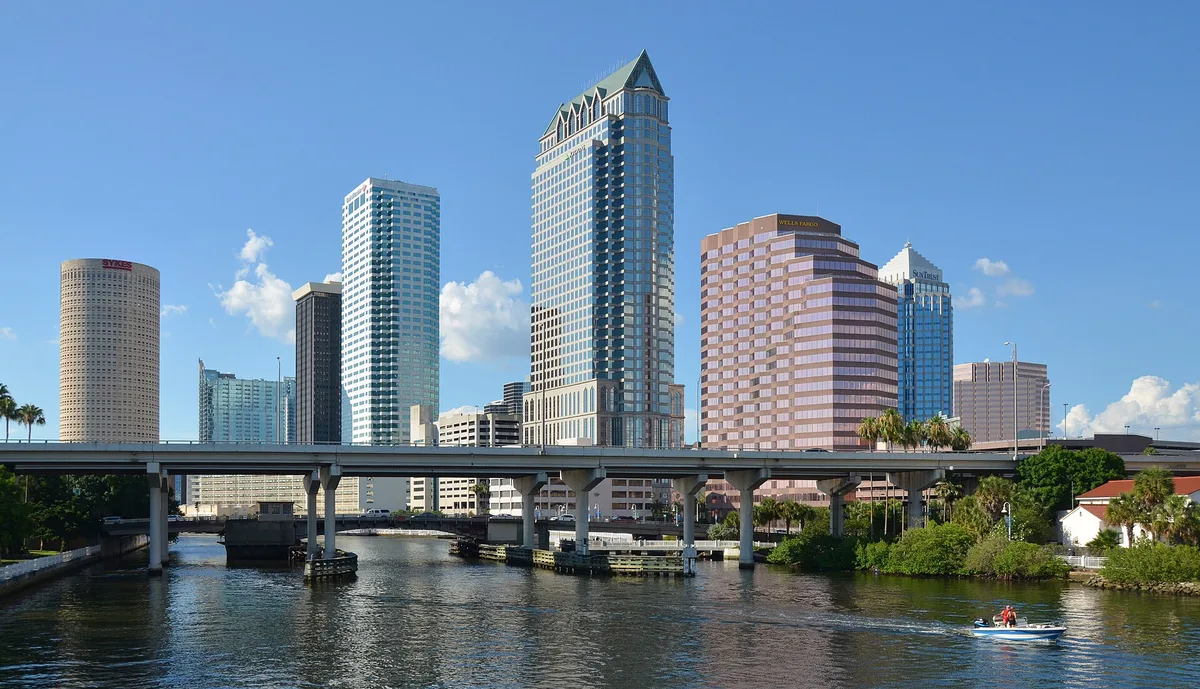
Tampa costs about 7% above the national average — median home $380,000 as of 2025 — for a Gulf Coast metro of 3.2 million with zero state income tax and white-sand beaches 30 to 45 minutes away. That undercuts Miami (index 130+) and most Northeast metros by a wide margin, while a diversifying economy of finance, healthcare, defense, and technology holds unemployment near 3.3%. The counterweights now underwrite every Florida housing decision: hurricane risk and homeowners’ insurance premiums that keep climbing. For remote workers, retirees, finance professionals, and families wanting the Gulf Coast lifestyle without South Florida prices, this guide covers the Tampa–St. Petersburg–Clearwater picture in full.
Quick Answer — Is Tampa Worth Moving To?
Tampa is one of the strongest all-around relocation cities in the South, known for its combination of warm weather, zero state income tax, waterfront access, and a rapidly diversifying economy anchored by finance, healthcare, defense, and technology. The cost of living index sits around 107 — modestly above the national average, but well below Miami (130+) or most Northeast metros. The job market is growing, with unemployment hovering around 3.3%. Tampa is an especially good fit for remote workers, retirees, finance professionals, and families seeking Gulf Coast lifestyle without South Florida prices — though residents should factor hurricane risk and rising homeowners’ insurance premiums into their housing decisions.
At a Glance: Tampa by the Numbers (2025)
| Metric | Tampa |
|---|---|
| Population | ~400,000 city / 3.2 million metro |
| Median home price | $380,000 |
| Cost of living index | 107 (U.S. avg = 100) |
| Median household income | $63,000 |
| Unemployment rate | 3.3% |
| Average commute | 27 minutes |
| Walk Score | 52/100 |
| Niche overall grade | B+ |
| Crime index | 134 (U.S. avg = 100; lower = safer) |
| School district grade | B |
| Average summer high | 91°F |
| Average winter low | 52°F |
| Annual sunshine days | 246 |
Tampa’s crime index of 134 indicates property and violent crime above the national average — a figure driven primarily by the city proper, while the broader metro includes much safer suburban communities in Wesley Chapel, Westchase, Brandon, and New Tampa. The Niche B+ grade reflects Tampa’s strong job growth and weather appeal offset by crime concentration and uneven school performance in some districts.
Cost of Living in Tampa
Tampa’s cost of living index of 107 means residents pay about 7% more than the U.S. average — a modest premium for what is, by any regional measure, an affordable Gulf Coast metro. Housing is the clearest value driver: median home prices of $380,000 place Tampa well below Miami ($620K+), Naples, or virtually any major Florida coastal market. Groceries run about 2–4% above the national average, and utilities average around $175–$195/month due to year-round air conditioning demand — the single biggest budget line many newcomers underestimate. Transportation costs require car ownership for most residents; the HART bus network and the free downtown Streetcar serve limited corridors. Healthcare costs are close to the national average, with a strong concentration of hospital systems providing competitive pricing. Florida has no state income tax, which meaningfully offsets Tampa’s modestly elevated cost basis — a California or New York transplant earning $150,000 annually saves $10,000–$18,000 per year in state income taxes alone.
Housing Market Snapshot
Tampa’s housing market has cooled from its post-pandemic peak but remains active. Median home prices sit around $380,000 as of Q1 2025 (per Zillow), down modestly from the 2022 high of around $420,000. Median rent for a 1-bedroom apartment runs approximately $1,650–$1,850/month; a 2-bedroom averages $2,000–$2,350. The most affordable options are in Brandon, Temple Terrace, and Riverview; the most sought-after (and expensive) are in South Tampa, Hyde Park, and Westchase. One important caveat: homeowners’ insurance premiums in Florida have risen sharply, with many Tampa homeowners now paying $4,000–$8,000 per year — a real cost of ownership that should be factored into monthly budgets.
---Jobs and Economy
Tampa’s five largest employers reflect its diversification beyond tourism: BayCare Health System, Tampa General Hospital, Hillsborough County School District, MacDill Air Force Base, and Raymond James Financial. The finance and insurance sector is Tampa’s most prominent private industry cluster — alongside Raymond James, the metro hosts the regional operations of Goldman Sachs, Citigroup, and numerous insurance carriers. Healthcare is the second-largest sector, with a corridor of hospital systems anchoring employment from Clearwater to Brandon. Defense and federal government employment centers on MacDill AFB, home to U.S. Central Command (CENTCOM) and U.S. Special Operations Command (SOCOM). The University of South Florida (USF) — a major research institution with 50,000+ students — adds education, healthcare, and research employment to the mix. Tampa’s tech sector has grown steadily, with companies including Relativity, EPAM Systems, and ConnectWise establishing significant Tampa presence. The metro unemployment rate sits around 3.3%. (Sources: BLS; Hillsborough Economic Development Corp.)
Neighborhoods in Tampa: Where to Live
Tampa’s neighborhoods vary enormously — from walkable bungalow districts to sprawling suburban corridors. Here are four areas worth understanding before you choose.
Hyde Park / South Tampa is Tampa’s most prestigious urban neighborhood — a walkable grid of craftsman bungalows and Mediterranean-revival homes stretching between Bayshore Boulevard and the waterfront. Hyde Park Village provides the area’s commercial heart with boutique shops and upscale dining. Best for professionals, empty nesters, and anyone who wants the most city-like experience Tampa offers. Median home prices range $650K–$1.2M; rentals are available but costly. Bayshore Boulevard’s 4.5-mile waterfront promenade is the neighborhood’s crown jewel.
Seminole Heights is Tampa’s creative-class neighborhood — a stretch of bungalows along the Hillsborough River north of downtown, known for its independent restaurants, craft breweries, and artistic energy. It’s best for young professionals and creatives who want character and lower prices than South Tampa. Median home prices range $350K–$500K. The Seminole Heights restaurant corridor rivals anything Tampa’s suburbs offer, and the neighborhood has seen significant reinvestment since 2015.
Westchase / Citrus Park is a master-planned suburban corridor in northwest Hillsborough County, consistently ranking among Tampa’s best family neighborhoods for its A-rated schools (Hillsborough County magnet and zoned options), newer construction, and planned greenspace. Best for families with children and professionals who commute to the Westshore business district or Tampa International Airport. Median home prices range $450K–$650K.
New Tampa / Wesley Chapel anchors Tampa’s fastest-growing northern suburbs, where Pasco County development has blurred the line between Tampa metro and suburban sprawl. Best for families seeking newer homes, highly rated schools (Pasco County earns a B+), and lower property costs. Median home prices in Wesley Chapel run $380K–$550K. The area has seen enormous retail and restaurant investment over the past decade and feels increasingly self-contained.
For context on comparable Gulf Coast and Florida metros, see our guides to [Phoenix, Arizona], [Raleigh, North Carolina], and [Atlanta, Georgia].
---Schools, Safety, and Quality of Life
Schools: Tampa falls within the Hillsborough County School District, which earns a B on Niche — one of the largest districts in Florida with a mix of high-performing magnets and underperforming neighborhood schools. Standout public options include Tampa Bay Technical High School, Hillsborough High IB program, and Plant High School in South Tampa (Niche A-). Families willing to explore suburban options will find strong performance in Pasco County (Wesley Chapel) and Pinellas County (Clearwater/St. Pete). The University of South Florida is Tampa’s primary research university; the University of Tampa is a private liberal arts institution with a downtown waterfront campus; and Hillsborough Community College serves workforce and transfer students.
Safety: Tampa’s crime index of 134 is above the national average of 100, driven largely by property crime in the urban core and historically elevated rates in East Tampa and Ybor City. Neighborhoods like South Tampa, Hyde Park, Westchase, New Tampa, and Wesley Chapel all report crime rates well below the city average and close to or below the national norm. Violent crime is concentrated in specific corridors, and most residents in established neighborhoods report feeling safe day-to-day. As with most major cities, the crime picture in Tampa is highly neighborhood-specific. (Source: FBI UCR 2023.)
Quality of Life: Tampa General Hospital is a top-ranked academic medical center and Level I trauma center; BayCare and AdventHealth round out a competitive hospital landscape. The city operates a free downtown Streetcar connecting Ybor City to the Channel District, though most residents depend on cars — Tampa’s Walk Score of 52 reflects its car-centric design. Quality of life strengths include the waterfront (Bayshore Boulevard, Tampa Riverwalk), the Straz Center for the Performing Arts, and proximity to the Gulf beaches of Clearwater and St. Pete Beach. The Tampa Bay Buccaneers (NFL), Lightning (NHL), and Rays (MLB) give sports fans all-season options. Tampa’s LGBTq+ community is one of the most visible in Florida, and Ybor City hosts one of the state’s largest Pride celebrations annually.
Climate and Weather in Tampa
Tampa is one of the sunniest cities in the United States, with 246 sunshine days per year — earning it the nickname “The Big Guava” and placing it among Florida’s most reliably warm locales. Summer highs average 91°F with high humidity from June through September, and afternoon thunderstorms are nearly daily occurrences — Tampa is statistically the lightning capital of the U.S. Winters are mild: average lows in January hover around 52°F, and freezes are rare. The year-round warmth means outdoor living is genuinely year-round viable. The primary weather risk is hurricanes: Tampa Bay sits in a particularly vulnerable hurricane funnel, and the metro has not taken a direct major hurricane hit in nearly a century — a statistical anomaly that emergency planners take seriously. Residents should maintain emergency plans, carry flood insurance if in a flood zone, and pay attention to storm surge maps. (Source: NOAA; WeatherSpark.)
Things to Do in Tampa: Top Attractions and Day Trips

Tampa’s leisure identity is built around the water — the Bay, the Gulf, and the Hillsborough River all shape how residents spend their weekends. Add in a historic Latin immigrant district, one of Florida’s best zoo complexes, and the most accessible entry point to Gulf Coast beaches, and Tampa delivers a well-rounded quality-of-life package that has surprised many relocators who expected less from a “secondary” Florida city.
-
Clearwater Beach and St. Pete Beach — The Gulf beaches 30–45 minutes west of downtown are among the best in the continental U.S. Clearwater Beach consistently ranks #1 on TripAdvisor’s U.S. beach rankings, with fine white sand, warm Gulf water, and a lively Pier 60 sunset celebration. St. Pete Beach is more residential and laid-back. Both are accessible by car and offer excellent day-trip potential for Tampa residents year-round.
-
Busch Gardens Tampa Bay — A world-class theme park in central Tampa combining roller coasters with a legitimate zoological collection of African animals. Busch Gardens features Cheetah Hunt, Tigris, and Iron Gwazi (ranked among the world’s best wooden-steel hybrid coasters) alongside savanna habitats with free-roaming rhinos and giraffes. It’s one of the best family entertainment assets of any major U.S. metro. Admission runs $80–$110; annual passes start around $160.
-
Tampa Riverwalk and Downtown Waterfront — A 2.6-mile pedestrian and cycling path along the Hillsborough River connects downtown’s cultural assets: the Tampa Museum of Art, Glazer Children’s Museum, the Straz Center for the Performing Arts, and Curtis Hixon Waterfront Park. The Riverwalk is free, walkable, and serves as Tampa’s civic living room — best experienced in the evening or on weekend mornings.
-
Ybor City — Tampa’s historic Latin Quarter, once home to the world’s largest cigar manufacturing district, now hosts one of Florida’s most distinctive nightlife scenes, a daytime café culture, and a walkable heritage trail. The Columbia Restaurant — opened in 1905 — is the oldest restaurant in Florida and still one of Tampa’s best. Ybor is best visited in the evening; daytime offers galleries, cigars, and the Columbia’s legendary Spanish bean soup.
-
Florida Aquarium — Located on the Tampa waterfront in the Channel District, the Florida Aquarium is one of the Southeast’s best marine institutions, with 20,000+ aquatic animals representing Gulf, Caribbean, and global ecosystems. The dive programs and behind-the-scenes tours make it engaging for adults as well as children. Admission is approximately $35 for adults; open daily.
-
St. Petersburg Art District and the Dalí Museum — Just 25 minutes across the Gandy Bridge, St. Petersburg has developed one of the most vibrant arts districts in the Southeast along Central Avenue. The Salvador Dalí Museum holds the largest collection of Dalí works outside of Europe, in a striking architecturally designed facility on the St. Pete waterfront. Downtown St. Pete adds excellent dining, rooftop bars, and Tropicana Field (soon relocating to a new ballpark).
Day Trips: Orlando is 75 miles northeast — about 90 minutes on I-4, with Walt Disney World, Universal Studios, and a massive theme park ecosystem. Sarasota is an hour south on I-75, offering the Ringling Museum, Siesta Key Beach (regularly ranked #1 nationally), and a sophisticated arts scene. Naples is two hours south along the Gulf Coast, with some of Florida’s most upscale dining and shopping. Crystal River and Homosassa, an hour north, offer manatee encounters in natural spring systems unlike anywhere else on the Gulf Coast.
---Moving to Tampa: Your 90-Day Checklist
90–60 days before:
- Research neighborhoods and set housing budget using Zillow or Realtor.com — compare South Tampa, Westchase, and Wesley Chapel based on commute and school priorities
- Get at least three moving company quotes (PODS, Allied Van Lines, HireAHelper, or local movers)
- Research school enrollment deadlines if you have children — Hillsborough County magnet applications open in fall for the following year
- Review Florida’s zero state income tax advantage and calculate net savings vs. your current state
- Begin decluttering — book a self-storage unit if needed; Tampa has numerous storage options at competitive rates
60–30 days before: 6. Confirm moving company and lock in dates — peak season (October–April) fills quickly as snowbirds and relocators arrive 7. Transfer medical and dental records; find new providers — Tampa General, BayCare, and AdventHealth all have extensive primary care networks 8. Notify employer, bank, and subscriptions of address change 9. Research utility providers (Tampa Electric / TECO, Peoples Gas, Tampa Bay Water) and set up accounts; budget for AC costs 10. Obtain flood zone map for your specific property from FEMA — purchase flood insurance if in a flood zone before closing
First 30 days after arrival: 11. Transfer driver’s license and vehicle registration to Florida — visit a Florida DMV within 30 days of establishing residency 12. Register to vote at new address 13. Explore your neighborhood on foot and by car — check out the Tampa Riverwalk, Hyde Park Village, and your nearest Gulf beach 14. Join local Facebook groups or Nextdoor for your neighborhood and the broader Tampa relocation communities 15. File change of address with USPS if not already done
---Frequently Asked Questions About Living in Tampa
Q: Is Tampa a good place to live? A: Tampa earns a Niche B+ grade overall, reflecting strong job growth, year-round outdoor weather, and a cost of living below most major Florida metros. Its biggest strengths are the zero state income tax, Gulf beach access within 30–45 minutes, and a diversified economy spanning finance, healthcare, and defense. The honest trade-offs are a crime index above the national average in the city proper, rising homeowners’ insurance costs, and hurricane risk that requires informed preparation.
Q: What is the cost of living in Tampa? A: Tampa’s cost of living index is approximately 107, meaning residents pay about 7% above the national average. Median home prices sit around $380,000 as of 2025. The most significant hidden cost for newcomers is homeowners’ insurance, which has risen sharply and can run $4,000–$8,000 per year. Florida’s zero state income tax meaningfully offsets Tampa’s modest cost-of-living premium for most working households. (Source: BestPlaces/Sperling’s; Zillow Q1 2025.)
Q: Is Tampa safe? A: Tampa’s crime index of 134 is above the national average, driven primarily by property crime in the urban core and historically elevated rates in East Tampa. However, the metro is highly varied: South Tampa, Hyde Park, Westchase, New Tampa, Wesley Chapel, and most suburban communities post crime rates near or below national norms. Most residents in established neighborhoods do not experience crime as a daily concern. As with any metro of 3+ million people, neighborhood selection matters significantly. (Source: FBI UCR 2023.)
Q: What are the best neighborhoods in Tampa? A: Hyde Park and South Tampa offer Tampa’s most walkable, upscale urban living with Bayshore Boulevard waterfront access and top-ranked restaurants. Seminole Heights is the go-to for young professionals seeking bungalow character and an independent food scene. Westchase offers suburban family life with excellent schools in northwest Hillsborough County. New Tampa and Wesley Chapel in the north deliver newer construction, strong school ratings, and more housing value for growing families.
Q: What is the job market like in Tampa? A: Tampa’s metro unemployment rate sits around 3.3%, with dominant sectors in finance and insurance (Raymond James, Goldman Sachs), healthcare (BayCare, Tampa General), defense and federal government (MacDill AFB), and a growing technology presence. The University of South Florida anchors education and research employment. Florida’s zero income tax has accelerated corporate relocation to Tampa, particularly from the Northeast and California. (Sources: BLS; Hillsborough Economic Development Corp.)
Q: How far is Tampa from Miami and Orlando? A: Tampa is approximately 280 miles from Miami — about a 3.5–4 hour drive south on I-75 — making Miami a viable long weekend destination but not a practical commute. Orlando is 75 miles northeast, roughly a 75–90 minute drive on I-4, making it the easiest major day trip from Tampa. Tampa International Airport (TPA) offers direct flights to most major U.S. cities and select international destinations.
Tampa vs. Nearby Cities
Tampa (COL 107, median home $380K) is the sweet spot between Miami (COL 130+, $620K+) and smaller Gulf Coast markets on the affordability spectrum. Against Miami, Tampa offers dramatically lower housing costs, less traffic, and a more manageable pace of life — though Miami’s international cultural energy and nightlife are unmatched. Against Raleigh (COL 108, $425K), Tampa wins on weather and tax climate but loses on school performance and overall Niche rating. Against Phoenix (COL 107, $415K), Tampa is similarly priced but offers Gulf beach access in exchange for higher humidity and greater hurricane exposure. For those choosing between Gulf Coast cities, St. Petersburg ($400K median, walkable arts district) and Sarasota ($500K+, higher-end market) sit within the same metro radius and deserve evaluation alongside Tampa proper. For full profiles of these cities, see our guides to [Phoenix, Arizona], [Raleigh, North Carolina], and [Atlanta, Georgia].
Sources and Data Notes
Data sourced from U.S. Census Bureau / American Community Survey (2023), Bureau of Labor Statistics (2024), Niche.com (2024–2025 grades), BestPlaces.net / Sperling’s Cost of Living Index, FBI Uniform Crime Reports (2023), WeatherSpark / NOAA climate normals, Walk Score (2024), and Zillow / Realtor.com (home price and rent data, Q1 2025). Flood zone and hurricane risk data sourced from FEMA National Flood Hazard Layer and Florida Division of Emergency Management. All figures cited “as of 2025” reflect the most current available data at time of publication.
Title tag: Living in Tampa, FL (2025): Cost of Living, Jobs & Neighborhoods Guide Meta description: Thinking about moving to Tampa? Our 2025 guide covers cost of living (index 107), median home prices ($380K), no Florida income tax, best neighborhoods, job market, and what life is really like on Florida’s Gulf Coast. Primary keyword: living in Tampa Secondary keywords: Tampa cost of living, Tampa neighborhoods, moving to Tampa Florida, Tampa jobs, Tampa Bay relocation Internal links: Phoenix AZ, Raleigh NC, Atlanta GA