
Living in St. Petersburg, FL: The Complete 2026 Relocation and Visitor Guide
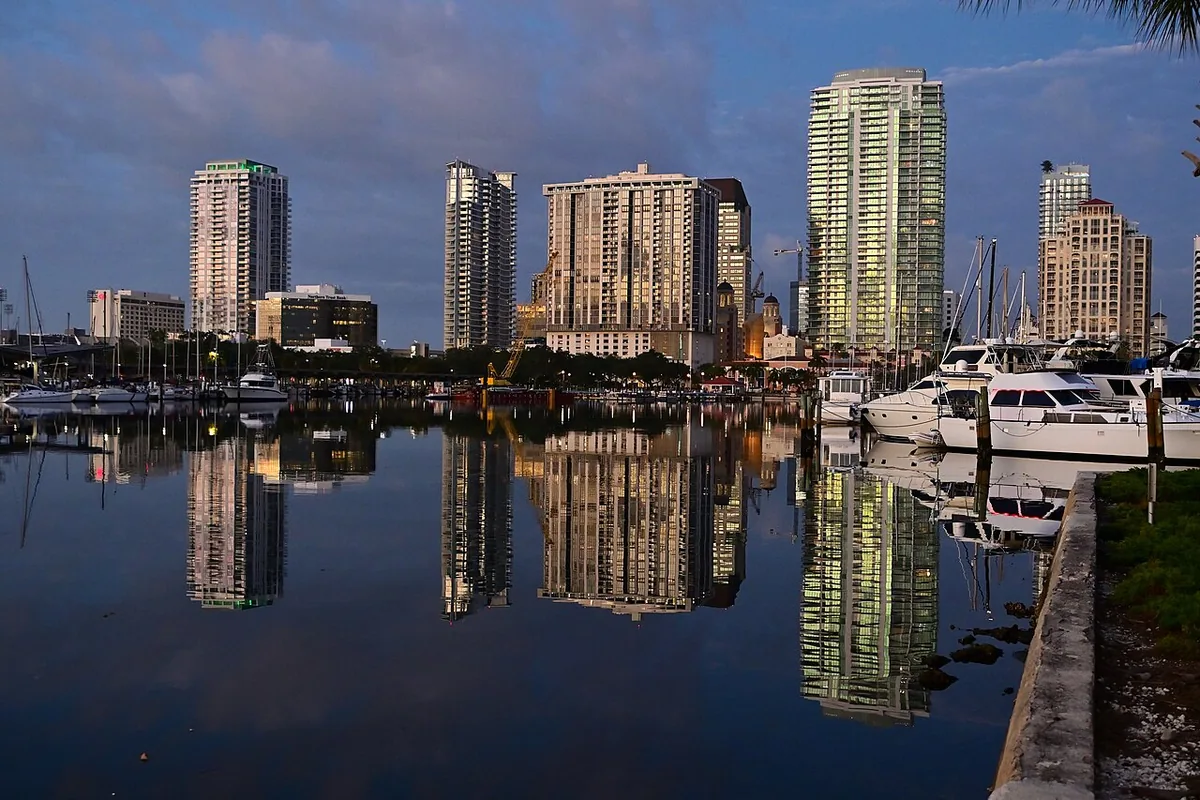
St. Petersburg’s cost of living index sits at 102.8 as of 2026 — just above the national average — for a walkable Gulf Coast city of 269,136 where the median home price has swung from $398,000 to as high as $495,000 depending on the month, according to Redfin. That volatility is the headline for anyone budgeting a move: St. Petersburg pairs a nationally recognized arts scene, a perfect 11-year run on the Human Rights Campaign’s Municipal Equality Index, and 248 sunshine days a year with a housing market that’s still finding its footing after the 2022 peak. Unemployment runs a touch higher than the state average at 4.2%, reflecting a smaller, more specialized economy built around Jabil, Raymond James Financial, and Johns Hopkins All Children’s Hospital rather than Tampa’s sheer scale across the bay. This guide is built for the mover comparing Tampa Bay’s two big cities, the retiree or remote worker drawn to a walkable downtown, and the visitor planning a Dalí Museum weekend before deciding anything longer-term.
Quick Answer — Is St. Petersburg Worth Moving To?
St. Petersburg is a mid-sized Gulf Coast city carrying a Niche B+ overall grade, known for a nationally recognized arts and dining scene along Central Avenue, a genuinely walkable downtown core, and one of the most LGBTQ-welcoming reputations in the South. The cost of living index sits at 102.8 — just above the national average of 100 — while unemployment runs 4.2% as of late 2025, a touch higher than nearby Tampa’s. It’s an especially good fit for retirees, remote professionals, and creative-class movers who want walkable urban living without Miami prices, though the housing market’s recent volatility — median prices ranging from $398,000 to $495,000 within the past year — and hurricane-driven insurance costs are real factors to budget around before you commit.
At a Glance: St. Petersburg by the Numbers (2026)
| Metric | St. Petersburg |
|---|---|
| Population | 269,136 |
| Median home price | $398,000 (conservative figure; ranged up to $495,000 in early 2026 — see note below) |
| Cost of living index | 102.8 (U.S. avg = 100) |
| Median household income | $73,118 |
| Unemployment rate | 4.2% (Tampa–St. Petersburg–Clearwater MSA) |
| Average commute | 25 minutes |
| Walk Score | 43/100 (downtown core scores 90+) |
| Niche overall grade | B+ |
| Crime index | 284 (City-Data.com composite, U.S. avg = 100; Numbeo’s separate crime index reads 40.18 on a different scale) |
| School district grade | B+ (Pinellas County Schools) |
| Average temperature, summer / winter | 89°F (summer high) / 67°F (January high; lows rarely dip below 50°F) |
| Annual sunshine days | 248 |
St. Petersburg’s numbers split into two cities layered on top of each other: a car-dependent citywide average (Walk Score 43) and a genuinely walkable downtown core that scores 90 or higher, where The Pier, the Dalí Museum, and Central Avenue’s restaurant row all sit within a short walk of each other. The wide home-price range reflects real market movement rather than a data error — this is a market still settling after a volatile 2022–2026 stretch, and the number you’ll see quoted depends heavily on which month and which source you check.
Cost of Living in St. Petersburg
St. Petersburg’s cost of living index of 102.8 as of 2026 means everyday expenses run about 3% above the national average, according to BestPlaces.net (Sperling’s) — modest compared to South Florida, but enough to notice against a Tampa Bay neighbor like Jacksonville. Housing is the least stable line item: the median sale price has ranged from $398,000 in early 2025 to $495,000 in March 2026, a swing that reflects genuine market volatility rather than a typo, and downtown 1-bedroom rents run $1,600–$2,100 a month with 2-bedrooms at $2,000–$2,700. By category, BestPlaces puts St. Petersburg healthcare about 8% below the national average and utilities roughly 1% below, while groceries run about 6% above and housing more than 20% above — housing is what pushes the overall index over 100, as of 2026. Transportation costs depend heavily on where you land: downtown residents can genuinely go car-light thanks to the SunRunner bus-rapid-transit line, while the citywide Walk Score of 43 means most of Pinellas County still requires a car for daily errands. Florida’s lack of a state income tax offsets St. Petersburg’s modest cost premium meaningfully for higher earners, particularly retirees drawing on pension or investment income that would otherwise be taxed in many other states.
Housing Market Snapshot
St. Petersburg’s housing market has been genuinely volatile: Redfin reported a median sale price of $398,000 in January 2025 (down 5.4% year-over-year), then $495,000 by March 2026 (up 20.7% year-over-year), with an April 2026 reading closer to $454,000 — real month-to-month swings rather than reporting inconsistency. Historic waterfront neighborhoods like Old Northeast and Snell Isle command $600,000–$900,000-plus, while downtown 1-bedroom apartments rent for $1,600–$2,100 a month and 2-bedrooms for $2,000–$2,700. Anyone house-hunting here should track current listings closely rather than anchor to a single quoted median.
## Jobs and EconomySt. Petersburg’s economy rests on five identified growth sectors, and the top employers reflect it: Jabil, Raymond James Financial, Johns Hopkins All Children’s Hospital, BayFront Health, and Pinellas County Schools. Jabil — one of the world’s largest electronics manufacturing companies, with 260,000 employees globally — has kept its headquarters in St. Petersburg for decades and anchors a manufacturing sector ranked second statewide for manufacturing employment. Raymond James Financial’s headquarters presence drives a genuine financial-services cluster, while healthcare and marine sciences — anchored by Johns Hopkins All Children’s, Bayfront Health, and federal researchers at NOAA and USGS facilities — form the largest such community in the Southeast. Technology and data analytics round out the picture, with data-analytics job growth projected at 40% year-over-year in recent counts. Unemployment sits at 4.2% as of late 2025 (Tampa–St. Petersburg–Clearwater MSA, Bureau of Labor Statistics) — a city-specific figure isn’t separately reported, so this reflects the broader metro rather than St. Petersburg alone.
Neighborhoods in St. Petersburg: Where to Live
St. Petersburg’s neighborhoods range from a dense, walkable downtown to exclusive waterfront enclaves, with a distinct LGBTQ+-centered district in between.
Downtown St. Pete is the city’s most walkable area by far, with a Walk Score of 90-plus, waterfront views, Central Avenue dining, and The Pier all within reach on foot. It’s best for young professionals and urban-lifestyle seekers, with housing split between luxury condos and historic apartments; The St. Pete Pier, rebuilt in 2020, is the neighborhood’s landmark.
Old Northeast is a beloved historic district of brick-lined streets, mature oak trees, and architecture ranging from Craftsman to Mediterranean Revival, with among the lowest crime rates in the northeast quadrant of the city. It’s best for families and history lovers, and Vinoy Park’s waterfront anchors the neighborhood.
Snell Isle is an exclusive waterfront enclave just northeast of downtown, with private docks and direct access to Tampa Bay. It’s best for affluent buyers, with luxury single-family homes running $800,000 to $2 million-plus; the Vinoy Renaissance Resort sits adjacent.
Grand Central District is St. Petersburg’s LGBTQ+-centered urban enclave west of downtown, with eclectic bars, boutiques, and a mural corridor, and it hosts the largest Pride event in Florida each June. It’s best for the LGBTQ+ community and culturally curious residents; the adjacent Historic Kenwood neighborhood of 1920s bungalows offers a similar creative, walkable character at a somewhat lower price point.
For comparison, see our guides to nearby Tampa, Clearwater, and Sarasota.
## Schools, Safety, and Quality of LifeSt. Petersburg schools fall under Pinellas County Schools, which carries a B+ overall grade on Niche, though individual schools within the district range widely from A+ to C — worth checking school-by-school rather than relying on the district average alone. For adult learners and career changers, the city hosts the University of South Florida’s St. Petersburg campus (about 4,700 students), St. Petersburg College — a public state college with multiple Pinellas campuses and extensive workforce and continuing-education programs — and the private liberal-arts Eckerd College, as of 2026. Safety in St. Petersburg reads differently depending on which index you check: City-Data.com’s composite crime rate index sits at 284 (where 100 equals the national average, so higher means more crime), while Numbeo’s separately scaled crime index reads a more moderate 40.18 — the two aren’t directly comparable, but both sources agree that crime fell about 2% in 2024 and has trended down over five years, with downtown and Old Northeast among the safer areas and some south-side neighborhoods running higher. Quality of life centers on a genuinely nationally recognized arts scene — the Salvador Dalí Museum, the Chihuly Collection, and the Museum of Fine Arts all sit within the city — alongside strong pediatric care at Johns Hopkins All Children’s Hospital, with Tampa General Hospital 30 minutes away for complex adult care. The SunRunner bus-rapid-transit line, launched in 2022 and enhanced with late-night weekend service in 2025, makes beach access genuinely car-optional for downtown residents, even though the citywide Walk Score of 43 confirms most of Pinellas County still requires a car. LGBTQ+ residents will find one of the most welcoming reputations in the South here: St. Petersburg has posted a perfect score on the Human Rights Campaign’s Municipal Equality Index for 11 consecutive years, and St. Pete Pride draws more than 100,000 attendees each June.
Climate and Weather in St. Petersburg
St. Petersburg logs 248 sunny days a year as of 2026 — more than Miami and close to Los Angeles — with humid summers (May–October) bringing highs in the high 80s to low 90s°F and daily Gulf Coast thunderstorms, tempered somewhat by a steady onshore breeze. Winters (November–April) are mild and nearly frost-free: January highs typically run in the upper 60s to low 70s°F, with lows rarely dipping below 50°F. Hurricane risk is real and consequential here — Pinellas County sits on a barrier peninsula with significant storm-surge exposure, and residents should know their evacuation zone before, not during, a storm. The climate underwrites the city’s year-round beach and outdoor-dining lifestyle, but it also means insurance costs and flood-zone status deserve a hard look before you close on a house near the water.
Getting In and Out of St. Petersburg
St. Pete-Clearwater International Airport (PIE) sits about 9 miles north of downtown — a 15- to 25-minute drive — handling limited low-cost carrier service, while the far larger Tampa International Airport (TPA) is roughly 21 miles and about 30 minutes northeast across the bay for most major-airline flights, as of 2026. Interstate 275 is the region’s spine, crossing the Howard Frankland Bridge to Tampa in the north and the Sunshine Skyway Bridge toward Bradenton and Sarasota in the south. Locally, the PSTA SunRunner bus-rapid-transit line runs a 10-mile, 16-stop route between downtown and St. Pete Beach every 15 minutes (until midnight on weekends), with more than 30 additional PSTA bus routes covering the rest of Pinellas County. Downtown residents can reasonably skip car ownership for daily errands and beach trips, but outside the urban core a car is effectively required — worth knowing whether you’re a frequent flyer, expecting visiting family, or simply weighing how much of daily life you can do without a vehicle.
Things to Do in St. Petersburg: Top Attractions and Day Trips
St. Petersburg’s leisure identity runs on art, water, and a genuine small-city cultural confidence — a downtown packed with museums and a waterfront pier, framed by beaches and springs within a half-hour’s drive in every direction.
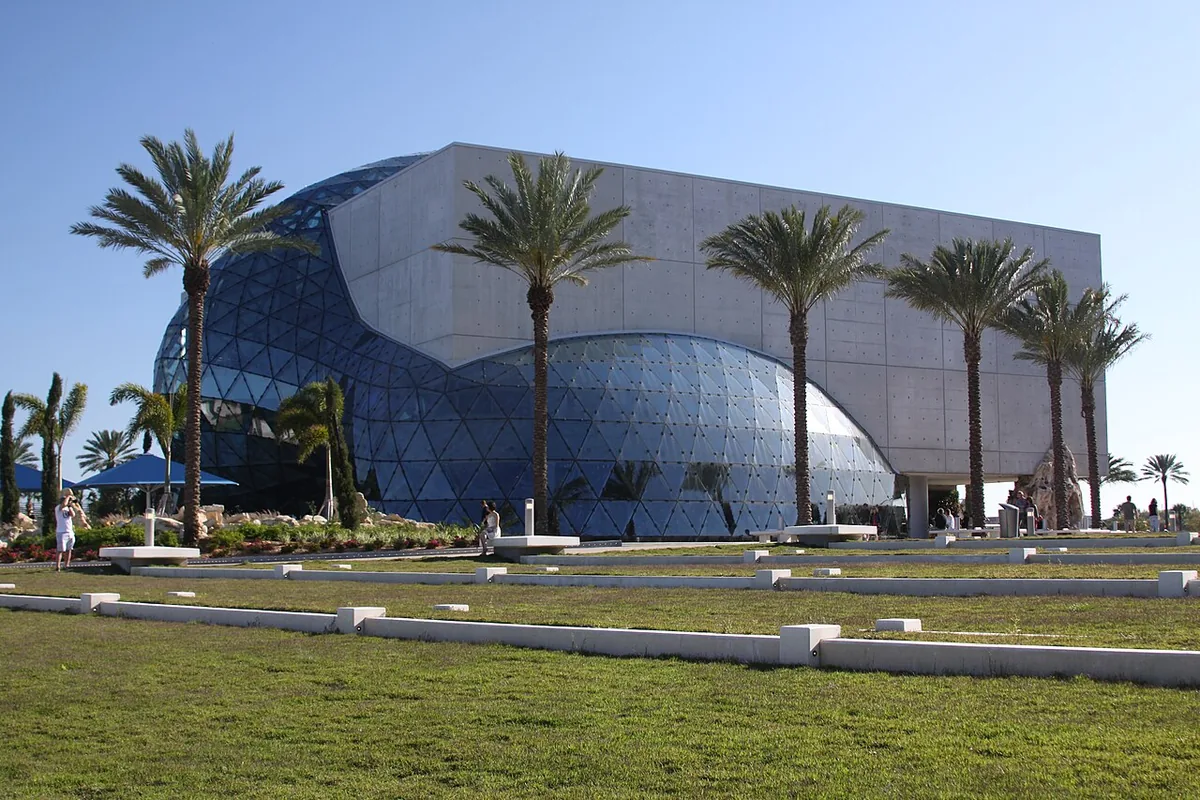
- Salvador Dalí Museum — The only Dalí museum outside of Europe, holding more than 2,400 works inside a striking geometric glass building. It appeals to art lovers and curious visitors of all ages; adult admission runs about $28, and timed entry is worth booking online in advance.
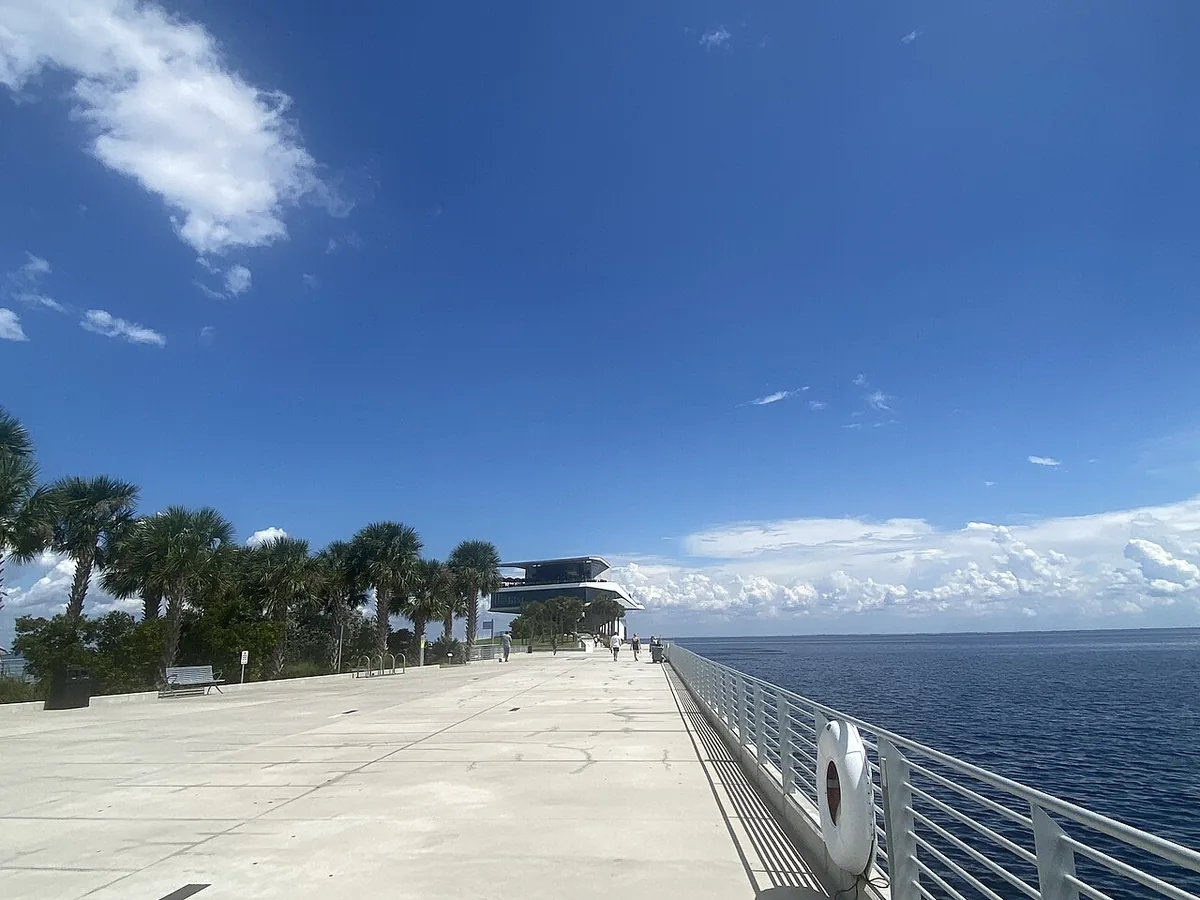
- The St. Pete Pier — Rebuilt in 2020, this 26-acre waterfront destination combines a splash pad, playground, nature discovery center, open-air market, and a dozen dining options. It’s free to enter (parking fees apply) and appeals to every age group and lifestyle.
- Chihuly Collection — An intimate permanent gallery of Dale Chihuly’s glass sculptures, distinct from larger traveling exhibits elsewhere. It appeals to design and art enthusiasts, with adult admission around $20.
- Fort De Soto Park — 1,136 acres across five interconnected keys at the southern tip of Pinellas County, with an award-winning beach, kayaking, camping, and birding. It’s free to enter and appeals to outdoor enthusiasts, though camping requires reservations well ahead.
- Saturday Morning Market — Ranked among the top 20 markets in the U.S. and the largest in the Southeast, with 100-plus vendors selling farm-fresh produce and gourmet food alongside live music. It runs October through May at Al Lang Stadium and draws more than 10,000 visitors weekly, appealing to food lovers and anyone wanting a genuine taste of local community life.
Central Avenue’s mile-long stretch of craft breweries, farm-to-table restaurants, and street-art murals generates its own calendar beyond any single attraction — jazz nights, gallery walks, and the annual SHINE Mural Festival all fill the corridor throughout the year.
Day Trips: Clearwater Beach, 30 minutes north, is consistently rated among the country’s best beaches for its powdery quartz sand and turquoise Gulf water. Tampa, 30 minutes northeast across the bay, delivers Busch Gardens, the Florida Aquarium, and Ybor City nightlife for a bigger-city day out. Tarpon Springs, 40 minutes north, is a charming Greek sponge-diving community with authentic restaurants and a working sponge dock — one of the region’s most distinctive outings.
## Moving to St. Petersburg: Your 90-Day Checklist90–60 days before:
- Research neighborhoods and set a housing budget using Zillow or Realtor.com, keeping in mind the median price has ranged from $398,000 to $495,000 within the past year.
- Get at least three moving company quotes (PODS, Allied Van Lines, HireAHelper, or a local mover).
- Research Pinellas County Schools enrollment deadlines if you have children, and check individual school ratings rather than relying on the district’s B+ average.
- Confirm your state income tax savings — Florida has none — and rebuild your budget around the new take-home number.
- Begin decluttering; book a self-storage unit if your move date and housing close date won’t line up.
60–30 days before: 6. Confirm your moving company and lock in dates, especially if moving during hurricane season (June–November). 7. Transfer medical and dental records; find new providers — Johns Hopkins All Children’s for pediatric care, or Tampa General (30 minutes away) for complex adult care. 8. Notify your employer, bank, and subscriptions of your address change. 9. Get homeowners or renters insurance quotes early — Pinellas County’s barrier-peninsula flood exposure means this can take longer than expected. 10. Research local utility providers and set up accounts before arrival.
First 30 days after arrival: 11. Transfer your driver’s license and vehicle registration to Florida. 12. Register to vote at your new address. 13. Explore your neighborhood on foot using the attractions section above — start with the Pier if you’re downtown. 14. Join local Facebook groups or Nextdoor for your neighborhood. 15. File your change of address with USPS if not already done.
## Frequently Asked Questions About Living in St. PetersburgQ: Is St. Petersburg a good place to live? A: St. Petersburg carries a Niche B+ grade, a nationally recognized arts and dining scene, and a genuinely walkable downtown. The honest trade-offs are a housing market that’s swung between $398,000 and $495,000 in median price within the past year and a citywide Walk Score of just 43 outside the urban core.
Q: What is the cost of living in St. Petersburg? A: St. Petersburg’s cost of living index is 102.8 as of 2026, about 3% above the national average, according to BestPlaces.net. The median home price has ranged from $398,000 to $495,000 depending on the month and source over the past year.
Q: Is St. Petersburg safe? A: Crime reads differently by source: City-Data.com’s composite index of 284 (100 = national average) suggests above-average crime, while Numbeo’s separately scaled index reads a more moderate 40.18. Both agree crime has trended down over five years, with downtown and Old Northeast among the safer neighborhoods.
Q: What are the best neighborhoods in St. Petersburg? A: Downtown St. Pete offers the city’s most walkable, urban lifestyle; Old Northeast provides historic charm for families; Snell Isle delivers exclusive waterfront estate living; and Grand Central District is the LGBTQ+-centered arts and nightlife hub.
Q: What is the job market like in St. Petersburg? A: Unemployment sits at 4.2% as of late 2025 (Tampa–St. Petersburg–Clearwater MSA, Bureau of Labor Statistics), with the economy anchored by Jabil (electronics manufacturing), Raymond James Financial, and a growing healthcare and marine-sciences cluster.
Q: How far is St. Petersburg from Tampa? A: Tampa is about 30 minutes northeast by car across Tampa Bay, making it an easy day trip or reverse commute. For flights, St. Pete-Clearwater International (PIE) is about 9 miles north of downtown, while Tampa International (TPA) — the region’s major airport — is roughly 21 miles and 30 minutes away.
St. Petersburg vs. Nearby Cities
St. Petersburg (cost of living index 102.8) runs close to Tampa in overall affordability but trades Tampa’s larger job market and bigger-city scale for a more walkable downtown and a stronger arts identity. Clearwater, 30 minutes north, offers a similar Gulf Coast lifestyle with easier beach access but a smaller, more tourism-dependent economy. Sarasota, further south, sits at a noticeably higher price point with a more upscale market than either St. Petersburg or Tampa. For movers choosing between Tampa Bay’s two anchor cities, St. Petersburg is generally the better fit for walkability and culture, while Tampa offers deeper job diversity and a larger corporate presence. For full profiles of these cities, see our guides to Tampa, Clearwater, and Sarasota.
Sources and Data Notes
Data compiled as of 2026 from: World Population Review / Florida Demographics (population); Redfin and Norada Real Estate (home price and market trend data, showing meaningful volatility across reporting periods); BestPlaces.net / Sperling’s (cost of living index); Niche.com (school district and overall city grades); City-Data.com and Numbeo (crime data — presented on two different scales, as noted, since a single directly comparable composite index was not available); U.S. Bureau of Labor Statistics (unemployment, reported at the Tampa–St. Petersburg–Clearwater MSA level rather than city-specific); U.S. Census Bureau / American Community Survey (median household income); WeatherSpark (climate); Walk Score; and Visit St. Pete/Clearwater (attractions and events). Fields not captured in the underlying research — the nearest commercial airports’ distances and drive times, continuing-education/college options, and category-level cost breakdowns — were filled from current web sources (St. Pete-Clearwater International/PIE and Tampa International/TPA, area college data, and BestPlaces) during editorial review.