
Living in Boca Raton, FL: The Complete 2026 Relocation and Visitor Guide
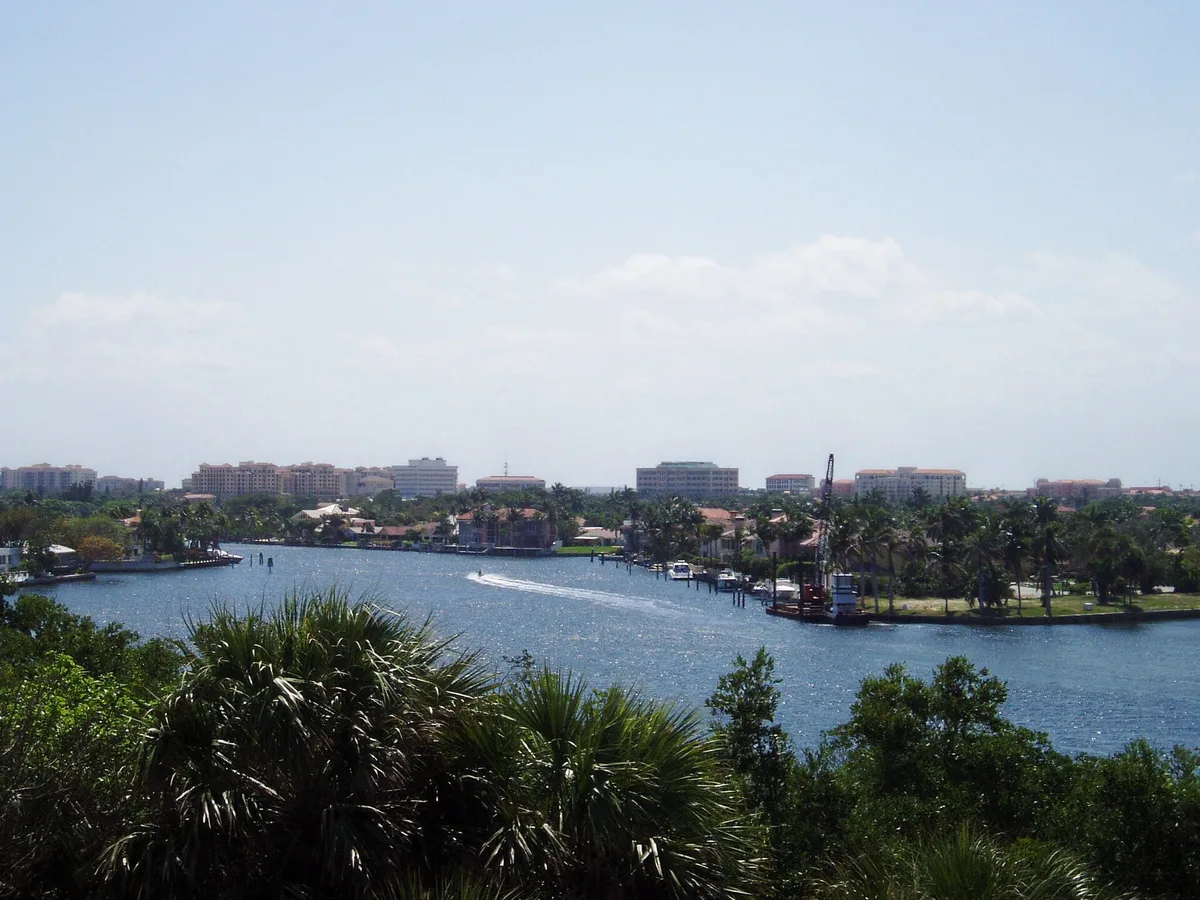
Boca Raton pairs a median home price between $697,000 and $828,000 with zero state income tax and a 3.3% unemployment rate — one of the tightest job markets in South Florida, according to the Bureau of Labor Statistics. The trade-off shows up on a different bill: homeowners insurance here can run $4,400 to $15,300 a year depending on flood zone and coverage, a direct cost of sitting in the Atlantic hurricane corridor. This guide is built for three readers: the family or professional weighing a full move, the PCS or corporate transfer planning logistics on a deadline, and the visitor scouting the city before committing to anything. Every number below carries its source and its context, because Boca Raton’s pitch — no income tax, strong jobs, beach living — only holds up once you’ve seen what it costs to keep it.
Quick Answer — Is Boca Raton Worth Moving To?
Boca Raton is an upscale, business-friendly city on Florida’s Gold Coast, carrying a Niche “A+” overall grade and anchored by a diversified white-collar economy in professional services, health care, financial services, and life sciences. The cost of living index sits at 114.1 (U.S. average = 100), driven almost entirely by housing, while the job market runs a lean 3.3% unemployment rate as of late 2025. It’s an especially good fit for corporate transfers, retirees, and remote professionals who can absorb high home prices and steep insurance premiums in exchange for no state income tax and 231 days of sunshine a year — though renters and first-time buyers on a tighter budget will feel the squeeze immediately.
At a Glance: Boca Raton by the Numbers (2026)
| Metric | Boca Raton |
|---|---|
| Population | 107,186 (city, 2025 est.); ~1.6 million in the West Palm Beach–Boca Raton–Boynton Beach metro |
| Median home price | $697,000–$828,000 (source-dependent range, see below) |
| Cost of living index | 114.1 (U.S. avg = 100) |
| Median household income | $106,273 |
| Unemployment rate | 3.3% (MSA) |
| Average commute | 26 minutes |
| Walk Score | 38/100 |
| Niche overall grade | A+ |
| Crime index | 56 (U.S. avg = 100; lower = safer) |
| School district grade | A- |
| Average summer high | 91°F |
| Average winter low | 59°F |
| Annual sunshine days | 231 |
The numbers describe two different cities layered on top of each other: a car-dependent, high-cost suburb citywide (Walk Score 38), and a walkable, amenity-rich urban core around downtown that scores 80 or higher. Income and jobs are strong enough to support the cost of living index, but the housing figure below tells the real story of who can comfortably afford to live here.
Cost of Living in Boca Raton
Boca Raton’s cost of living index is 114.1 as of 2026, meaning everyday expenses run about 14% above the national average, according to BestPlaces.net (Sperling’s). Housing is the driver: median home values and rents both sit well above the U.S. norm, while groceries, utilities, and healthcare track closer to typical Florida costs. The citywide average rent is around $2,938 a month — roughly 40% above the national average — which matters as much to renters weighing a move as the home-price headline does to buyers. Transportation costs run higher than average too, a function of the city’s car-dependent layout outside downtown; a household without a second income earner to offset that Walk Score of 38 should budget accordingly. Healthcare costs sit close to the national baseline, helped by a dense concentration of hospital systems and specialty care in Palm Beach County. The one line that changes the whole calculation: Florida charges no state income tax, which meaningfully offsets the elevated cost of living for higher earners, especially those relocating from states with income tax rates of 5% or more.
Housing Market Snapshot
Boca Raton’s housing market is cooling from its 2021–2022 peak but remains expensive, and the price itself depends on which source you check: Zillow puts the median home value at $697,000 (up 2.5% year-over-year), while Redfin reports a median sale price of $828,000 as of March 2026 (down 2.6% year-over-year). That spread reflects genuine market movement — homes now average 76 days on market and inventory is up 17%, a shift toward buyer leverage after years of a tight seller’s market. One-bedroom rentals run roughly $1,750–$2,272 a month and two-bedrooms $2,400–$2,915, per RentCafe and Apartment List data.
## Jobs and EconomyBoca Raton’s unemployment rate of 3.3% (West Palm Beach–Boca Raton–Boynton Beach MSA, BLS, late 2025) runs well below Florida’s statewide 4.9%, and the city’s top five employers — Tyco Integrated Security (Johnson Controls), Office Depot, Florida Atlantic University, Unisys Corporation, and GEO Group — anchor a genuinely diversified base rather than a single-industry town. Professional, scientific, and technical services form the largest employment sector, alongside health care, financial services, and a growing life-sciences cluster that includes newer arrivals like quantum-computing firm D-Wave and DigitalBridge Group. Two large Class-A office campuses, the 1.7-million-square-foot BRIC and the 5.2-million-square-foot Park at Broken Sound, reflect sustained corporate demand for physical office space even as remote work reshapes other metros — worth noting for anyone assuming the whole region has gone fully remote. Local employment grew 3.33% from 2023 to 2024 (45,900 to 47,500 jobs), and median household income of $106,273 gives residents real room against the elevated cost of living. Boca Raton’s economic-development office markets the city aggressively against Northeast and West Coast HQ costs — citing an estimated $25.9 million versus $33 million-plus in New York or Silicon Valley for a comparable 60,000-square-foot, 300-employee office footprint — a pitch that’s clearly landing with corporate relocations.
Neighborhoods in Boca Raton: Where to Live
Boca Raton’s neighborhoods split cleanly by lifestyle and budget, from ultra-exclusive waterfront estates to walkable downtown condos to family-oriented streets near top-rated schools.
Royal Palm Yacht & Country Club is an ultra-exclusive waterfront enclave with deepwater yacht access and a private country club, best suited to high-net-worth buyers and boaters. Housing is predominantly custom estate homes running well past $1.5–$3 million, and the neighborhood’s landmark is the Royal Palm Yacht Club marina basin.
Broken Sound is a mandatory-membership gated community spanning more than 1,000 acres with two championship golf courses, tennis and pickleball, and a modern spa and fitness center — best for golf-and-country-club lifestyle buyers and active retirees. Housing mixes single-family homes and villas, anchored by Broken Sound Club’s twin 18-hole courses.
Downtown Boca Raton (Mizner Park) is the walkable urban core, mixing luxury condos with shops, restaurants, and cultural venues — best for young professionals and empty-nesters who want car-optional living in a city where that’s otherwise rare. Housing is predominantly mid- and high-rise condos, landmarked by the Mizner Park Amphitheater.
St. Andrews Corridor is a family-oriented area prized for shade-tree streets, walkability, and proximity to top-rated schools, best for families with school-age kids. Housing is primarily single-family homes, and the area centers on St. Andrews School.
For comparison, see our guides to nearby Delray Beach, Deerfield Beach, and West Palm Beach.
## Schools, Safety, and Quality of LifeBoca Raton schools fall under the Palm Beach County School District, which carries an overall A- grade on Niche, with individual schools like Boca Raton Community High frequently grading A to A+. Florida Atlantic University, headquartered in the city with more than 30,000 students and an estimated $6.3 billion annual economic impact, gives residents access to continuing-education programs, night classes, and extension courses — a real option for career changers, military spouses, and anyone finishing a degree after relocating. Boca Raton’s crime index of 56 (U.S. average = 100, so lower is safer) reflects an overall crime rate about 44% below the national average, according to NeighborhoodScout and HomeSnacks data derived from FBI Uniform Crime Reports; the city ranks safer than 82% of comparable U.S. cities, though as with any city, safety varies by block and the figure is a citywide average rather than a per-neighborhood guarantee. Quality of life leans upscale and unhurried: multiple hospital systems serve Palm Beach County, the downtown core supports genuine walkability (Walk Score 80+ around Mizner Park) even though the citywide average is a car-dependent 38, and the overall pace favors people who’ve already arranged their transportation and don’t mind driving to reach most daily errands.
Climate and Weather in Boca Raton
Boca Raton runs hot, humid summers (May–September) with highs of 85–91°F and near-daily afternoon storm potential, and short, mild winters (December–February) with highs around 76°F and lows in the high 50s to 60s — genuinely comfortable rather than cold, and part of why the city averages 231 sunny days a year. The defining weather risk is hurricane season, June 1 through November 30: Boca Raton sits directly in the Atlantic hurricane corridor, and coastal sections fall into high-risk FEMA flood zones (VE/AE), per NOAA and WeatherSpark data. That risk isn’t abstract — it’s the direct cause of the $4,400–$15,300 annual insurance range cited earlier, with coastal properties often landing near the top of that band. Anyone house-hunting here should check FEMA flood-zone maps and get an insurance quote before making an offer, not after, since the same house a half-mile inland can carry a dramatically different premium.
Getting In and Out of Boca Raton
Fort Lauderdale-Hollywood International (FLL) sits 20.3 miles away (about a 30-minute drive), and Palm Beach International (PBI) is 22.9 miles away, also roughly 30 minutes — both useful for frequent flyers and family visiting from out of state. Boca Raton Airport (BCT) is just 2.2 miles from downtown but handles private and charter traffic only. Interstate 95 runs through the city with five local exits, Florida’s Turnpike provides a second north-south route, and Tri-Rail commuter service (with Amtrak connections) stops at the Boca Raton station — relevant for anyone commuting toward Fort Lauderdale or Miami without wanting to drive the full corridor daily.
Things to Do in Boca Raton: Top Attractions and Day Trips

Boca Raton’s leisure identity centers on Mediterranean-style outdoor shopping districts, beach parks, and a genuine arts scene, with easy day trips north and south along the coast.
- Mizner Park — An open-air, Mediterranean-style shopping, dining, and entertainment district anchored by an amphitheater that hosts concerts and events. It appeals to couples, families, and evening strollers; walking the district is free, and amphitheater shows are ticketed separately.
- Town Center at Boca Raton — One of South Florida’s premier luxury shopping malls, with 200-plus stores including Neiman Marcus, Saks Fifth Avenue, and Nordstrom. It draws shoppers and luxury-goods buyers; entry is free, though parking is validated or paid during peak hours.
- Boca Raton Museum of Art — A 44,000-square-foot museum inside Mizner Park drawing more than 200,000 visitors a year with rotating exhibitions and a strong permanent collection. It appeals to art lovers and newcomers looking to plug into the local culture scene; admission carries a modest fee.
- Gumbo Limbo Nature Center — A coastal tropical hammock preserve with a shaded boardwalk and a 40-foot ADA-accessible observation tower. It’s built for families and nature or ecology enthusiasts, and admission is free (donations encouraged).
- Red Reef Park — Nearly 40 oceanfront acres with swimming, snorkeling, surf fishing, and an on-site executive golf course. It appeals to outdoor and beach-lifestyle buyers, with a small daily parking fee for non-residents.
Mizner Park’s amphitheater and open plazas double as the city’s event calendar — concerts, seasonal markets, and evening gatherings fill the space well beyond a typical shopping trip.
Day trips are easy in both directions: Delray Beach (20 minutes north) offers a walkable, more bohemian Atlantic Avenue with boutiques and the Pineapple Grove Arts District; Fort Lauderdale (30 minutes south) delivers canal water-taxi cruises and Las Olas Boulevard dining for a bigger-city outing; and Palm Beach/West Palm Beach (30–40 minutes north) pairs old-money Worth Avenue shopping with the Norton Museum of Art and the Kravis Center performing-arts scene.
## Moving to Boca Raton: Your 90-Day Checklist90–60 days before:
- Research neighborhoods and set a housing budget using Zillow or Realtor.com, factoring in the $697K–$828K median home price range.
- Get at least three moving company quotes (PODS, Allied, HireAHelper, or a local South Florida mover).
- Research Palm Beach County School District enrollment deadlines if you have children.
- Confirm your state income tax savings — Florida has none — and rebuild your budget around the new take-home number.
- Begin decluttering; book a self-storage unit if your move date and housing close date won’t line up.
60–30 days before: 6. Confirm your moving company and lock in dates, especially if moving during hurricane season (June–November). 7. Transfer medical and dental records; find new providers in Boca Raton or Palm Beach County. 8. Notify your employer, bank, and subscriptions of your address change. 9. Get homeowners or renters insurance quotes early — Boca Raton’s flood-zone variation means this can take longer than expected. 10. Arrange short-term lodging if permanent housing won’t be ready immediately.
First 30 days after arrival: 11. Transfer your driver’s license and vehicle registration to Florida. 12. Register to vote at your new address. 13. Explore your neighborhood on foot using the attractions section above — start with Mizner Park if you’re downtown. 14. Join local Facebook groups or Nextdoor for your neighborhood. 15. File your change of address with USPS if not already done.
## Frequently Asked Questions About Living in Boca RatonQ: Is Boca Raton a good place to live? A: Yes, for the right budget: Boca Raton carries a Niche “A+” overall grade, strong schools, and a low 3.3% unemployment rate. The main trade-off is cost — median home prices in the high $600,000s to $800,000s and homeowners insurance up to $15,300 a year in high-risk flood zones — making it a stronger fit for higher earners than budget-conscious movers.
Q: What is the cost of living in Boca Raton? A: Boca Raton’s cost of living index is 114.1, about 14% above the national average of 100, according to BestPlaces.net. Housing drives most of that gap: median home prices range from $697,000 (Zillow) to $828,000 (Redfin) as of early 2026, depending on the source and timing.
Q: Is Boca Raton safe? A: Boca Raton’s crime index of 56 (U.S. average = 100) reflects an overall crime rate about 44% below the national average, per NeighborhoodScout and FBI Uniform Crime Report data, with the city ranking safer than 82% of comparable U.S. cities. As in any city, risk varies somewhat by neighborhood, but the overall picture is a low-crime suburb.
Q: What are the best neighborhoods in Boca Raton? A: Royal Palm Yacht & Country Club offers ultra-exclusive waterfront estate living; Downtown Boca Raton (Mizner Park) provides walkable, car-optional condo living; and St. Andrews Corridor suits families who want single-family homes near top-rated schools.
Q: What is the job market like in Boca Raton? A: Unemployment sits at 3.3% (MSA, BLS, late 2025), well below Florida’s statewide 4.9%. The economy is anchored by professional and technical services, health care, financial services, and top employers including Tyco Integrated Security, Office Depot, Florida Atlantic University, Unisys, and GEO Group.
Q: How far is Boca Raton from Fort Lauderdale? A: Fort Lauderdale is about 30 minutes south of Boca Raton by car, and Fort Lauderdale-Hollywood International Airport (FLL) is 20.3 miles away — the closest major commercial airport for most Boca Raton residents.
Boca Raton vs. Nearby Cities
Boca Raton runs more expensive than Delray Beach (20 minutes north), which offers a similar beach-town feel with a more walkable, bohemian downtown at generally lower home prices, and both trail West Palm Beach (30–40 minutes north) in raw job-market size, since West Palm Beach anchors a larger share of the metro’s finance and government employment. Deerfield Beach, just south, offers a more budget-friendly coastal alternative with easier beach access and lower housing costs, trading Boca Raton’s luxury retail and corporate campuses for a quieter, more residential pace. All three sit within a 30–40 minute drive, making cross-shopping between them realistic for anyone deciding where exactly to land within Palm Beach County. For full profiles of these cities, see our guides to Delray Beach, Deerfield Beach, and West Palm Beach.
Sources and Data Notes
Data compiled as of 2026 from: U.S. Census Bureau / American Community Survey and World Population Review (population, median household income); U.S. Bureau of Labor Statistics Economy at a Glance for the West Palm Beach-Boca Raton-Boynton Beach MSA (unemployment); BestPlaces.net / Sperling’s (cost of living index); Niche.com (overall city and school district grades); NeighborhoodScout / HomeSnacks, sourced from FBI Uniform Crime Reports (crime data); Zillow and Redfin (home price and market trend data); Walk Score (walkability); WeatherSpark and NOAA (climate data). The median home price is presented as a range ($697,000–$828,000) because Zillow’s value estimate and Redfin’s median sale price diverge meaningfully as of early 2026, reflecting real market volatility rather than source error. The crime index of 56 is a derived figure (100 minus the reported 44% below-average rate) rather than a directly published index number.