
Living in Denver, CO: The Complete 2026 Relocation and Visitor Guide
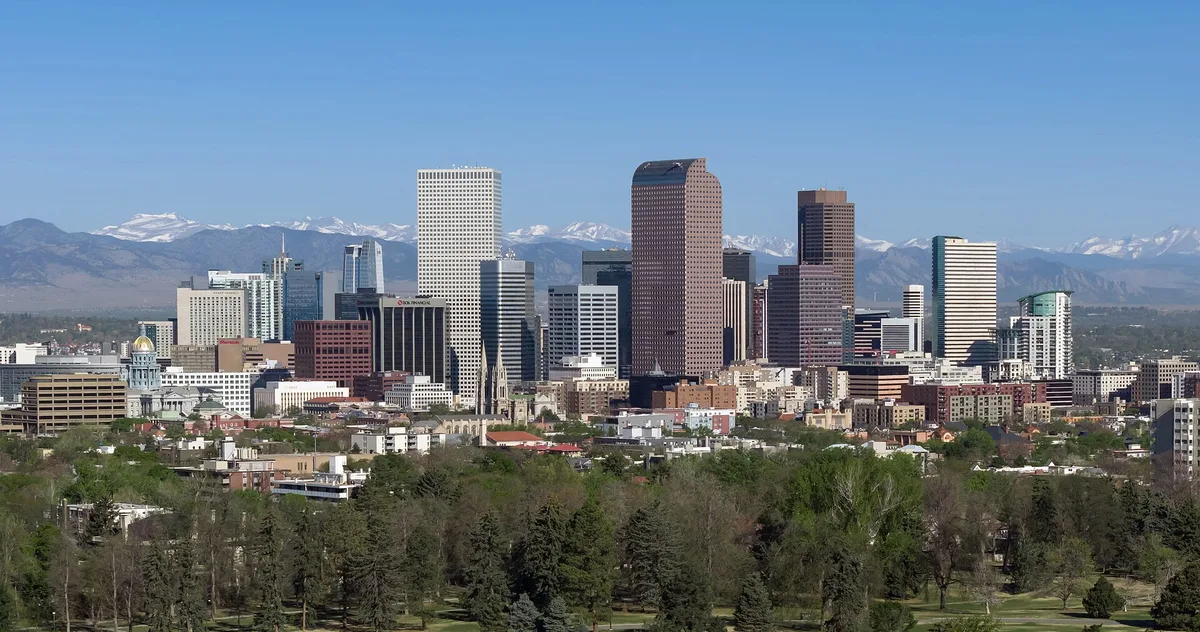
Denver charges about 28% above the national average for everyday life — median home $578,000 as of 2025 — and pays it back with a median household income of $94,718, roughly 300 days of annual sunshine, and the Rockies an hour from your front door. The economy is real, not just scenery: aerospace, healthcare, and tech anchor a 2.9-million-person metro at 3.9% unemployment. The honest counterweights are a crime index of 185 and a housing market that, though cooler than its 2022 peak, still demands careful budgeting. For professionals with transferable skills who want career and mountains in the same week, this guide covers the whole Mile High picture — a city sitting exactly one mile above sea level.
Quick Answer — Is Denver Worth Moving To?
Denver’s strongest selling point is the combination: a real, diversified economy with a genuine outdoor culture that isn’t just marketing copy. The Rocky Mountains are not a backdrop — they’re an hour’s drive from your front door, with skiing, hiking, and mountain towns accessible on a weekend. The honest challenge is cost: as of 2025, Denver’s cost of living runs about 28% above the national average, and the housing market — while cooler than its 2022 peak — still demands a median home price near $578,000. Denver is best suited to professionals with transferable skills in healthcare, tech, aerospace, or finance who value quality of life and can absorb a higher cost of entry.
At a Glance: Denver by the Numbers (2025)
| Metric | Denver |
|---|---|
| Population | 715,522 (city); 2.9M (metro) |
| Median home price | $578,000 |
| Cost of living index | 127.6 (U.S. avg = 100) |
| Median household income | $94,718 |
| Unemployment rate | 3.9% |
| Average commute | 27 minutes |
| Walk Score | 61/100 |
| Niche overall grade | B+ |
| Crime index | 185 (U.S. avg = 100; lower = safer) |
| School district grade | B (Denver Public Schools) |
| Average summer high | 88°F |
| Average winter low | 29°F |
| Annual sunshine days | ~300 |
Denver’s numbers tell a layered story: high income, high cost, above-average crime, and exceptional sunshine. The median household income of $94,718 (U.S. Census Bureau) helps offset the premium cost of living, but prospective movers should budget carefully — Denver rewards those who do their homework.
Cost of Living in Denver
As of 2025, Denver’s cost of living index of 127.6 (per BestPlaces/Sperling’s) means daily life costs roughly 28% more than the U.S. average across all major spending categories. Housing is the biggest driver, running well above national norms, but the premium extends to utilities, childcare, and healthcare as well. Groceries in Denver sit modestly above the national average — expect to pay roughly 5–8% more for a typical market basket. Transportation costs are comparable to other mid-sized metros, though the city’s car-dependence (81% of commuters drive) means fuel and insurance weigh on budgets. Healthcare is above average in cost, though the metro’s major hospital systems keep access solid. On the positive side, Colorado’s flat state income tax rate of 4.4% is among the lower rates for any state that levies income tax, offering some relief versus peer metros in higher-tax states. Working with a budget that accounts for Denver’s premium — particularly on housing — is essential before committing to a move.
Housing Market Snapshot
As of 2025, Denver’s median home price sits around $578,000 (Zillow/Redfin), down modestly from the 2022 peak and representing roughly a 1–3% year-over-year decline as the market has cooled into a more balanced state. Buyers have more negotiating room than in recent years, though competition remains active for move-in-ready homes under $600,000. Renters will find a 1-bedroom averaging approximately $1,600/month and a 2-bedroom around $2,000/month. Condos and attached homes offer an entry point closer to $390,000–$400,000 for buyers not ready to stretch to the median.
## Jobs and EconomyDenver’s economy is one of the most diversified in the Mountain West, and that breadth is a genuine asset for relocators. The dominant sectors are aerospace and defense, healthcare, energy (particularly oil and natural gas extraction and services), financial services, and a fast-growing technology and IT cluster. Major employers include UCHealth, the region’s largest healthcare system; Lockheed Martin, with a major aerospace and defense presence; Children’s Hospital Colorado, consistently ranked among the nation’s best; Arrow Electronics, a Fortune 500 tech solutions company headquartered downtown; and Ball Corporation, a global packaging and aerospace manufacturer also based in the metro. As of 2025, Denver’s unemployment rate stands at 3.9% (Bureau of Labor Statistics), below the national average, and median household income reached $94,718 per the U.S. Census Bureau. Job growth is projected at approximately 0.6% for 2026, led by healthcare and tech hiring. Denver also ranks among the top metros for remote-work attractiveness, drawing location-independent professionals who prioritize mountain-adjacent lifestyle over coastal proximity.
Neighborhoods in Denver: Where to Live
Denver’s neighborhoods are as varied as its population — from buttoned-up luxury enclaves to artsy blocks of Victorian row houses. Here are four areas worth putting on your shortlist, followed by a note on nearby communities.
Cherry Creek is Denver’s upscale urban core, anchored by the Cherry Creek Shopping Center and the paved trail that winds along Cherry Creek into downtown. It’s best for established professionals and families who want walkable retail, fine dining, and relative safety in a polished setting. Housing runs toward luxury condos and townhomes, with prices from $500,000 to well over $1 million. The neighborhood rewards those who prioritize lifestyle convenience over square footage.
LoDo (Lower Downtown) is where Denver’s history and its present-day energy collide most visibly. Century-old warehouses have been converted into lofts, hotel bars, and rooftop restaurants, and Coors Field anchors the neighborhood’s identity as a gathering place. LoDo is best for young professionals and urban dwellers who want to walk to concerts, games, and dinner. Denver Union Station — a restored 1914 rail terminal — sits at its center and doubles as one of the city’s best dining destinations.
Baker occupies the stretch along South Broadway south of downtown, and it wears its creative identity proudly: local record shops, vintage clothing stores, casual taco joints, and music venues line the corridor. Victorian row homes and affordable rentals make it a natural home for artists, musicians, and renters who want neighborhood character without the Cherry Creek price tag. It’s one of Denver’s most genuinely walkable blocks.
Capitol Hill is dense, diverse, and historically layered — stately mansions from Denver’s silver-boom years sit beside apartment buildings and bustling coffee shops. It’s best for young renters, LGBTQ+ residents, and anyone who wants walkable access to the city’s food and bar scene without paying LoDo prices. The Colorado State Capitol and Cheesman Park both anchor the neighborhood’s sense of place.
Prospective movers who find Denver’s prices steep may also want to explore nearby communities like Boulder, Colorado Springs, and Fort Collins — each with its own character and cost profile.
## Schools, Safety, and Quality of LifeSchools
Denver Public Schools (DPS) is the city’s primary district, serving roughly 90,000 students across more than 200 schools. Niche.com assigns DPS an overall grade of B, which reflects genuine strengths in magnet programs and selective high schools alongside continued work on equity and achievement gaps. Standout public options include East High School and the School of Science and Technology. For families seeking higher-rated districts, the surrounding metro delivers: Cherry Creek School District and Douglas County School District both earn A-minus grades from Niche, and Boulder Valley earns an A. Post-secondary options are strong: the University of Denver (private), Metropolitan State University of Denver, and the University of Colorado Denver all operate in the city.
Safety
Safety is Denver’s most significant quality-of-life caveat, and it deserves an honest discussion rather than a dismissal. Denver’s crime index of approximately 185 (versus a U.S. average of 100, where lower is safer) reflects elevated property crime and violent crime rates relative to the national norm. However, context matters: Denver Police Department data show overall crime dropped 24% from 2023 to 2024, and violent crime declined 18.8% in the same period — a meaningful trend in the right direction. Crime is also highly uneven geographically. Neighborhoods like Cherry Creek, Hilltop, Washington Park, and Congress Park are consistently cited as among the safest in the city. Prospective residents should research specific neighborhoods rather than treating the city-wide figures as uniform. FBI UCR data and local crime mapping tools are useful for block-level comparison.
Quality of Life
Denver’s hospital infrastructure is excellent — UCHealth, Denver Health, and Children’s Hospital Colorado give the metro strong access across specialties. The city’s walkability averages 61 out of 100 city-wide (Walk Score), though that number masks significant neighborhood variation: LoDo and Capitol Hill score in the 90s, while more residential, car-dependent areas score in the 40s and 50s. Public transit via RTD (Regional Transportation District) covers light rail, commuter rail, and buses, but the majority of residents rely on personal vehicles for daily life. Denver’s overall pace of life sits somewhere between Mountain West laid-back and urban-professional driven — the city takes its weekends seriously.
Climate and Weather in Denver
Denver’s climate is one of its most underrated selling points: roughly 300 sunshine days per year (Metro Denver Economic Development Corporation), making it sunnier than Miami or Los Angeles despite sitting at 5,280 feet elevation. Summers are warm and largely dry, with July highs averaging 88°F — afternoon thunderstorms are common and brief from June through August, and hail is a genuine risk that affects car and homeowner insurance premiums. Winters are milder than Denver’s reputation suggests: January averages a high of 44°F, and even after heavy snowfall (the city averages about 60 inches annually), sunny days follow quickly. Spring and fall are variable and beautiful — though late-spring blizzards are not unusual. New arrivals should budget time to adjust to the altitude; the thin air at 5,280 feet affects everyone initially and influences outdoor activity pacing. Climate is a major factor in Denver’s housing decisions — south-facing slopes and sun exposure matter, and many buyers specifically seek homes that minimize snow management.
Things to Do in Denver: Top Attractions and Day Trips
Denver is a city that earns its reputation for livability through the quality of what it offers after work hours — a craft brewery culture that rivals any city in the country, a genuine arts scene, professional sports across all four major leagues, and wilderness an hour in any direction. Whether you’re visiting for a weekend or mapping your new everyday life, Denver delivers a range of experiences that few cities of its size can match.
-
Red Rocks Amphitheatre — Fifteen miles west of downtown, Red Rocks is an open-air concert venue carved into dramatic red sandstone formations that rise 300 feet on either side of the stage. The acoustics are legendary, and the setting is unlike any other music venue in North America. Outside of concert nights, the park is free to visit and a favorite spot for sunrise hikes and morning yoga. Check the schedule before visiting in summer — concert nights mean limited access to the rocks themselves, and tickets for major acts sell out quickly.
-
Denver Art Museum — The DAM houses more than 70,000 works spanning 5,000 years of human history, with a particularly strong collection of Native American and Indigenous art. The Frederic C. Hamilton Building’s angular titanium exterior has become a downtown landmark in its own right. Admission is approximately $20 for adults, and the museum offers free first Saturdays for families with children. It’s the kind of museum that rewards a slow visit rather than a sprint through the galleries.
-
Denver Botanic Gardens — This 23-acre urban oasis in the Cheesman Park neighborhood features a tropical conservatory, Japanese garden, and water features designed for contemplative wandering. In summer, the outdoor concert series (Jazz in the Gardens, Blossoms of Light) turns the gardens into an evening destination. Admission runs approximately $15; purchasing tickets online in advance is recommended during peak spring and summer months.
-
Colorado State Capitol and Civic Center — The Capitol is a free, walkable piece of Denver history: the dome is gilded in real Colorado gold, and a step on the west lawn is marked exactly one mile above sea level. Guided tours are available on weekdays. The surrounding Civic Center Park connects the Capitol to the Denver Art Museum and the Denver Central Library, making this a natural anchor for a downtown afternoon. It appeals to first-time visitors and families equally.
-
RiNo Arts District and Denver Union Station — Union Station is the city’s beautifully restored 1914 rail terminal, now home to a dozen restaurants, the Terminal Bar, and the Crawford Hotel — and one of the best places in Denver to spend a rainy afternoon. The adjacent RiNo (River North) neighborhood is Denver’s creative epicenter: block after block of murals, independent breweries, and galleries make it the city’s most photogenic district. Both are free to explore, and the restaurant scene in RiNo has become one of the best in the Mountain West.
Day Trips from Denver: Rocky Mountain National Park, about 1.5 hours north via US-36, is the essential Colorado day trip — Trail Ridge Road is the highest continuously paved road in the United States, and the park’s elk and alpine scenery justify the timed-entry permit process (required in peak summer; day passes run approximately $35 per vehicle). Breckenridge, 1.5 hours west on I-70, shifts from world-class ski resort in winter to mountain biking and gondola-ride territory in summer, with a charming Victorian Main Street that doesn’t feel like a theme park. Colorado Springs, one hour south on I-25, anchors a cluster of natural attractions including the free Garden of the Gods — where red sandstone formations dwarf visitors — and Pikes Peak, accessible by cog railway or the auto road.
## Moving to Denver: Your 90-Day Checklist90–60 days before:
- Research neighborhoods and set housing budget using Zillow or Realtor.com
- Get at least three moving company quotes (PODS, Allied, HireAHelper, or local movers)
- Research school enrollment deadlines if you have children
- Review Colorado’s flat 4.4% state income tax implications for your situation
- Begin decluttering — book a self-storage unit if needed
60–30 days before: 6. Confirm moving company and lock in dates 7. Transfer medical and dental records; find new providers in Denver 8. Notify employer, bank, and subscriptions of address change 9. Research utility providers in Denver (Xcel Energy for gas and electric) and set up accounts 10. Arrange short-term lodging if permanent housing won’t be ready immediately
First 30 days after arrival: 11. Transfer driver’s license and vehicle registration to Colorado (required within 90 days) 12. Register to vote at your new address 13. Explore your neighborhood on foot using the attractions section above 14. Join local Facebook groups or Nextdoor for your neighborhood 15. File change of address with USPS if not already done
## Frequently Asked Questions About Living in DenverQ: Is Denver a good place to live? A: Denver earns a B+ overall grade from Niche.com, which reflects its genuine strengths — a strong job market, exceptional outdoor access, and a vibrant food and arts culture — alongside real trade-offs in cost of living and crime. The city suits active professionals and outdoor-minded people particularly well. Those who prioritize safety above all else or are on a tight housing budget may find the numbers challenging.
Q: What is the cost of living in Denver? A: As of 2025, Denver’s cost of living index is 127.6 per BestPlaces/Sperling’s, meaning it runs about 28% above the U.S. average. Housing is the primary driver: the median home price sits around $578,000, and median 1-bedroom rent runs approximately $1,600/month. Groceries and utilities are modestly above average; Colorado’s 4.4% flat income tax rate provides some offset.
Q: Is Denver safe? A: Denver’s crime index of approximately 185 (versus the U.S. average of 100, where lower is safer) puts it above the national average in both property and violent crime. That said, crime dropped 24% city-wide from 2023 to 2024 per Denver Police Department data, and safety varies dramatically by neighborhood. Cherry Creek, Hilltop, Washington Park, and Congress Park are among the safest areas. As with most large cities, researching specific neighborhoods rather than relying on city-wide averages is the more useful approach.
Q: What are the best neighborhoods in Denver? A: Cherry Creek offers upscale walkability and is popular with families and professionals; LoDo is the place for urban energy and proximity to dining, sports, and entertainment; Baker suits renters and creatives who want neighborhood character at a lower price point; and Capitol Hill is diverse, walkable, and historically rich. For families specifically, the nearby suburb of Highlands Ranch and the Central Park neighborhood within Denver proper consistently earn high marks.
Q: What is the job market like in Denver? A: Denver’s job market is healthy, with a 3.9% unemployment rate as of 2025 (Bureau of Labor Statistics) and a diversified base across aerospace and defense, healthcare, energy, financial services, and technology. Major employers include UCHealth, Lockheed Martin, Children’s Hospital Colorado, Arrow Electronics, and Ball Corporation. Job growth is modest but steady, and Denver’s profile as a remote-work destination continues to attract workers whose employers are based elsewhere.
Q: How far is Denver from Colorado Springs? A: Colorado Springs is approximately 70 miles south of Denver via I-25, a drive that takes roughly one hour under normal traffic conditions. The two cities are distinct in character — Denver is larger, more expensive, and more cosmopolitan; Colorado Springs is more affordable, more conservative politically, and anchors a strong military and defense economy. There is no direct passenger rail service between the two cities as of 2025, making a personal vehicle the practical requirement for commuting between them.
Denver vs. Nearby Cities
Denver’s position as Colorado’s economic and cultural hub comes with a price premium that its neighbors don’t carry. Boulder, 30 miles northwest, offers a beautiful, walkable college-town environment with a top-tier research economy — but median home prices near $940,000 make Denver look affordable by comparison. Colorado Springs, one hour south, delivers significantly lower housing costs (median near $450,000), top-rated schools, and proximity to Pikes Peak, with a job market strong in military, defense, and healthcare — a genuine alternative for families and retirees who don’t need Denver’s big-city amenities. Fort Collins, 65 miles north, earns consistent livability rankings with a median home price around $556,000, a vibrant brewery and trail culture, and Colorado State University providing an educated, youthful base. If Denver’s cost is the friction point in your decision, Colorado Springs and Fort Collins both offer strong quality of life at a meaningful discount — explore our full guides to understand which fits your priorities.
Sources and Data Notes
Data in this guide reflects 2024–2025 figures drawn from the following sources: U.S. Census Bureau / American Community Survey (population, median household income); Bureau of Labor Statistics (unemployment rate, wage data); Niche.com (overall grade, school district grade); BestPlaces.net / Sperling’s BestPlaces (cost of living index); NeighborhoodScout / AreaVibes (crime index); WeatherSpark / NOAA Climate Normals (temperature, sunshine days); Walk Score / walkscore.com (walkability); Zillow / Redfin / Rentometer (home prices, rent trends); Visit Denver / Metro Denver Economic Development Corporation (attractions, employer data). Crime index figures represent relative rates compared to the U.S. average of 100; lower values indicate safer conditions. All statistical figures should be independently verified before making financial or relocation decisions.