
Living in Colorado Springs, CO: The Complete 2026 Relocation and Visitor Guide
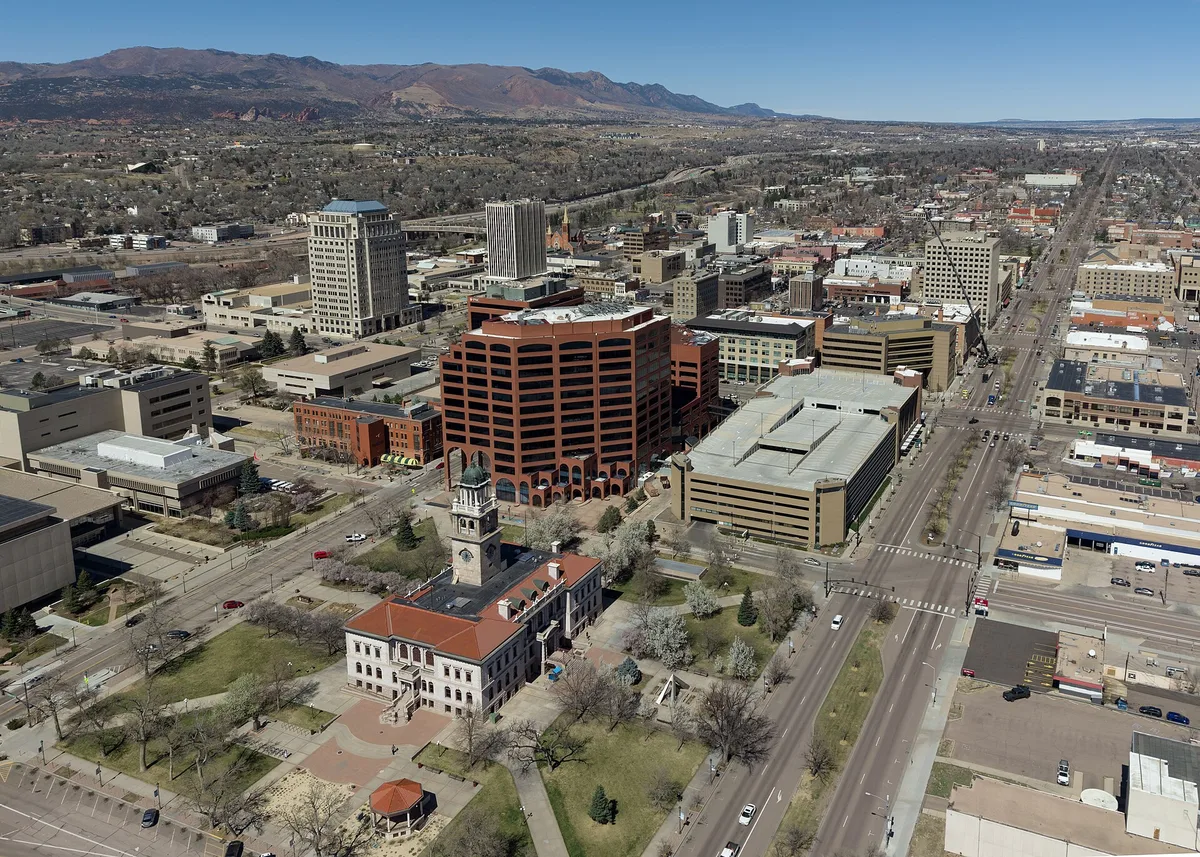
Colorado Springs hosts more of America’s space and air defense than any other city — Peterson and Schriever Space Force Bases, Cheyenne Mountain, Fort Carson, the U.S. Air Force Academy, and NORAD/NORTHCOM headquarters — and that anchor holds unemployment at 3.3% in Colorado’s second-largest city of 502,000. The price of the setting, 6,035 feet up at the base of Pikes Peak: a median home around $450,000 and living costs 11% above the national average, softened by 243 sunny days a year and several A+ school districts. The honest trade-offs are a crime index of 170, wide district-by-district school variation, and car dependence outside a few walkable neighborhoods. This guide covers what life here actually looks like in 2025 — for military and aerospace families especially.
Quick Answer — Is Colorado Springs Worth Moving To?
Colorado Springs earns a B+ overall from Niche.com and is consistently ranked among the best mid-size cities in America for outdoor recreation, sunshine, and military quality of life. The cost of living index of 111 places it modestly above the national average, driven primarily by housing — median home prices around $450,000 as of 2025 — but a strong local economy (unemployment just 3.3%) and 243 sunny days per year make the premium feel justified for most residents. It’s an especially strong fit for military and Space Force personnel, aerospace and defense professionals, outdoor enthusiasts, and families who prioritize school quality (several A+ rated districts). The honest trade-off: a citywide crime rate that runs above national averages, wide district-by-district school quality variation, and car dependency outside of a few walkable neighborhoods.
At a Glance: Colorado Springs by the Numbers (2025)
| Metric | Colorado Springs |
|---|---|
| Population | 502,306 |
| Median home price | $450,000 |
| Cost of living index | 111 (U.S. avg = 100) |
| Median household income | $83,198 |
| Unemployment rate | 3.3% |
| Average commute | 23 minutes |
| Walk Score | 36/100 |
| Niche overall grade | B+ |
| Crime index | 170 (U.S. avg = 100; lower = safer) |
| School district grade | A- (top districts: Cheyenne Mountain SD A+, Academy D20 A) |
| Average summer high | 84°F |
| Average winter low | 20°F |
| Annual sunshine days | 243 |
Colorado Springs’ median household income of $83,198 as of 2025 reflects a labor market significantly shaped by well-compensated military and aerospace employment. The 3.3% unemployment rate is among the lowest of any major Colorado city — a direct result of the federal government’s ongoing investment in space, cyber, and defense missions that cannot be outsourced or downsized in economic downturns.
Cost of Living in Colorado Springs
Colorado Springs’ cost of living index of 111 means everyday expenses run about 11% above the national average — modest for a Western city with this quality of life and employment base. Housing is the primary driver: median home prices have climbed steadily alongside population growth and defense contract expansion. Groceries and utilities run approximately 5–8% above national norms, and healthcare is close to average. Transportation costs are elevated by car dependency — Colorado Springs is a sprawling city where a vehicle is essential for most residents. Colorado has a flat state income tax rate of 4.4% (as of 2025), which is below many peer states. Critically, an income of $83,198 in Colorado Springs provides genuine purchasing power given the city’s lifestyle amenities, outdoor access, and quality of neighborhoods — residents consistently cite high satisfaction with value received despite above-average costs.
Housing Market Snapshot
Colorado Springs’ median home price sits around $450,000 as of early 2026, down modestly (approximately 4%) from a 2025 peak, creating a slightly more buyer-friendly environment than the frenzied 2021–2023 market. Median rent for a one-bedroom runs approximately $1,350–$1,550/month, and a two-bedroom averages $1,600–$1,900/month, according to Zillow and local market data. Military families benefit from competitive BAH rates that reflect the local market. The housing stock ranges from affordable new construction in Banning Lewis Ranch to luxury estates around the Broadmoor — nearly every price point and lifestyle preference is represented somewhere in the city.
---Jobs and Economy
Colorado Springs has become the most important space and defense hub in the United States. Peterson Space Force Base serves as headquarters for Space Operations Command, with approximately 15,000 active-duty, reserve, National Guard, and civilian personnel. Schriever Space Force Base, 15 miles to the east, is the nerve center of American satellite command and control operations. Cheyenne Mountain Space Force Station — carved into the granite of Cheyenne Mountain — houses NORAD and USNORTHCOM, providing aerospace warning and defense for all of North America. The U.S. Air Force Academy, 12 miles north, adds another 10,000+ personnel. Fort Carson, one of the Army’s largest installations, contributes 28,000+ soldiers and civilians. The contractor ecosystem surrounding these installations is extraordinary: more than 250 aerospace and defense companies — including Lockheed Martin, Northrop Grumman, Boeing, Raytheon, L3Harris, and dozens of emerging space startups — operate in the metro. Colorado Springs posted $2.8 billion in defense contract awards in FY2024, the highest in regional history, according to ClearanceJobs. For cleared professionals, the concentration of TS/SCI-required positions here is second to no metro area outside the Washington D.C. Beltway.
Neighborhoods in Colorado Springs: Where to Live
Colorado Springs’ neighborhoods reflect the full diversity of a half-million-person Western city — from historic walkable districts to master-planned suburban communities and mountain-adjacent estates. School district boundaries are critically important here, as quality varies enormously between districts. For additional community options, see our guides to Manitou Springs, Monument, and Pueblo.
Briargate is Colorado Springs’ most popular and family-oriented neighborhood, located in the city’s northeast quadrant within the highly rated Academy District 20 (Niche grade A). Features newer homes ranging from the mid-$300,000s to $700,000+, excellent schools, multiple parks, and lower crime than the citywide average. Best for military families and professionals who want top-tier schools and a structured suburban environment. Proximity to Peterson SFB and Schriever SFB makes morning commutes manageable.
Old Colorado City is the city’s original downtown, established in 1859, with walkable Victorian storefronts, independent art galleries, boutiques, coffee shops, and an eclectic neighborhood character that feels nothing like suburban Colorado Springs. Best for creatives, empty nesters, and those who want genuine neighborhood walkability and historic charm. Home prices are more varied than Briargate, with excellent value in the $300,000–$500,000 range.
Broadmoor is Colorado Springs’ premier luxury enclave, centered on the iconic Forbes Five-Star Broadmoor Resort at the base of Cheyenne Mountain. Properties range from $800,000 to several million, with estate homes, mountain views, and an exclusivity defined by one of America’s great resort properties. Best for senior officers, executives, and those who want privacy, prestige, and access to the Broadmoor’s trails and amenities.
Banning Lewis Ranch was the fastest-growing community in Colorado Springs as of 2025, with master-planned new construction on the city’s east side offering accessible price points ($350,000–$550,000), modern amenities, and reasonable proximity to Peterson SFB and Schriever SFB. Best for young families and first-time buyers who want newer construction with room to grow.
---Schools, Safety, and Quality of Life
Schools: Colorado Springs is home to some of the best public school districts in Colorado — but the variation is enormous, and district selection is the single most important housing decision families make here. Cheyenne Mountain School District earns a Niche grade of A+ and is one of the top-rated districts in the entire state. Academy District 20 (serving Briargate and the northeast) earns an A. District 49 (east/Falcon area) scores in the B range. District 11 (downtown/central) carries significantly lower ratings. The U.S. Air Force Academy also provides a unique community influence through its academic culture. Colorado College adds a liberal arts dimension to the city’s intellectual life.
Safety: Colorado Springs’ citywide crime rate runs approximately 97% above the national average, giving it a crime index of approximately 170 (U.S. average = 100). This is a genuine challenge. However, as with most large Western cities, crime is highly concentrated in specific corridors — primarily older commercial strips on the east and south sides. Neighborhoods like Briargate, the Broadmoor area, and established northeast communities consistently report dramatically lower crime than citywide statistics suggest. The city has invested in CSPD staffing and crime reduction programs, and the military community’s presence tends to anchor neighborhood stability in areas near the bases.
Quality of Life: UCHealth Memorial Hospital and Penrose-St. Francis Health Services are the city’s primary hospital systems, both offering comprehensive care. The U.S. Olympic & Paralympic Training Center is headquartered here, giving Colorado Springs an unusual distinction as a hub for elite American athletic development. The city’s outdoor lifestyle is world-class: Garden of the Gods, the Barr Trail up Pikes Peak, the Cheyenne Mountain trail system, and the Palmer Park open space are all within city limits. The mild, sunny climate — 243+ days of sunshine — is one of the best in the country for outdoor activity nearly year-round.
Climate and Weather in Colorado Springs
Colorado Springs enjoys one of the most enviable climates of any American city its size: 243+ sunny days per year, low humidity, and a four-season experience without coastal extremes. Summers are warm but rarely oppressive — highs average 84°F in July, with cool, low-humidity evenings at 6,000 feet that make sleeping comfortable without air conditioning on most nights. Winters are cold but famously sunny: January lows average 20°F, but chinook wind events regularly push midwinter temperatures into the 50s and 60s, providing unexpected relief. Annual snowfall averages 25 inches, but Colorado’s low humidity means snow often melts within days under abundant winter sunshine. Afternoon thunderstorms are a reliable summer occurrence, typically brief and spectacular. The area sits in a moderate wildfire risk zone — open space near the mountains requires defensible landscaping — and the 2012 Waldo Canyon and Black Forest fires remain cautionary landmarks in local memory. According to WeatherSpark, the temperature varies from 20°F to 84°F over the year and is rarely below 2°F or above 92°F.
Things to Do in Colorado Springs: Top Attractions and Day Trips
Colorado Springs is, by any measure, one of America’s premier outdoor recreation cities — anchored by Pikes Peak, Garden of the Gods, and a trail system that puts world-class hiking within minutes of most neighborhoods. The military heritage, Olympic sports infrastructure, and a growing arts and food scene round out a lifestyle that justifies the city’s reputation as one of the best places to live in the Mountain West.
-
Garden of the Gods — One of Colorado’s most spectacular free attractions: a 1,300-acre public park of towering red sandstone formations, 15 miles of hiking trails, and Pikes Peak rising behind the rocks as a natural backdrop. Consistently ranked among the best parks in the country. Free admission year-round; visitor center and guided tours available.
-
Pikes Peak — America’s Mountain — The 14,115-foot summit that inspired Katherine Lee Bates to write “America the Beautiful” is accessible via the Pikes Peak Cog Railway (approximately $45 adults) or the Pikes Peak Highway (approximately $20/vehicle). The rebuilt summit visitor center is a modern architectural achievement at altitude. A defining experience for any Colorado Springs resident — plan on doing it multiple times.
-
Cheyenne Mountain Zoo — America’s highest zoo at 6,714 feet elevation, consistently ranked among the top zoos in the nation (USA Today’s #2 Best Zoo in North America, 2025). Features giraffes you can hand-feed, African elephants, Rocky Mountain wildlife, and breathtaking mountain views. Admission approximately $30 for adults.
-
U.S. Olympic & Paralympic Museum — A stunning, purpose-built museum in downtown Colorado Springs celebrating the full history of American Olympic and Paralympic athletes through immersive, interactive exhibits. Colorado Springs has been home to the U.S. Olympic & Paralympic Training Center since 1978. Admission approximately $25 adults — one of the finest sports museums in the country.
-
Manitou Springs — A beloved mountain town at the base of Pikes Peak, technically separate from Colorado Springs but functionally the city’s most treasured day destination. Mineral springs, Victorian architecture, independent galleries, excellent restaurants, and the legendary Manitou Incline (a lung-searing 2,000-foot elevation gain in 0.9 miles of former funicular railway tracks) draw residents back repeatedly. Free to explore; various individual activity fees.
Day Trips: Royal Gorge Bridge & Canyon, 45 miles west (approximately 45 minutes), is the most dramatic single-day excursion from Colorado Springs — America’s highest suspension bridge spanning a 1,000-foot granite canyon, with gondola rides, zip lines, and white-water rafting on the Arkansas River below. Denver, 70 miles north (approximately one hour on I-25), is the region’s metropolitan hub for concerts, professional sports (Broncos, Rockies, Nuggets, Avalanche), world-class dining, and Denver International Airport. Cripple Creek, 45 miles west (approximately 50 minutes), is a remarkably preserved gold-rush mining town at 9,500 feet with the Mollie Kathleen Gold Mine tour, casino entertainment, and mountain scenery.
---Moving to Colorado Springs: Your 90-Day Checklist
90–60 days before:
- Research neighborhoods with school districts in mind — Cheyenne Mountain SD and Academy District 20 are the top choices; confirm boundary lines before signing any lease or purchase contract
- Get at least three moving company quotes (PODS, Allied, HireAHelper, or local movers)
- Research school enrollment deadlines; Academy District 20 magnet programs have competitive enrollment windows
- Review Colorado’s 4.4% flat income tax structure and any military exemptions
- Begin decluttering — altitude matters for moving; heavier items and large furniture require more labor at elevation
60–30 days before: 6. Confirm moving company and lock in dates 7. Transfer medical and dental records; UCHealth and Centura Health both have extensive primary care networks; on-base families contact Peterson/Schriever medical facilities 8. Notify employer, bank, and subscriptions of address change 9. Research utility providers — Colorado Springs Utilities (CSU) handles electricity, gas, water, and wastewater for most city residents — an unusual municipal monopoly 10. Arrange short-term lodging; Peterson and Schriever families should contact on-base housing well in advance
First 30 days after arrival: 11. Transfer Colorado driver’s license and vehicle registration (within 30 days of establishing residency) 12. Register to vote at new address 13. Hike Garden of the Gods on your first good-weather weekend — it’s the fastest way to understand why people love this city 14. Join local Colorado Springs military family and neighborhood Facebook groups; the community is extraordinarily active and welcoming 15. File change of address with USPS if not already done
---Frequently Asked Questions About Living in Colorado Springs
Q: Is Colorado Springs a good place to live? A: Colorado Springs earns a B+ from Niche.com and consistently ranks among the best mid-size cities in the country for outdoor lifestyle, military quality of life, and sunshine. The city’s combination of natural beauty, strong aerospace economy, and top-tier school districts in the northeast makes it genuinely excellent for the right buyer. The honest trade-offs — a crime rate above the national average, housing costs 11% above the national norm, and car dependency — are real but manageable with smart neighborhood and district selection.
Q: What is the cost of living in Colorado Springs? A: The cost of living index is approximately 111 as of 2025 — about 11% above the national average. Housing is the primary driver, with a median home price of $450,000. However, the city’s 3.3% unemployment rate, $83,198 median household income, and Colorado’s 4.4% flat income tax (below many peer states) mean residents’ purchasing power is stronger than the raw cost index suggests. Compared to Denver (significantly more expensive) or coastal metro areas, Colorado Springs represents solid value for its quality of life.
Q: Is Colorado Springs safe? A: Colorado Springs’ citywide crime index is approximately 170 (U.S. average = 100), reflecting a crime rate roughly 70% above average. This is a genuine consideration. However, neighborhoods like Briargate, the Broadmoor area, and established northeast communities have day-to-day safety profiles well above the citywide average. The northeast side of the city is consistently identified as the safest area. As always, neighborhood-specific research before choosing a home address is essential.
Q: What are the best neighborhoods in Colorado Springs? A: Briargate (best schools, family-friendly, lower crime) is the most consistently top-rated neighborhood for families. Old Colorado City offers the best walkable urban character with historic architecture. Broadmoor provides the city’s finest luxury living with resort-adjacent amenities. Banning Lewis Ranch offers the best new construction value on the east side, with excellent Peterson/Schriever commute access.
Q: What is the job market like in Colorado Springs? A: Exceptional for cleared professionals and defense/aerospace workers. With Peterson SFB, Schriever SFB, Fort Carson, NORAD, USNORTHCOM, the Air Force Academy, and 250+ defense contractors all operating here, Colorado Springs has one of the densest concentrations of defense-related employment in the country. The 3.3% unemployment rate confirms a genuinely tight labor market. For civilians outside the defense sector, healthcare (UCHealth, Centura), education, and tourism provide additional employment pillars.
Q: How far is Colorado Springs from Denver? A: Colorado Springs is approximately 70 miles south of Denver — typically a 60–75 minute drive on I-25 under normal conditions, and up to 90+ minutes during Denver rush hour traffic extending south. Denver International Airport is the primary international gateway for Colorado Springs residents, approximately 90 minutes from downtown. Many Colorado Springs residents commute to Denver for work or entertainment while enjoying the lower housing costs and smaller-city pace of life.
Colorado Springs vs. Nearby Cities
Colorado Springs’ most relevant comparison points are Manitou Springs, Monument, and Pueblo. Manitou Springs (immediately west, population ~5,000) is beloved for its arts-forward small-town character and mountain setting, but functions better as a Colorado Springs neighborhood than an independent relocation destination — with limited job access and very few homes available at any given time. Monument (15 miles north, population ~12,000) offers one of the best school districts in the state (Lewis-Palmer D38, Niche grade A+) at lower crime than Colorado Springs proper, but requires a longer commute to base and downtown. Pueblo (45 miles south, population ~112,000) is dramatically more affordable ($200,000–$250,000 median homes) but carries higher crime, fewer amenities, and a more limited job market. For full profiles, see our guides to Manitou Springs, Monument, and Pueblo.
Sources and Data Notes
Data in this article is drawn from the following sources, primarily covering 2024–2025: U.S. Census Bureau / Data Commons (population, income), Bureau of Labor Statistics (unemployment), Niche.com (school district and city grades), Salary.com / PayScale (cost of living index), Colorado Springs PD / NeighborhoodScout / City-Data.com (crime data), WeatherSpark / BestPlaces / VisitCOS.com (climate and sunshine), Zillow / Redfin (housing market data), Colorado Springs Chamber & EDC / ClearanceJobs (defense economy), and TripAdvisor / VisitCOS.com (attractions and day trips). Data reflects conditions as of 2025 unless otherwise noted.