
Living in Boulder, CO: The Complete 2026 Relocation and Visitor Guide
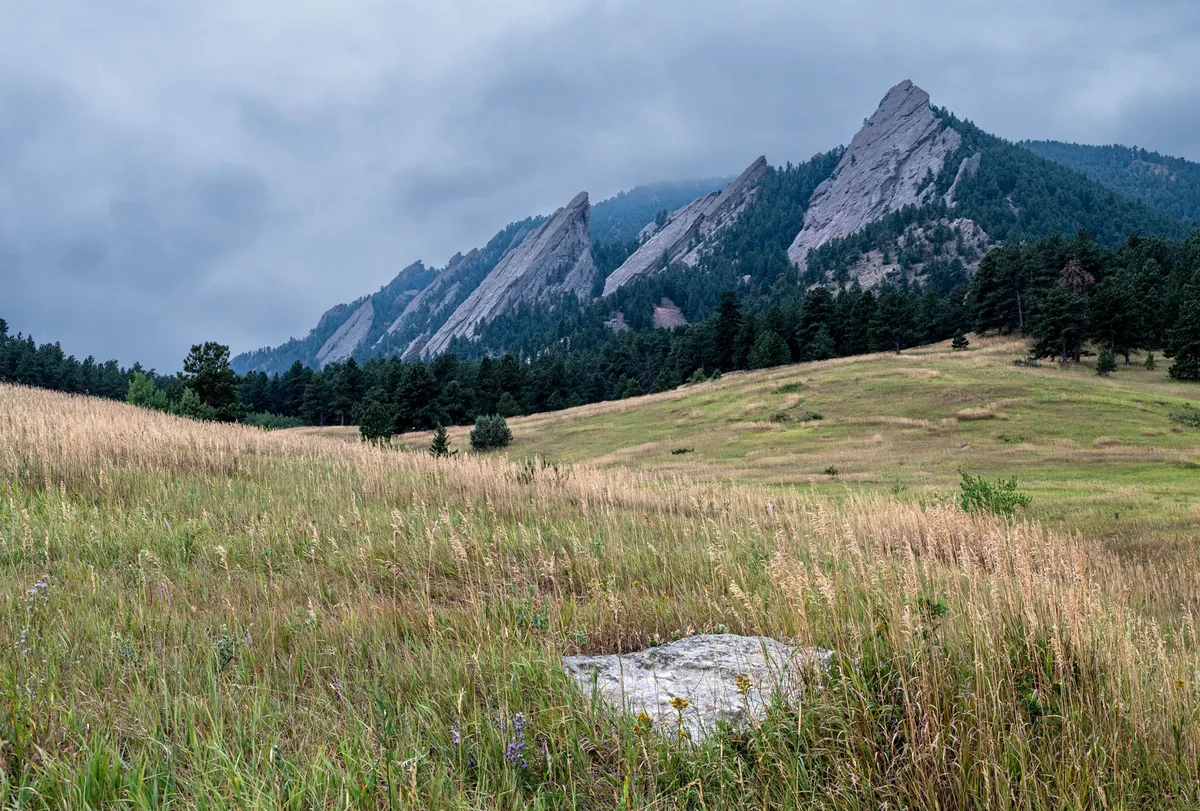
Boulder’s median home price of $875,000 is the price of a deliberate policy: 45,000 acres of permanently protected open space ring this city of 105,000, capping outward growth and putting the Rocky Mountain Flatirons at the end of residential streets. What residents get for a cost of living 48% above the national average: an A+ Niche grade, a crime index 28% below average, 300 days of annual sunshine, CU Boulder’s research economy, and a startup-and-aerospace corridor running at 3.2% unemployment. The city inspires fierce loyalty and sticker shock, often simultaneously. This guide is for anyone weighing that trade — drawn by CU Boulder, a tech or aerospace offer, or the Flatirons themselves — with Denver, 30 miles south, as the fallback comparison throughout.
Quick Answer — Is Boulder Worth Moving To?
Boulder is an exceptional place to live for those whose lifestyle and finances align with what it offers: immediate access to some of the finest hiking, climbing, and cycling terrain in North America, a top-ranked public university, a startup ecosystem that produces disproportionate innovation relative to the city’s size, and 300 days of sunshine per year. The cost of living is high — driven by a deliberately constrained housing supply — and the city can feel insular and demographically homogeneous. It’s the strongest fit for outdoor enthusiasts, tech and aerospace professionals, academics, and anyone who will genuinely use the natural environment as a daily part of life. Those prioritizing affordability or urban diversity will find Denver, 30 miles south, a more balanced proposition.
At a Glance: Boulder by the Numbers (2025)
| Metric | Boulder |
|---|---|
| Population | ~105,000 (city); ~330,000 (metro) |
| Median home price | $875,000 |
| Cost of living index | 148 (U.S. avg = 100) |
| Median household income | $82,000 |
| Unemployment rate | 3.2% |
| Average commute | 21 minutes |
| Walk Score | 53/100 |
| Niche overall grade | A+ |
| Crime index | 72 (U.S. avg = 100; lower = safer) |
| School district grade | A |
| Average summer high | 88°F |
| Average winter low | 18°F |
| Annual sunshine days | 300 |
Boulder’s 300 annual sunshine days is a genuine differentiator — significantly more than Seattle, Minneapolis, Chicago, or Boston — and for outdoor-focused residents, it shapes daily quality of life in ways that are hard to overstate. The median home price of $875,000 reflects a constrained supply driven by Boulder’s open-space acquisition policy, which has surrounded the city with land that cannot be developed, limiting outward growth in ways that keep prices high and the natural setting pristine.
Cost of Living in Boulder
As of 2025, Boulder’s cost of living index sits at approximately 148 — about 48% above the national average, according to BestPlaces/Sperling’s. Housing is overwhelmingly the dominant driver: Boulder’s open-space ordinance has permanently constrained the city’s developable land, and the result is one of the most supply-restricted housing markets of any mid-sized American city. Groceries run about 10–12% above the national average. Utilities are moderate, with Xcel Energy providing gas and electric service at rates roughly in line with other Front Range cities. Transportation costs are below average for those who commute by bike or use the BOLT bus service to Denver, but car ownership is practical for most residents given the area’s geography. Healthcare is near the national average, with UCHealth and Boulder Community Health providing strong local options. Colorado imposes a flat 4.4% income tax — one of the more moderate flat-tax rates nationally. The city’s property taxes are among the lower rates in Colorado, partially offsetting the high purchase prices for homeowners.
Housing Market Snapshot
Boulder’s housing market is among the most constrained of any similarly sized city in the United States, driven by the open-space policy that limits new development and by persistent demand from CU Boulder, the aerospace and federal research corridor, and an ongoing influx of remote workers and outdoor enthusiasts. The median home price as of 2025 is approximately $875,000, with single-family homes in desirable neighborhoods routinely exceeding $1.2 million. Many residents — including many CU faculty and professional-class workers — rent or own in nearby Louisville, Lafayette, or Longmont, where prices run 30–50% below Boulder’s. Renters in Boulder proper face a tight market: one-bedroom apartments average $2,000–$2,500 per month, and two-bedrooms typically run $2,600–$3,200. Data sourced from Zillow and Realtor.com.
## Jobs and EconomyCU Boulder is the city’s largest employer, with approximately 6,500 faculty and staff supporting a research enterprise that spans aerospace engineering, environmental science, molecular biology, and information science. The National Center for Atmospheric Research (NCAR) and the National Institute of Standards and Technology (NIST) both operate major campuses in Boulder, making the city one of the densest concentrations of federal research institutions in the country. Ball Aerospace (now BAE Systems), a major defense and space systems manufacturer, employs thousands in Boulder and is a cornerstone of the city’s aerospace identity. Google maintains a significant Boulder engineering office, and IBM, Zayo Group, and dozens of tech and clean-energy startups add depth to the private-sector employment landscape. As of 2025, Boulder’s unemployment rate sits at approximately 3.2%, according to the Bureau of Labor Statistics — below the national average and consistent with a highly educated workforce. The median household income of $82,000 reflects the mix of federal researchers, tech workers, CU employees, and the substantial population of outdoor industry professionals employed by companies like Celestial Seasonings, BBDO, and the many athletic brands that choose Boulder for its lifestyle alignment with their customers. Dominant industries are aerospace and defense, scientific research, technology, outdoor industry, and education.
Neighborhoods in Boulder: Where to Live
Boulder is a compact city — roughly 26 square miles — and its geography is shaped by the open-space belt that surrounds it, the CU campus that anchors its southeastern edge, and the Pearl Street Mall that bisects its historic downtown. The result is a city where no neighborhood is far from either open space or the commercial core, but where housing options are genuinely constrained. Many Boulder workers live in the neighboring communities of Louisville, Lafayette, Longmont, or Superior — all within 20–30 minutes of Boulder’s major employers — and treat Boulder itself as a destination for recreation and dining rather than residence.
The Hill / Chautauqua sits directly adjacent to the CU campus and the Chautauqua Park trailhead — making it simultaneously the most university-adjacent neighborhood and the gateway to the most iconic outdoor access in the city. The Hill’s commercial strip serves the student population, while the residential blocks between campus and Chautauqua Park attract faculty, outdoor enthusiasts, and families who want immediate trail access as their primary amenity. Homes here are older, varied in style, and command a significant premium for proximity to the Flatirons trailheads.
Downtown Boulder / Pearl Street is the city’s most walkable and urban neighborhood — a grid of Victorian-era commercial buildings, converted lofts, and newer mixed-use development surrounding the four-block Pearl Street Mall pedestrian zone. Condos and apartments attract young professionals, empty-nesters, and remote workers who want to minimize car dependence and maximize walkable dining and entertainment access. The neighborhood is the most expensive in the city on a per-square-foot basis, and parking is a daily consideration.
South Boulder encompasses the residential neighborhoods south of Baseline Road — a mix of post-WWII ranches, mid-century moderns, and newer infill development that attracts families and professionals who want a quieter, more suburban feel within Boulder city limits. South Boulder offers the city’s best value relative to the Hill and Downtown areas, and many blocks back directly onto preserved open-space trails. Easy access to both CU and the NIST/NCAR campus makes it practical for researchers and academics.
Louisville / Lafayette — while technically neighboring cities rather than Boulder neighborhoods — deserve emphasis as the most realistic housing options for the majority of Boulder-area newcomers. Louisville and Lafayette offer median home prices in the $550,000–$650,000 range (compared to Boulder’s $875,000), with excellent Boulder Valley School District access, easy bike or drive access to Boulder’s employers and trails, and a more diverse and affordable commercial scene. Lafayette in particular has developed a genuine independent restaurant and arts culture that makes it more than merely a bedroom community.
## Schools, Safety, and Quality of LifeSchools: The Boulder Valley School District (BVSD) earns an A from Niche and is consistently ranked among the top public school districts in Colorado and the Mountain West. The district covers both Boulder and the neighboring communities of Louisville, Lafayette, and Superior, providing excellent school access across a range of price points. Standout schools include Fairview High School and Boulder High School, both of which place graduates in competitive universities at high rates. CU Boulder offers graduate and professional programs across virtually every discipline and is particularly distinguished in aerospace engineering, environmental studies, chemistry, and physics — ranked as a top-20 public university by multiple national measures.
Safety: Boulder is a generally safe city, with a crime index of approximately 72 compared to the national average of 100, according to FBI Uniform Crime Reports. Property crime — particularly bicycle theft and vehicle break-ins in park and trailhead areas — is the most common category of concern, a reflection of the city’s heavy outdoor recreation culture and large transient student population. Violent crime rates are low, and most Boulder residents experience the city as comfortable and safe for everyday life. The city’s visible homeless population near the downtown Pearl Street area is a persistent civic challenge that Boulder has managed with varying success over the past decade.
Quality of Life: UCHealth’s Boulder Memorial Hospital and Boulder Community Health provide strong local healthcare, with the University of Colorado Hospital in Aurora (30 miles southeast) offering academic medical center care for complex needs. Boulder’s trail system is extraordinary: over 300 miles of maintained trails within and immediately surrounding the city connect neighborhoods, open spaces, and mountain terrain in a system that effectively makes the outdoors an extension of daily life for residents. The city’s commitment to cycling is reflected in its 350+ miles of on-street bike lanes and paths. Boulder’s population is among the most highly educated in the United States — approximately 75% of adults hold a bachelor’s degree or higher — and the density of researchers, entrepreneurs, and outdoor athletes creates an intellectual and physical culture that is genuinely distinctive.
Climate and Weather in Boulder
Boulder’s climate is one of its most powerful selling points: approximately 300 days of sunshine per year, warm dry summers, and mild winters punctuated by periodic heavy snowstorms that typically clear within a day or two — thanks partly to the Chinook winds that sweep down the Front Range and can raise temperatures 40–50 degrees in hours. Average summer highs reach 88°F with very low humidity, making outdoor activity comfortable from April through October in ways that Southern or Midwestern cities cannot match. Winter lows average 18°F, but the combination of sunshine, low humidity, and frequent Chinook warm-ups means that Boulder winters feel significantly milder than the temperature suggests — locals ski in the mountains on Saturday and hike in short sleeves on Sunday with some regularity. The city’s elevation of 5,430 feet means that newcomers from sea level often need one to three weeks to fully acclimate, particularly for aerobic exercise. Active wildfire seasons in the surrounding foothills can bring smoke to Boulder several times in late summer and fall, and the Boulder Creek watershed flooding risk is real — the 2013 flood was one of the most destructive in Colorado history. Hailstorms in summer can be severe. Data sourced from WeatherSpark and NOAA.
Things to Do in Boulder: Top Attractions and Day Trips
Boulder’s leisure identity is built almost entirely around the natural environment and the culture that grows from it — trail running, rock climbing, road and mountain cycling, skiing, and kayaking define the city’s recreational personality in a way that few American cities can claim. The Pearl Street Mall provides a concentrated cultural and dining experience, and CU Boulder’s arts and athletics programming adds intellectual and sporting depth. The surrounding region offers some of the finest outdoor destinations in North America within easy reach.
-
Flatirons & Chautauqua Park — The Flatirons — five massive tilted sandstone slabs rising above the city’s western edge — are Boulder’s defining visual landmark and the gateway to one of the finest urban trail systems in the American West. Chautauqua Park, at the base of the Flatirons, offers a network of trails ranging from easy meadow walks to technical rock climbing routes, all accessible within minutes of downtown. The Chautauqua Auditorium, a historic 1898 structure at the park’s center, hosts concerts and events throughout the summer. Entry to the park is free; parking requires a fee in peak season.
-
Pearl Street Mall — Boulder’s four-block pedestrian mall is the social and commercial heart of the city — a beautifully maintained historic streetscape of restaurants, galleries, boutiques, and street performers that draws both residents and visitors year-round. The best of Boulder’s independent dining is concentrated here and on the adjacent blocks, and the street-performer culture on summer evenings gives Pearl Street a genuine public-space energy. It is the single best introduction to Boulder’s character for newcomers.
-
Boulder Creek Path — A 5.5-mile paved path running along Boulder Creek from the mountains through the heart of the city and out to the eastern plains, the Boulder Creek Path is the city’s most-used recreational infrastructure — a place where cyclists, runners, inline skaters, and dog walkers coexist in a linear park that gives the city a remarkable sense of natural continuity. The creek itself is swimmable (cold) and popular with children in summer, and the path connects to the broader trail network at multiple points.
-
CU Boulder Campus & Fiske Planetarium — The University of Colorado’s main campus is one of the most architecturally distinctive in the country, built in a Tuscan-inspired “Tuscan vernacular” style of sandstone and terracotta tile that references the Italian hill towns. The campus is open to the public, and the Fiske Planetarium offers regular public astronomy shows and special events at accessible prices. The CU Art Museum provides free admission to a permanent collection and rotating exhibitions housed in a striking building adjacent to the main quad.
-
Boulder Farmers’ Market — Held on Wednesday afternoons and Saturday mornings from April through November in the Central Park area adjacent to Pearl Street, the Boulder Farmers’ Market is one of Colorado’s finest — a weekly gathering of Front Range farmers, ranchers, bakers, and specialty food producers that reflects the agricultural richness of the Boulder Valley. The Saturday market draws a significant crowd and is one of the best community rituals for newcomers seeking to feel quickly embedded in Boulder’s social life.
For day trips, Rocky Mountain National Park (75 minutes northwest via US-36) is the most obvious and spectacular destination — one of the most visited national parks in the country, with elk, alpine tundra, and Trail Ridge Road (the highest continuous paved road in the country) all accessible in a half-day. Denver (45 minutes south via US-36) provides full metropolitan-scale culture and employment — the Denver Art Museum, Union Station, Coors Field, and a restaurant scene that has become one of the best in the Mountain West. Estes Park (1 hour northwest) is the gateway town to Rocky Mountain National Park and a charming mountain village worth a weekend visit, particularly in fall when elk bugle in the meadows at the edge of town.
## Moving to Boulder: Your 90-Day Checklist90–60 days before:
- Research Boulder’s neighborhoods — and seriously consider Louisville, Lafayette, or Longmont for significantly better housing value while maintaining school district and employer access
- Get at least three moving company quotes (PODS, Allied, HireAHelper, or local movers)
- Research Boulder Valley School District enrollment deadlines
- Review Colorado’s 4.4% flat income tax
- Begin decluttering — Boulder costs reward minimalism, and storage is expensive
60–30 days before: 6. Confirm moving company and lock in dates 7. Transfer medical and dental records; UCHealth and Boulder Community Health are strong local options 8. Notify employer, bank, and subscriptions of address change 9. Research utility providers (Xcel Energy for gas and electric) and set up accounts 10. Arrange short-term lodging — Boulder’s rental market is tight, so begin your housing search as early as possible
First 30 days after arrival: 11. Transfer driver’s license and vehicle registration to Colorado 12. Register to vote at new address 13. Hike the Flatirons and explore Pearl Street Mall using the attractions section above 14. Join local Facebook groups or Nextdoor for your neighborhood 15. File change of address with USPS if not already done
## Frequently Asked Questions About Living in BoulderQ: Is Boulder a good place to live? A: Boulder earns an A+ from Niche and delivers on nearly every quality-of-life metric that its ratings reflect — 300 days of sunshine, immediate access to extraordinary outdoor recreation, a top-ranked public university, excellent schools, and low crime. The honest trade-offs are among the most constrained and expensive housing markets of any mid-sized American city, a demographic homogeneity that some newcomers find limiting, and a “Boulder bubble” social culture that can take time to penetrate. For those whose lifestyle genuinely centers on outdoor recreation and intellectual community, few American cities compare.
Q: What is the cost of living in Boulder? A: Boulder’s cost of living index of approximately 148 places it about 48% above the national average — driven overwhelmingly by housing costs that reflect a deliberately constrained supply. The median home price of $875,000 and one-bedroom rents of $2,000–$2,500 per month are the primary financial barriers. Colorado’s flat 4.4% income tax is moderate, and property taxes are among the lower rates in Colorado. Many Boulder-area workers choose to live in Louisville or Lafayette — 20–30 minutes away — where housing costs are 30–50% lower while maintaining access to Boulder’s employers, schools, and trails.
Q: Is Boulder safe? A: Boulder is a generally safe city, with a crime index of approximately 72 compared to the national average of 100. Property crime — particularly bicycle theft and vehicle break-ins near trailheads and parks — is the most common concern and is significantly higher than violent crime rates. Violent crime is low, and most residents experience Boulder as comfortable and safe for daily life. The city’s visible unhoused population near Pearl Street is a persistent civic challenge that is worth awareness for newcomers but does not fundamentally affect the safety of residential neighborhoods.
Q: What are the best neighborhoods in Boulder? A: The Hill and Chautauqua area offer the most direct access to CU Boulder’s campus and the Flatirons trailheads — ideal for academics, graduate students, and outdoor enthusiasts who want to walk or bike everywhere. Downtown and Pearl Street appeal to those who prioritize urban walkability and independent dining. South Boulder offers the best value within city limits. For most newcomers, Louisville and Lafayette represent the most practical combination of Boulder Valley quality and relative affordability.
Q: What is the job market like in Boulder? A: Boulder’s job market is strong and oriented toward high-paying sectors. CU Boulder, NCAR, NIST, Ball Aerospace/BAE Systems, Google, and a dense startup ecosystem provide employment across aerospace, federal research, tech, clean energy, and outdoor industry. The unemployment rate of approximately 3.2% is below the national average, and Boulder’s proximity to Denver dramatically expands employment options for residents willing to commute 30–45 minutes.
Q: How far is Boulder from Denver? A: Boulder is approximately 30 miles northwest of downtown Denver — roughly 45 minutes via US-36 (Boulder Turnpike) in normal conditions, though peak-hour traffic can extend that to 60–75 minutes. The Flatiron Flyer Bus Rapid Transit service connects Boulder to Denver’s RTD light rail system at Broomfield, enabling a car-free commute to downtown Denver that takes approximately 75–90 minutes door-to-door. Many Boulder residents commute to Denver for work or entertainment on a regular basis, treating the two cities as complementary parts of a single metro lifestyle.
Boulder vs. Nearby Cities
Denver, 45 minutes south, offers the full metropolitan-scale experience — significantly more diverse neighborhoods, a larger and more varied job market, professional sports, and housing costs that run 30–40% below Boulder’s while still providing easy access to the mountains. Fort Collins, 45 minutes north, is Boulder’s closest peer — a similar-sized college town anchored by Colorado State University, with lower housing costs and a slightly more relaxed character, though with fewer of Boulder’s outdoor amenities and research institutions. Colorado Springs, 2 hours south, offers a dramatically more affordable Front Range lifestyle — median home prices around $400,000 — with mountain access but a more conservative civic character and a job market anchored by military installations rather than research and tech. For full profiles of these cities, see our guides to Denver, Fort Collins, and Colorado Springs.
Sources and Data Notes
Data for this guide was drawn from the U.S. Census Bureau American Community Survey (2024), Bureau of Labor Statistics (2025), Niche.com, BestPlaces.net/Sperling’s Cost of Living Index, FBI Uniform Crime Reports, WeatherSpark, Walk Score, and Zillow/Realtor.com. Statistics reflect 2024–2025 data where available.