
Living in San Francisco, CA: The Complete 2026 Relocation and Visitor Guide
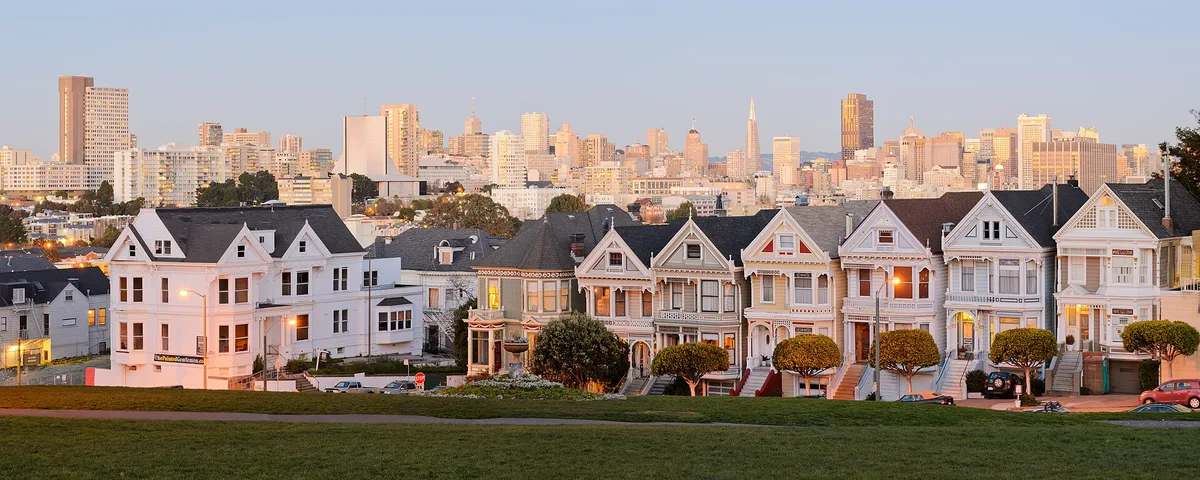
San Francisco costs more to live in than any major American city — a BestPlaces index of 245.5, roughly 145% above the U.S. average, with a median home near $1.3 million — and pays the country’s highest big-city median household income, $139,801, to those who can clear the bar. What the premium buys is real: an 89/100 Walk Score, an A-graded school district, roughly 300 sunny days under famously mild weather, and the densest concentration of tech, biotech, and finance opportunity anywhere. Crime runs high but has been improving sharply as of 2024–2025. For high-earning professionals and entrepreneurs who thrive in dense, walkable neighborhoods, this guide runs the math on the 49-square-mile peninsula — and anyone prioritizing space or savings should read the cost section twice before committing.
Quick Answer — Is San Francisco Worth Moving To?
San Francisco is a world-class city known for unrivaled career opportunities in tech and finance, extraordinary cultural richness, a famously mild climate, and neighborhoods with distinct personalities that reward exploration. The cost of living is among the very highest of any American city — a BestPlaces index of 245.5 means total living costs run roughly 145% above the U.S. average — and the housing market is brutal even by California standards. The job market is exceptional, particularly for technology, biotech, and finance professionals, with compensation levels that partially offset the expense. It’s an especially good fit for high-earning professionals, entrepreneurs, and people who thrive in dense, walkable, culturally vibrant environments, though anyone prioritizing suburban space, affordability, or a lower cost of living will want to think carefully before committing.
At a Glance: San Francisco by the Numbers (2025)
| Metric | San Francisco |
|---|---|
| Population | ~837,000 (2024 estimate) |
| Median home price | ~$1.3M (all home types) |
| Cost of living index | 245.5 (U.S. avg = 100) |
| Median household income | $139,801 |
| Unemployment rate | 3.9% (San Francisco County, early 2025) |
| Average commute | ~30 minutes (drive); ~50 minutes (transit) |
| Walk Score | 89/100 |
| Niche overall grade | A |
| Crime index | High vs. U.S. avg; improving sharply (2024–2025) |
| School district grade | A (SFUSD, per Niche) |
| Average summer high | ~69°F |
| Average winter low | ~46°F |
| Annual sunshine days | ~300 |
As of 2025, San Francisco punches at the very top of American cities for walkability, income, and career opportunity — but those advantages come packaged with living costs that demand serious financial planning before you sign a lease or put in an offer.
Cost of Living in San Francisco
San Francisco’s cost of living index of 245.5 (BestPlaces/Sperling’s, U.S. average = 100) places it among the most expensive cities on the planet, let alone in the United States. Residents spend an estimated $9,000+ per month on average to cover basic necessities. Housing is the dominant driver: as of 2025, median rent for a one-bedroom apartment runs approximately $3,019 per month, and two-bedrooms average around $3,579 — figures that represent two to three times the national average. Groceries, utilities, and healthcare also run well above national benchmarks; BLS data from early 2026 shows total compensation in the San Francisco area at $54.56 per hour, reflecting labor market costs that ripple into everyday services from haircuts to plumbing. Transportation costs are somewhat mitigated by the city’s excellent transit network for those who can avoid car ownership. California’s state income tax is the highest in the nation, with a top marginal rate of 13.3%, meaning high earners face a significant additional burden on top of already elevated living costs.
Housing Market Snapshot
The San Francisco housing market, as of 2025, remains one of the most challenging in the country. The median sale price for all home types sits around $1.3 million, while single-family homes frequently trade above $1.8 million. Competitive bidding remains common for well-located properties, driven in part by continued demand from tech and finance workers. Median rent for a one-bedroom is approximately $3,019 per month; a two-bedroom averages $3,579 (Apartment List, 2025). Buyers should also factor in high property taxes and steep HOA fees common in the city’s many condo buildings. (Sources: Redfin, Zillow, Apartment List.)
## Jobs and EconomySan Francisco’s economy is one of the most dynamic in the world, anchored by the technology industry, which accounts for roughly 22.5% of the city’s total workforce — nearly a quarter of all jobs. Major employers and headquarters in or near the city include Salesforce, Twitter/X, Airbnb, Uber, DoorDash, Pinterest, Reddit, and Prologis, alongside global financial institutions and the largest biotech cluster in the U.S. The Bay Area attracted three-quarters of U.S. AI venture capital funding from 2019 through 2024, and as of 2025, AI-skilled tech talent in the region grew 24% year-over-year. The San Francisco metro unemployment rate was 3.9% in early 2025 (BLS), and the median household income reached $139,801 in 2024 (U.S. Census ACS), roughly double the national median. Finance, tourism, healthcare (anchored by UCSF), and a robust startup ecosystem round out the city’s economic base. Remote work culture remains strong here, and many San Francisco residents hold positions at companies headquartered in Silicon Valley to the south.
Neighborhoods in San Francisco: Where to Live
San Francisco’s neighborhoods are among the most distinct and self-contained of any American city — crossing a few blocks can feel like entering an entirely different town. Here are four neighborhoods that stand out for relocators.
Noe Valley — A quiet, family-friendly enclave with a small-town feel despite its central location, Noe Valley is best for young families and professionals seeking calm residential streets without sacrificing city access. The neighborhood is lined with Victorian and Edwardian homes, and the Sunday farmers market on 24th Street is a weekly ritual. The main drag is walkable, and BART access at 24th Street makes downtown commutes easy.
Pacific Heights — The most prestigious address in San Francisco, Pacific Heights offers hilltop views of the Golden Gate Bridge and the Bay alongside stately Victorians and grand apartment buildings. Best for high earners who want luxury living, proximity to the Presidio, and walkable access to high-end boutiques and restaurants on Fillmore Street. Typical housing includes large flats and single-family homes at the upper end of the city’s price scale.
Mission District — Vibrant, culturally rich, and energetic, the Mission is defined by its Latino heritage, stunning street murals, outstanding taquerias, Dolores Park, and a lively bar and restaurant scene. Best for young professionals, artists, and anyone who wants to feel the full pulse of the city. Housing ranges from older apartment buildings to modern condos, generally at slightly lower price points than the city’s west side.
Inner Richmond — A quieter, more affordable (by SF standards) neighborhood tucked between Golden Gate Park and the Presidio, Inner Richmond is beloved for its diverse dining scene (excellent Chinese, Southeast Asian, and Irish options), neighborhood feel, and proximity to Ocean Beach and the park. Best for families and those who prefer a calmer pace without leaving the city. Stucco row houses and Edwardian flats dominate the streetscape.
For buyers and renters drawn to the broader Bay Area, nearby Oakland, Berkeley, and Marin County offer different cost profiles with access to San Francisco by BART or ferry.
## Schools, Safety, and Quality of LifeSchools: San Francisco is served by the San Francisco Unified School District (SFUSD), which earned an overall A grade from Niche and enrolls approximately 48,736 students across 106 schools. State test proficiency rates are solid: 46% in math and 54% in reading. Standout schools include Lowell High School, widely regarded as one of the top public high schools in California. Higher education options are extraordinary — UCSF (one of the top medical research universities in the world) is headquartered here, San Francisco State University serves the city, and UC Berkeley is just across the Bay. Stanford University is within commuting distance to the south.
Safety: San Francisco’s crime story as of 2025 is genuinely more encouraging than the city’s reputation suggests. After years of elevated crime rates, 2024 saw property crime fall 31%, violent crime drop 14%, and homicides reach their lowest total since 1961 — just 35. The trend accelerated through 2025, with total reported incidents declining more than 40% from 2023 levels. That said, the city still has a higher crime rate than the U.S. average when measured per capita, and the improvements are uneven by neighborhood. The Tenderloin and parts of SoMa remain high-crime areas, while neighborhoods like Inner Sunset, Noe Valley, Bernal Heights, and Inner Richmond are meaningfully safer. Prospective residents should research specific neighborhoods carefully using NeighborhoodScout or local SFPD data rather than relying on citywide averages. (Sources: SF.gov, SF Standard, NeighborhoodScout.)
Quality of life: San Francisco’s healthcare infrastructure is anchored by UCSF Medical Center, one of the nation’s top hospitals, alongside Sutter Health and California Pacific Medical Center. Public transit — Muni buses and streetcars, BART regional rail, and ferries — makes car-free living not just possible but genuinely enjoyable for many residents. The city’s arts and culture scene is world-class, with institutions including the San Francisco Museum of Modern Art (SFMOMA), the de Young Museum, the San Francisco Symphony, and the San Francisco Ballet.
Climate and Weather in San Francisco
San Francisco’s climate is famously mild but frequently misunderstood. The city sits in a USDA Hardiness Zone 10b, with temperatures that rarely drop below freezing or climb above 75°F. Average summer highs hover around 69°F, while average winter lows rarely dip below 46°F. The city logs roughly 300 sunny days per year (WeatherSpark/BestPlaces). However, “San Francisco summer” can surprise newcomers: the city’s famous fog — affectionately nicknamed “Karl” — rolls in from the Pacific most afternoons from June through August, keeping western neighborhoods like the Outer Sunset and Outer Richmond distinctly cooler than inland areas. Microclimates are dramatic; it can be 65°F and foggy at Ocean Beach while simultaneously 80°F and sunny in the Mission, just two miles away. Winter brings the city’s rain (most precipitation falls November through March) but remains mild by any national standard. If you’re arriving in July expecting California heat, pack a jacket.
Things to Do in San Francisco: Top Attractions and Day Trips
Few cities of San Francisco’s size offer a leisure menu this varied — world-class museums, legendary food markets, outdoor adventure, historic architecture, and one of the great waterfronts in the world, all within a city compact enough to explore on foot or by cable car. Whether you’re visiting for a weekend or scouting for a permanent move, the city rewards time spent simply wandering.
-
Golden Gate Bridge — The most iconic structure in the American West, the Golden Gate is best experienced on foot or by bicycle rather than from a car window. Walking or cycling across the 1.7-mile span offers sweeping views of the Bay, the Marin Headlands, and the city skyline. The adjacent Crissy Field and Fort Point National Historic Site extend the outing into a half-day adventure. Tip: early mornings often clear the fog before it builds again by afternoon.
-
Golden Gate Park — One of the great urban parks in the world, Golden Gate Park stretches three miles through the city and houses the de Young Museum, the California Academy of Sciences (aquarium, planetarium, and live rainforest under one roof), the Japanese Tea Garden, and the Conservatory of Flowers. More than 24 million people visit annually, yet the park is large enough that quiet corners are always findable. Best for families, culture lovers, and anyone who wants a full day of varied activities.
-
Alcatraz Island — The former federal penitentiary on an island in the middle of the Bay is one of San Francisco’s most popular experiences — and deservedly so. The self-guided audio tour, narrated by former inmates and guards, is unexpectedly riveting. Ferries depart from Pier 33, and tickets sell out weeks in advance during peak season; book as early as possible. Best for history enthusiasts and first-time visitors.
-
Ferry Building Marketplace — The restored 1898 Ferry Building on the Embarcadero is ground zero for San Francisco’s exceptional food culture, housing artisan vendors, the Acme Bread Company, Cowgirl Creamery, and a Tuesday/Thursday/Saturday farmers market that draws chefs from across the Bay Area. This is the best single stop for understanding San Francisco’s food identity. Arrive hungry, and plan to linger.
-
Mission District and Dolores Park — A walk through the Mission is a full sensory experience: vivid murals, the smell of carnitas from taquerias on 24th Street, coffee shops where designers and startup founders work side by side. Dolores Park on a sunny afternoon — with its panoramic views of downtown and the Bay — captures why San Franciscans are so fiercely attached to this city. Best for food lovers, cultural explorers, and anyone who wants to see the city living its day-to-day life.
San Francisco’s position at the tip of a peninsula makes it a natural gateway for exceptional day trips. Napa Valley, about 50 miles north, puts 400-plus wineries and Michelin-starred restaurants within an easy drive — Sonoma offers a more relaxed alternative with boutique vineyards and a charming town square. Muir Woods National Monument, just 16 miles north across the Golden Gate, protects a cathedral grove of ancient coastal redwoods; the main loop trail takes about 90 minutes and is suitable for all ages (advance parking or shuttle reservations required). Monterey and Carmel, roughly 120 miles south, offer the dramatic scenery of the 17-Mile Drive, the world-class Monterey Bay Aquarium, and the charming village of Carmel-by-the-Sea — a perfect full-day escape that showcases the best of the California coast.
## Moving to San Francisco: Your 90-Day Checklist90–60 days before:
- Research neighborhoods and set housing budget using Zillow or Realtor.com (budget carefully — costs are high)
- Get at least three moving company quotes (PODS, Allied, HireAHelper, or local movers)
- Research school enrollment deadlines if you have children
- Review California state income tax implications (up to 13.3% — highest in the U.S.)
- Begin decluttering — San Francisco apartments are often smaller than elsewhere
60–30 days before: 6. Confirm moving company and lock in dates 7. Transfer medical and dental records; find new providers in San Francisco 8. Notify employer, bank, and subscriptions of address change 9. Research utility providers (PG&E) and set up BART/Muni Clipper card 10. Arrange short-term lodging if permanent housing won’t be ready immediately
First 30 days after arrival: 11. Transfer driver’s license and vehicle registration to California 12. Register to vote at new address 13. Explore your neighborhood on foot using the attractions section above 14. Join local Facebook groups or Nextdoor for your neighborhood 15. File change of address with USPS if not already done
## Frequently Asked Questions About Living in San FranciscoQ: Is San Francisco a good place to live? A: San Francisco earns an A overall grade from Niche, and the data backs it up: exceptional job opportunities, world-class healthcare and universities, outstanding transit, and a cultural and culinary scene that rivals any city in the country. The honest trade-offs are a very high cost of living, a competitive housing market, and ongoing quality-of-life challenges (particularly around homelessness and street conditions in certain neighborhoods) that have improved in recent years but remain visible.
Q: What is the cost of living in San Francisco? A: San Francisco’s BestPlaces cost of living index is 245.5 (U.S. average = 100), meaning total living costs run approximately 145% above the national average. It is consistently ranked among the three most expensive cities in the United States. The median home price as of 2025 is approximately $1.3 million for all home types, and median one-bedroom rents run about $3,019 per month.
Q: Is San Francisco safe? A: As of 2025, San Francisco’s safety profile has improved substantially — 2024 saw a 31% drop in property crime and a 14% reduction in violent crime, with homicides reaching a 60-year low. However, the city’s per-capita crime rate remains above the national average, and the experience varies dramatically by neighborhood. The Tenderloin and parts of SoMa face concentrated challenges, while neighborhoods like Noe Valley, Inner Richmond, Inner Sunset, and Bernal Heights are considerably safer and more representative of typical residential life in the city.
Q: What are the best neighborhoods in San Francisco? A: For families, Noe Valley and Inner Richmond offer strong schools, quiet streets, and community amenities. For young professionals and urban energy, the Mission District and Hayes Valley are perennial favorites. For luxury and views, Pacific Heights and Russian Hill are unmatched. Each neighborhood has a distinct personality — one of San Francisco’s greatest assets.
Q: What is the job market like in San Francisco? A: The job market is outstanding, particularly for technology, biotech, and finance professionals. The unemployment rate sits at approximately 3.9% (BLS, early 2025), and the median household income of $139,801 is roughly double the national median. San Francisco and the broader Bay Area attract the majority of U.S. AI venture capital, and major tech employers — from legacy giants like Salesforce to fast-growing startups — maintain a continuous demand for skilled workers across engineering, product, marketing, and finance roles.
Q: How far is San Francisco from Los Angeles? A: San Francisco is approximately 380 miles from Los Angeles by road — a drive of roughly 5.5 to 6.5 hours depending on traffic, which can be significant on Interstate 5 and Highway 101. Direct flights between SFO (or Oakland) and LAX or Burbank take about 1.5 hours and are widely available at competitive prices. No high-speed rail connection currently exists between the two cities, though California’s high-speed rail project remains in development.
San Francisco vs. Nearby Cities
For those who want Bay Area access without San Francisco’s price premium, Oakland sits just across the Bay Bridge — it offers lower housing costs, improving neighborhoods, and direct BART access to the city, though it carries its own safety considerations. San Jose, 50 miles south in Silicon Valley, is the heart of the semiconductor and enterprise tech industries; it’s actually comparable or more expensive than San Francisco in some metrics, with a more suburban feel and heavy car-dependence. Sacramento, roughly 90 miles northeast via I-80, offers dramatically lower housing costs (often 60–70% less than San Francisco) and a growing tech and state-government job market — an increasingly popular landing spot for Bay Area residents seeking more space and value. For full profiles of these cities, see our guides to [Oakland, CA], [San Jose, CA], and [Sacramento, CA].
Sources and Data Notes
Data in this article is drawn from: U.S. Census Bureau / American Community Survey (ACS 2024 1-year estimates); U.S. Bureau of Labor Statistics (BLS, 2025–2026); Niche.com (2025–2026 school and city grades); BestPlaces.net / Sperling’s Best Places (cost of living index); NeighborhoodScout and SF.gov (crime statistics); WeatherSpark and BestPlaces (climate data); Walk Score (walkability); Zillow, Redfin, and Apartment List (housing market, 2025). All figures reflect the most current available data as of early-to-mid 2025 unless otherwise noted.