
Living in Phoenix, AZ: The Complete 2026 Relocation and Visitor Guide
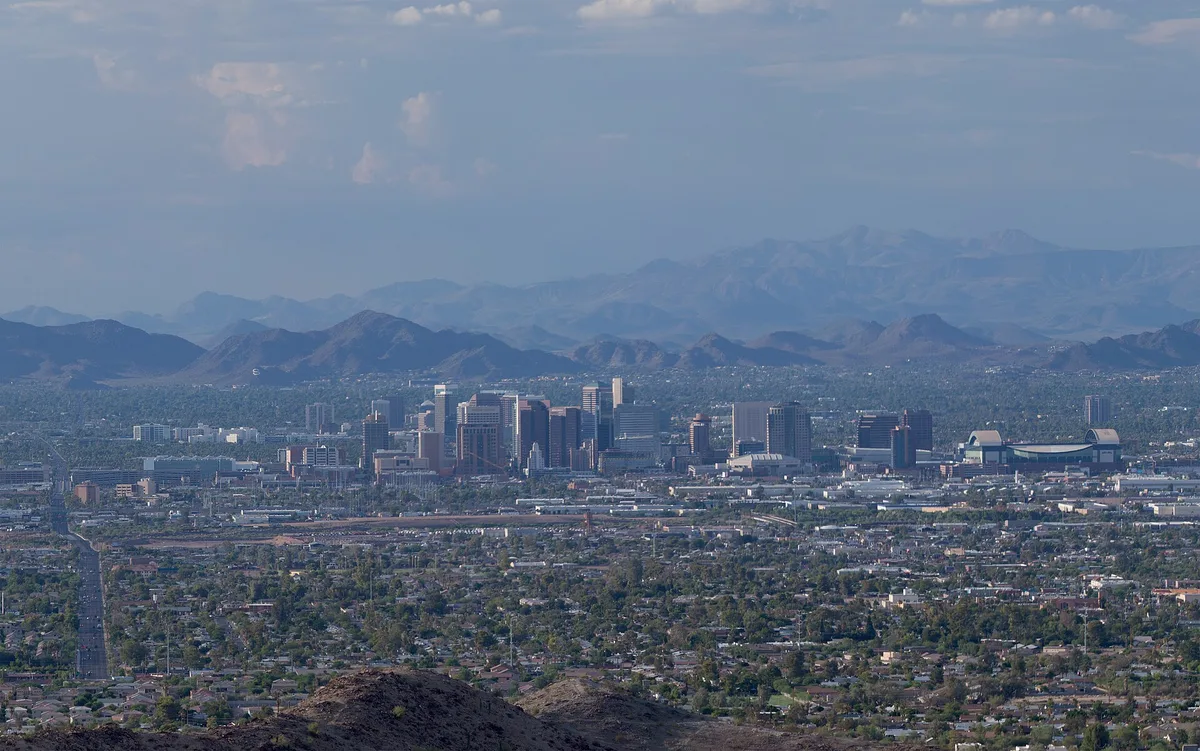
Phoenix delivers 299 days of annual sunshine at a cost of living just 7% above the national average — remarkable for the fifth-largest city in the United States and its nearly 5-million-person metro. The economy has outgrown its retirement-and-real-estate roots: a rapidly expanding semiconductor and tech corridor, Arizona State University (one of the country’s largest public universities), and in-migration from California, the Midwest, and the Northeast measured in hundreds of thousands. The defining challenge is the appeal inverted: 106°F average summer highs, with 110°F+ routine in July and August, and car dependence among the most extreme of any major American city. For outdoor enthusiasts, remote workers, retirees, and tech professionals weighing Phoenix or its suburbs — Scottsdale, Tempe, Mesa, Chandler, Gilbert — this guide maps the trade.
Quick Answer — Is Phoenix Worth Moving To?
Phoenix is a compelling relocation destination for those who value sunshine, a rapidly diversifying job market, no state income tax burden comparable to California, and a cost of living that remains significantly below West Coast and Northeast peers despite substantial recent appreciation. Known for its desert landscape, outdoor recreation, professional sports, and one of the country’s fastest-growing tech and semiconductor corridors, Phoenix suits outdoor enthusiasts, remote workers, retirees, and tech professionals particularly well. The honest trade-offs are extreme summer heat (110°F+ days are routine in July and August), car dependence that is among the most extreme of any major American city, and a sprawling geography that requires careful neighborhood selection.
At a Glance: Phoenix by the Numbers (2025)
| Metric | Phoenix |
|---|---|
| Population | ~1.6M (city); ~4.9M (metro) |
| Median home price | $415,000 |
| Cost of living index | 107 (U.S. avg = 100) |
| Median household income | $68,000 |
| Unemployment rate | 3.8% |
| Average commute | 27 minutes |
| Walk Score | 41/100 |
| Niche overall grade | B+ |
| Crime index | 138 (U.S. avg = 100; lower = safer) |
| School district grade | C+ |
| Average summer high | 106°F |
| Average winter low | 44°F |
| Annual sunshine days | 299 |
Phoenix’s 299 annual sunshine days and mild winters are the defining climate facts that drive much of its appeal, while the 106°F average summer high is the defining honest challenge. The cost of living index of 107 — just 7% above national average — represents remarkable value for a metro of Phoenix’s size, amenities, and growth trajectory.
Cost of Living in Phoenix
As of 2025, Phoenix’s cost of living index sits at approximately 107 — about 7% above the national average, according to BestPlaces/Sperling’s. For a metro of nearly 5 million people with 300 sunny days, professional sports franchises across all major leagues, world-class resort infrastructure, and a rapidly growing tech economy, that modest premium represents exceptional value by national standards. Housing has appreciated significantly since 2020 — driven by a massive influx of California and Midwest transplants — but the median home price of $415,000 remains far below comparable Sun Belt metros like San Diego or Los Angeles. Groceries are near the national average. Utilities are the most significant cost consideration: air conditioning in Phoenix runs meaningfully higher than the national average from May through October, and monthly electric bills of $200–$350 are common in summer. Transportation costs are above average given the car-dependent layout. Arizona’s flat 2.5% income tax — reduced from 4.5% through voter-approved legislation — is one of the lowest flat state rates in the country, a significant draw for high earners relocating from California (up to 13.3%) or other high-tax states.
Housing Market Snapshot
Phoenix’s housing market has moderated from its frenzied 2021–2022 peak but remains active as of 2025. The median home price is approximately $415,000 citywide, with significant variation across the metro: suburban communities like Gilbert and Chandler run slightly higher for new construction, while areas of central Phoenix and Mesa offer more accessible entry points. Renters face a competitive market that has eased from pandemic highs: one-bedroom apartments average $1,400–$1,700 per month, and two-bedrooms typically run $1,700–$2,200. The market has shifted in favor of buyers relative to 2021–2022, with more inventory and negotiating room available. Data sourced from Zillow and Realtor.com.
## Jobs and EconomyPhoenix’s economy has diversified dramatically over the past decade, moving well beyond its historical dependence on real estate, tourism, and retirement services. As of 2025, the unemployment rate sits at approximately 3.8%, according to the Bureau of Labor Statistics, reflecting a growing professional workforce. The semiconductor sector has emerged as perhaps the most significant economic story in the metro: Taiwan Semiconductor Manufacturing Company (TSMC) is building multiple fabrication plants in the northern suburb of north Phoenix/Peoria, representing a $65 billion investment and thousands of high-paying manufacturing and engineering jobs that are reshaping the region’s economic trajectory. Intel operates a major chip manufacturing campus in Chandler. Apple, Amazon, Microsoft, and Google all have significant Phoenix-area operations. Banner Health, the largest private employer in Arizona, provides healthcare employment across dozens of facilities. Arizona State University — with over 140,000 students across multiple campuses — is a major employer and the anchor of the Tempe innovation ecosystem. American Express, JPMorgan Chase, and Charles Schwab operate major back-office and operations centers in the metro, providing financial services employment. The dominant industries are semiconductor manufacturing, tech and financial services, healthcare, real estate and construction, tourism and hospitality, and a rapidly growing logistics sector anchored by the expansion of e-commerce distribution.
Neighborhoods in Phoenix: Where to Live
The Phoenix metro is enormous — roughly 50 miles from one end to the other — and neighborhood selection is particularly consequential given the city’s car-dependent sprawl. The municipalities below each have distinct characters, school systems, and commute profiles. Newcomers are strongly advised to identify their primary employer location first, then select a neighborhood that minimizes daily driving given the metro’s significant traffic congestion.
Scottsdale is Phoenix’s most distinctive and cosmopolitan suburb — a 30-mile-long city stretching from Old Town Scottsdale’s walkable arts-and-dining district in the south to the luxury resort corridor of North Scottsdale in the north. Old Town offers the closest thing to urban walkability in the metro, with a concentrated restaurant and nightlife scene, a world-class arts district, and proximity to Tempe and downtown Phoenix. North Scottsdale is resort-suburban: golf courses, luxury homes, and the TPC Scottsdale stadium course. Median home prices run $600,000–$800,000+ in desirable areas, and Scottsdale Unified School District earns an A from Niche.
Tempe is anchored by Arizona State University’s main campus and has developed the most genuine urban character of any Phoenix suburb — walkable near Mill Avenue and the ASU campus, transit-accessible via Valley Metro light rail, and home to a concentration of young professionals, tech workers, and graduate students. Tempe is significantly more affordable than Scottsdale, with median home prices around $400,000–$480,000, and its proximity to downtown Phoenix and the airport makes it practical for a wide range of professional commutes.
Chandler / Gilbert represents the Southeast Valley’s premier family suburbia — master-planned communities with newer construction, top-rated schools (Chandler Unified and Gilbert Unified both earn A grades from Niche), and proximity to the Intel and TSMC semiconductor corridor. Gilbert in particular has won consistent national recognition as one of the best places to live in the country — safe, well-maintained, and anchored by a charming historic Heritage District with independent restaurants and community events. Median home prices run $450,000–$600,000.
Central Phoenix / Arcadia offers the closest thing to urban neighborhood living within Phoenix proper — a corridor of historic neighborhoods including Arcadia, Willo, and the Camelback Corridor that feature mature landscaping, vintage ranch and bungalow homes, and proximity to Phoenix’s best independent restaurant scene. Arcadia in particular — set between Camelback Mountain and the Arizona Canal — combines genuine neighborhood character with strong home values. Median prices in Arcadia run $700,000–$1.2 million, while adjacent Biltmore and central Phoenix neighborhoods offer more accessible price points.
## Schools, Safety, and Quality of LifeSchools: Phoenix’s school landscape is complex and heavily fragmented across dozens of independent municipal districts and a large charter school sector. The Phoenix Union High School District — serving the city of Phoenix proper — earns a C+ from Niche, reflecting the challenges typical of large urban districts. The suburban districts offer much better outcomes: Chandler Unified, Gilbert Unified, and Scottsdale Unified all earn A grades, and the metro’s extensive charter school network provides additional options. Families with school-age children are strongly advised to research specific school attendance zones before committing to a neighborhood. Arizona State University is the educational anchor of the metro — the largest public university in the country by enrollment, with strong programs in engineering, business, journalism, and sustainability.
Safety: Phoenix’s citywide crime index of approximately 138 reflects elevated rates compared to the national average, particularly for property crime in parts of central and west Phoenix. As with most large American cities, crime varies dramatically by neighborhood: Scottsdale, Gilbert, and Chandler post crime rates among the lowest in the state, while parts of central and west Phoenix have elevated property and violent crime. Newcomers are advised to research specific neighborhoods, and the suburban communities that attract the most relocating families consistently score well on safety metrics.
Quality of Life: The Mayo Clinic Arizona campus in Scottsdale provides world-class academic medical care, and Banner Health operates a comprehensive network of hospitals and urgent care facilities across the metro. Valley Metro’s light rail connects downtown Phoenix, Tempe, and Mesa and is genuinely useful for certain commutes, though the vast majority of Phoenix residents rely on cars for daily transportation. Camelback Mountain, South Mountain Park (the largest municipal park in the United States), and the Sonoran Desert Preserve provide extraordinary outdoor recreation within city limits — hiking, mountain biking, and trail running that is accessible year-round except during the peak summer heat.
Climate and Weather in Phoenix
Phoenix’s climate is simultaneously one of its greatest assets and its most significant challenge for relocators. The 299 annual sunshine days — more than Miami, Los Angeles, or Honolulu — and mild winters (average January lows of 44°F, with weeks of 70°F+ days) make Phoenix genuinely pleasant for seven to eight months of the year. The summers, however, are extreme by any objective measure: average July highs reach 106°F, and temperatures of 110–115°F occur multiple times each summer. The “heat dome” period from mid-June through mid-September requires genuine lifestyle adaptation — outdoor activity must be concentrated in early morning or after sunset, outdoor pets require constant access to water and shade, and power outages during peak demand are a real risk. The monsoon season (July through September) brings dramatic afternoon thunderstorms that briefly cool temperatures and create spectacular lightning displays, but also flash flooding in desert washes. Phoenix is experiencing increased extreme heat events as of 2025, and planning outdoor life around the season is not optional. For housing decisions, west- and south-facing homes accumulate heat significantly, and well-insulated construction with high-efficiency HVAC is worth prioritizing. Data sourced from WeatherSpark and NOAA.
Things to Do in Phoenix: Top Attractions and Day Trips
Phoenix’s leisure identity is built around desert outdoor recreation, world-class resort and spa culture, a serious professional sports scene, and an arts district that has exceeded expectations for a city of its character. The surrounding region — with Sedona, the Grand Canyon, and Tucson all within two hours — provides day-trip options that are among the most dramatic in the American West.
-
Camelback Mountain — Phoenix’s most iconic natural landmark, Camelback Mountain rises 2,704 feet above the desert floor in the heart of the metro, offering two challenging hiking trails (Echo Canyon and Cholla) that attract hundreds of thousands of visitors annually. The summit provides a 360-degree view of the entire Phoenix metro that is particularly dramatic at dawn and dusk. Arrive before 7am in summer; the trails close at 7am on days when temperatures are forecast to exceed 100°F. Free to hike; parking is limited and competitive.
-
Desert Botanical Garden — A 140-acre garden in Papago Park housing the world’s finest collection of desert plants — more than 50,000 plants from the arid regions of the world, including a comprehensive collection of cacti and succulents from the Sonoran Desert and beyond. The garden is particularly spectacular in spring when the cacti and wildflowers bloom, and the evening Las Noches de las Luminarias in December is one of Phoenix’s most magical annual events. Admission is charged; Phoenix residents can purchase a membership that pays for itself quickly.
-
Old Town Scottsdale & the Arts District — Scottsdale’s original commercial center has evolved into one of the finest gallery and dining districts in the American West — a walkable concentration of contemporary art galleries, restaurants, and boutiques centered on Main Street and Marshall Way. The Scottsdale Museum of Contemporary Art and the Heard Museum (in nearby downtown Phoenix) together provide genuine world-class art experiences. The ArtWalk held every Thursday evening in the Scottsdale Arts District draws thousands of gallery visitors and street performers in an outdoor pedestrian setting.
-
South Mountain Park & Preserve — At 16,000 acres, South Mountain is the largest municipal park in the United States and one of the most extensive urban trail systems in the world, with over 50 miles of hiking, biking, and equestrian trails through native Sonoran Desert. The summit views over the Phoenix metro are extraordinary at sunset, and the park’s scale means that even on busy weekends, it’s possible to find solitude on the lesser-known trails. Free to enter.
-
Chase Field & Footprint Center — Phoenix supports professional teams across all four major North American sports leagues, and the downtown sports district anchored by Chase Field (Arizona Diamondbacks, MLB) and Footprint Center (Phoenix Suns, NBA; Phoenix Mercury, WNBA) provides year-round sports programming within walking distance of each other. The Coyotes have relocated from the metro, but the Cardinals (NFL, State Farm Stadium in Glendale) and Coyotes-replacement options continue to develop. Chase Field’s retractable roof and air conditioning make summer baseball games genuinely comfortable.
Phoenix’s day-trip options are extraordinary. Sedona (2 hours north) is one of the most visually stunning small cities in America — red rock formations, world-class hiking, vortex energy sites, and a culinary scene that consistently surprises visitors. The Grand Canyon South Rim (3.5 hours north) is one of the seven natural wonders of the world and fully worth the drive multiple times for residents. Tucson (2 hours south) is Arizona’s second city — a university town with its own distinctive character, Saguaro National Park, and a Mexican-influenced food culture that rivals anywhere in the country.
## Moving to Phoenix: Your 90-Day Checklist90–60 days before:
- Research neighborhoods and municipalities — identify your employer location first, then select a community that minimizes your daily commute
- Get at least three moving company quotes (PODS, Allied, HireAHelper, or local movers)
- Research school district options — Chandler, Gilbert, and Scottsdale Unified all earn A grades; research specific attendance zones
- Review Arizona’s 2.5% flat income tax — a major financial benefit for California transplants
- Begin decluttering — book a self-storage unit if needed
60–30 days before: 6. Confirm moving company — avoid June through August if possible (extreme heat makes moving physically taxing) 7. Transfer medical and dental records; Banner Health and Mayo Clinic Arizona are excellent options 8. Notify employer, bank, and subscriptions of address change 9. Research utility providers (APS or SRP for electric — Phoenix is split between the two) and set up accounts 10. Arrange short-term lodging if permanent housing won’t be ready immediately
First 30 days after arrival: 11. Transfer driver’s license and vehicle registration to Arizona 12. Register to vote at new address 13. Explore Camelback Mountain and Old Town Scottsdale using the attractions section above — go early morning 14. Join local Facebook groups or Nextdoor for your neighborhood 15. File change of address with USPS if not already done
## Frequently Asked Questions About Living in PhoenixQ: Is Phoenix a good place to live? A: Phoenix earns a B+ from Niche and offers a genuinely compelling combination of sunshine, relative affordability, a diversifying job market, and outdoor recreation that has driven sustained in-migration. As of 2025, the honest trade-offs are extreme summer heat that requires real lifestyle adaptation, car dependence that is among the most extreme of any major American city, and a public school landscape that varies dramatically between districts. For those who choose the right suburb and prepare for summer, Phoenix delivers on its appeal.
Q: What is the cost of living in Phoenix? A: Phoenix’s cost of living index of approximately 107 — just 7% above the national average — represents exceptional value for a metro of its size and trajectory. The median home price of $415,000 is well below comparable Sun Belt metros like San Diego or Miami, and one-bedroom rents of $1,400–$1,700 per month are competitive nationally. Arizona’s 2.5% flat income tax is among the lowest state rates in the country — a significant factor for high earners relocating from California or other high-tax states.
Q: Is Phoenix safe? A: Phoenix’s citywide crime index of approximately 138 — above the national average — reflects elevated property crime in parts of central and west Phoenix. Suburban communities including Gilbert, Chandler, and Scottsdale have crime rates among the lowest in Arizona and well below the national average. As with any large American metro, neighborhood selection is the primary safety variable, and the suburban communities that attract the most relocating families are genuinely safe.
Q: What are the best neighborhoods in Phoenix? A: Gilbert and Chandler are the top choices for families — top-rated schools, low crime, newer construction, and proximity to the semiconductor employment corridor. Scottsdale offers the most cosmopolitan suburban experience, with excellent schools and a world-class arts and dining scene. Tempe is the best option for young professionals seeking urban character and light-rail access. Arcadia and central Phoenix neighborhoods appeal to those who want established neighborhood character and proximity to the city’s best independent restaurants.
Q: What is the job market like in Phoenix? A: Phoenix’s job market is strong and rapidly diversifying. The TSMC and Intel semiconductor investments represent tens of thousands of new jobs in manufacturing and engineering. Tech companies including Apple, Microsoft, Amazon, and Google have significant metro presences. Banner Health, Arizona State University, and a deep financial services sector (AmEx, JPMorgan, Charles Schwab) provide additional employment depth. The unemployment rate of approximately 3.8% is near the national average and reflects a growing, dynamic economy.
Q: How hot does Phoenix get in summer? A: Phoenix’s average July high is 106°F, and temperatures of 110–115°F occur multiple times each summer during heat dome events. The heat season effectively runs from mid-June through mid-September, during which outdoor activity must be concentrated before 7am or after sunset. The trade-off is winter temperatures consistently in the 65–75°F range from November through March — making Phoenix genuinely one of the most pleasant winter cities in the country.
Phoenix vs. Nearby Cities
Tucson, 2 hours south, is Arizona’s university city — smaller, more eclectic, with a University of Arizona-anchored economy, lower housing costs (median around $320,000), and a distinctive Sonoran Desert character that many residents find more authentic than Phoenix’s suburban sprawl. Scottsdale, technically part of the Phoenix metro but with its own distinct identity, is discussed above as a neighborhood option rather than a separate city comparison. Las Vegas, 4.5 hours northwest, is the most natural regional peer — another Sun Belt metro with no state income tax, a service-economy base that has diversified toward tech, and housing costs similar to Phoenix, though with a more transient population and less of Phoenix’s family-suburban infrastructure. For full profiles of these cities, see our guides to Tucson, Scottsdale, and Las Vegas.
Sources and Data Notes
Data for this guide was drawn from the U.S. Census Bureau American Community Survey (2024), Bureau of Labor Statistics (2025), Niche.com, BestPlaces.net/Sperling’s Cost of Living Index, FBI Uniform Crime Reports, WeatherSpark, Walk Score, and Zillow/Realtor.com. Statistics reflect 2024–2025 data where available.